Article Contents:
- The Art of Choice: Materials That Define Character
- Technological Solutions: From Classic to Avant-Garde
- Turned Balusters: Eternal Classic
- Milled Items: Geometry of Perfection
- Carved Elements: When Wood Comes Alive
- Design and Calculation: Mathematics of Beauty
- Installation and Setup: Professional Approach
- Preparatory work
- Mounting methods
- Individual and authorial solutions
- Classic Style: Timeless Values
- Modern Minimalism: Purity of Lines
- Country and Rustic: Proximity to Nature
- Final Finishing and Protection
- Surface Preparation
- Types of protective coatings
- Economic Aspects and Pricing
- Factors Affecting Cost
- Price-to-Quality Ratio
- Maintenance and Care: Extending Service Life
- Regular Maintenance
- Updating protective coating
- Regional Features of the Janjik Market
- Climate Conditions
- Logistical Advantages
- Industry development trends
- Introduction of new technologies
- Ecological requirements
- Custom solutions and customization
- Design According to Individual Sketches
- Comprehensive Solutions
- Conclusion

Imagine a staircase without elegant supports, without smooth handrail lines, without the magical play of light and shadow created by finely carved balusters. It becomes a dull structure, devoid of soul and character. When you decide buy balusters and handrails in Janjik, you choose beauty, safety, and prestige. In this Crimean city, where architectural traditions intertwine with modern technologies, every element of the staircase railing becomes part of the larger story of your home.
Janjik, located in the northern part of Crimea, is renowned for its master woodworkers who create true masterpieces from natural wood. Here, they understand that a staircase is not merely a means to move between floors, but an architectural feature that shapes the character of the entire interior. Every baluster, every centimeter of handrail carries the mark of craftsmanship and love for the craft.


The Art of Choice: Materials That Define Character
Choosing material for balusters and handrails is a decision that will affect the appearance of your home for decades. In Janjik, natural wood is traditionally preferred, and there are good reasons for this. Wood has a unique ability to create an atmosphere of warmth and coziness, it breathes with the house, reacts to changes in humidity and temperature, becoming a living part of the interior.
Oak remains the king among materials for manufacturing staircase elements. Its wood possesses exceptional strength, the ability to withstand significant loads, and a noble appearance. Oak balusters and handrails are an investment in longevity and prestige. The oak's texture with large pores creates an expressive pattern, which becomes even more beautiful after toning or patination.
Ash combines the strength of oak with lighter tones and less pronounced porosity. This species is especially valued for its ability to withstand dynamic loads, making it ideal for heavily used staircases. Ash products have a natural luster and pleasant tactile sensations, which is especially important for handrails.
Beech has a uniform structure and a soft pinkish hue. This species is easily toned, allowing for any color solutions. Beech balusters are especially popular in modern interiors, where clean lines and the natural beauty of the material are appreciated.




Technological Solutions: From Classic to Avant-Garde
Our factory also produces:



Turned Balusters: Eternal Classic
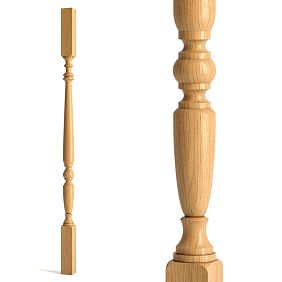
Turned balusters are bodies of revolution with smooth transitions in diameter. This style, originating in the Renaissance era, remains one of the most popular to this day. In Janjik, masters create turned items of varying complexity: from simple cylindrical forms to complex compositions with numerous decorative elements.
Producing turned balusters requires high lathe craftsmanship and modern equipment. Each item goes through several processing stages: rough turning forms the general contour, finishing turning creates the final shape, and multi-stage polishing ensures a perfectly smooth surface.
Get Consultation
Milled Items: Geometry of Perfection
Milled balusters and handrails feature longitudinal and transverse grooves that create a play of light and shadow on the surface. Modern CNC milling machines allow for complex geometric patterns that were inaccessible to craftsmen of previous centuries.
Items with twisted elements, imitating twisted columns, are especially popular. Such balusters require special precision in manufacturing and high operator skill. The result exceeds all expectations — each post becomes a miniature work of art.
Carved Elements: When Wood Comes Alive
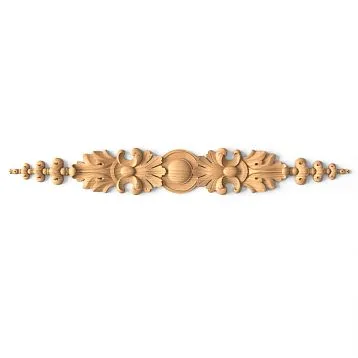
Carved balusters and handrails represent the pinnacle of woodworking craftsmanship. In Janjik, traditions of artistic wood carving have been preserved and passed down from generation to generation. Modern technologies allow combining the artisan's handwork with the capabilities of high-precision equipment.
Design and calculation: mathematics of beauty
Design and calculation: mathematics of beauty
Creating a harmonious staircase structure begins with proper design. The distance between balusters must comply with safety requirements — no more than 150 millimeters center-to-center. This ensures protection for children and prevents the risk of getting stuck between posts.
The height of handrails is determined by building codes and is 900-1000 millimeters from the stair level. For childcare facilities, this parameter may be increased to 1200 millimeters. It is also important to consider ergonomic requirements: the handrail should be comfortably graspable by an adult’s hand.
When calculating the number of balusters, it is necessary to consider not only the length of the stair run but also the placement of support posts. The optimal arrangement is one baluster per stair step. This arrangement creates a rhythmic composition and ensures even load distribution.
Installation and mounting: professional approach
Preparation Work
Quality Installation wooden balusters for staircases Installation begins with careful preparation of the base. Steps must be leveled and cleaned of dust and debris. The handrail must be installed in accordance with all geometric parameters and securely fastened to support posts.
Marking the locations for baluster installation is performed using special templates and measuring tools. It is important to ensure even distribution of posts along the entire length of the stair run. Any deviations from the specified dimensions may negatively affect the appearance of the finished structure.
Methods of mounting
There are several methods for attaching balusters to treads and handrails. The traditional method involves using wooden dowels and carpentry glue. This method ensures maximum connection strength and allows for creating a monolithic structure.
Modern technologies offer the use of metal fasteners: threaded rods, bolts, special brackets. This approach simplifies installation and allows replacing individual elements without dismantling the entire structure.
Special attention should be paid to attaching to the handrail. The upper part of the baluster must fit tightly into the handrail's groove, ensuring the rigidity of the entire structure. Using polyurethane glue guarantees the durability of the connection and resistance to thermal deformation.
Stylistic solutions for various interiors
Classic Style: Timeless Values
A classic interior requires appropriate staircase styling. Balusters and handrails in a classic style feature strict proportions and restrained decoration. The composition is based on precisely shaped elements with smooth transitions in diameter, creating a sense of stability and reliability.
The color palette of classic items leans toward natural wood tones with possible light toning. Especially effective are oak balusters with patina, highlighting the material’s nobility. Handrails are made with a traditional profile, ensuring comfortable grip.
Modern Minimalism: Clean Lines
A minimalist design approach involves using simple geometric forms and clean lines. Balusters in this style may have square or rectangular sections with minimal decoration. The emphasis is on surface finish quality and geometric precision.
The color solution leans toward light tones: whitewashed oak, light beech, toned wood. It is important to achieve uniformity among all staircase elements, creating a cohesive composition without unnecessary details. Handrails are made with a simple rectangular profile.
Countryside and rustic: closeness to nature
The country style implies using rough, deliberately simple forms that emphasize the handmade nature of the items. Balusters may have irregular geometry, knots, and traces of hand-tooling. This approach creates an atmosphere of a countryside home, closeness to nature.
The color palette includes all natural wood tones, from light yellow to dark brown. Especially popular are effects of artificial aging and brushing, creating the impression of long-term use. Handrails may have irregular shapes, mimicking axe-cutting.
Final finishing and protection
Surface preparation
Quality finishing begins with careful surface preparation of balusters and handrails. Multi-stage sanding using abrasives of varying grits allows achieving a perfectly smooth surface. Special attention is paid to processing complex profiles and decorative elements.
After sanding, the surface is cleaned of dust and degreased with special compounds. This ensures better adhesion of protective coatings and guarantees the longevity of the finish. Toning of the wood may be performed if desired to achieve the desired shade.
Types of Protective Coatings
Modern wood protective coatings can be divided into several main groups. Lacquers create a strong protective film on the wood surface, providing high wear resistance and moisture protection. Polyurethane lacquers are especially popular for staircase elements due to their durability.
Oils penetrate into the wood structure, highlighting its natural texture and providing a breathable finish. Oil coatings are easy to renew and create pleasant tactile sensations. Especially effective on oak and beech.
Waxes create a soft matte finish with pleasant tactile sensations. They are especially popular for interior balusters and handrails, where naturalness and eco-friendliness are important. Wax coatings require regular renewal but provide a unique appearance.
Economic aspects and pricing
Factors Affecting Cost
The cost of balusters and handrails depends on many factors, ranging from wood species to complexity of processing. The most affordable are simple geometrically shaped items made from pine using automated equipment. The most expensive are carved balusters from elite wood species, crafted according to individual sketches.
The order volume significantly affects the price. Manufacturers offer substantial discounts for large batches, making the project more economically advantageous. Production timelines also affect cost: urgent orders typically cost more than standard ones.
Installation complexity is another pricing factor. Installing simple turned balusters is cheaper than installing a complex carved structure. The need for additional foundation preparation work also increases the overall project cost.
Price-to-quality ratio
When choosing balusters and handrails, it is important to consider not only the initial cost but also long-term operational expenses. High-quality items made from hardwoods cost more, but their longevity and minimal maintenance requirements offset the high initial investment.
Saving on material quality and manufacturing may lead to the need for premature replacement of elements, which ultimately costs significantly more. Therefore, it is recommended to choose products from reputable manufacturers with a good market reputation.
Care and maintenance: extending service life
Regular Maintenance
Proper care of wooden balusters and handrails begins with regular cleaning of dust and dirt. Soft microfiber cloths slightly moistened with water are used for this. It is important to avoid using aggressive cleaning agents that may damage the protective coating.
For persistent dirt, specialized wood care products can be used. They gently remove dirt without damaging the wood structure and preserve its natural luster. Special attention should be paid to cleaning decorative elements and complex profiles.
Updating protective coating
Protective coatings for balusters and handrails require periodic renewal. Frequency depends on usage intensity and environmental conditions. On average, lacquer coatings should be renewed every 5-7 years, oil coatings every 2-3 years.
The renewal process includes light sanding of the surface to remove old coating and create an adhesive layer. Afterward, new coating is applied in several layers with intermediate drying. Properly executed coating renewal can fully restore the original appearance of the items.
Regional characteristics of the Janjiksky market
Climate conditions
The climate of Crimea is characterized by mild winters and hot summers, which creates special conditions for the use of wooden products. High air humidity in coastal areas requires the use of special protective coatings resistant to sea air.
Local manufacturers take these features into account when selecting processing technologies and protective coatings. Using special stabilizing impregnations helps minimize wood deformation due to changes in ambient humidity.
Logistical advantages
Janjik occupies a favorable geographical position in the northern part of Crimea, ensuring good transportation accessibility. A well-developed network of roads allows for prompt delivery of finished products to any point on the Crimean Peninsula and mainland Russia.
Proximity to ports of the Black and Azov Seas opens opportunities for importing high-quality raw materials from other regions. This enables local manufacturers to offer products made from various wood species at competitive prices.
Industry development trends
Introduction of new technologies
Modern production of balusters and handrails in Janjik actively adopts new wood processing technologies. CNC machines allow creating items of the most complex shapes with high precision. Laser cutting opens new possibilities for creating intricate elements.
Development of wood drying technologies allows obtaining material with specified moisture and internal stress characteristics. This significantly improves the quality of finished products and reduces the risk of deformation during use.
Ecological Requirements
Growing attention to ecological issues influences the choice of materials and production technologies. Consumers increasingly prefer products made from wood harvested in accordance with sustainable forestry principles. Manufacturers adopt zero-waste technologies and use environmentally friendly protective coatings.
Certification of products according to ecological standards has become an important competitive advantage. Companies offering eco-friendly balusters and handrails gain additional opportunities for business development.
Custom solutions and customization
Design based on individual sketches
Modern consumers increasingly value the individuality and uniqueness of their interiors. Manufacturers in Janjik respond to this demand by offering services for producing solid wood staircase elements based on individual sketches. Modern equipment allows to realize the most daring design ideas in wood.
The process of creating custom items begins with detailed discussion of the client's wishes. Designers create sketches taking into account the interior's features and the client's personal preferences. After the sketch is approved, a 3D model is created, allowing to evaluate the future item's appearance.
Comprehensive solutions
Many manufacturers offer comprehensive solutions, including not only balusters and handrails, but also other staircase elements: steps, treads, support posts. This approach ensures full stylistic compatibility of all elements and simplifies the ordering process.
Comprehensive solutions often prove more economically advantageous, as they allow optimizing production processes and logistics. Moreover, a single manufacturer bears full responsibility for the quality of all staircase elements.
Conclusion
Solution buy balusters and handrails in Janjik opens unique opportunities for property owners to create individual and functional interiors. Combining rich woodworking traditions with modern technologies allows obtaining items that will serve for decades, preserving their beauty and functionality.
The Crimean market for balusters and handrails is distinguished by diverse offerings and high product quality. Local manufacturers understand client needs and offer solutions for any architectural tasks. From simple turned balusters to complex carved compositions — everyone will find an item matching their taste and budget.
Investing in high-quality wooden balusters and handrails pays off not only through long service life, but also by increasing the overall property value. An elegant staircase with refined railing elements becomes a central interior feature, a source of pride for owners and admiration for guests.
Choosing staircase elements made of natural wood— you invest in the longevity, safety, and beauty of your home. Each baluster, each centimeter of handrail — is not just a functional element, but a work of art, crafted by masters with years of experience working with wood.
For many years, STAVROS has been a recognized leader in producing high-quality wooden items for staircases. Our specialists possess deep expertise in woodworking and use only the best materials and advanced technologies. We guarantee an individual approach to each project, flawless quality of finished items, and full compliance with all safety requirements. Entrusting us with manufacturing balusters and handrails for your staircase, you receive not just functional elements, but true works of art that will delight you and your loved ones for many years.