Article Contents:
- History of origin and evolution of balustrade cornices
- From antiquity to modernity: a journey spanning millennia
- Regional features and national traditions
- Materials and Manufacturing Technologies
- Traditional materials: time-tested solutions
- Modern materials and innovative technologies
- Manufacturing technology
- Architectural styles and balustrade cornices
- Classicism: harmony of proportions and purity of lines
- Baroque and Rococo: triumph of ornamentation
- Modernism: natural motifs and flowing lines
- Minimalism: functionality and simplicity
- Functional significance of balustrade cornice
- Structural role: strength and durability
- Protective function: resistance to elements
- Aesthetic function: completion of architectural form
- Design and installation of balustrade cornices
- Engineering calculations: safety above all
- Installation technology: from project to implementation
- Features of restoring historical cornices
- Design solutions and modern trends
- Integration with lighting: functionality and expressiveness
- Combining materials: play of contrasts
- Ecological sustainability and development
- Balustrade cornices in various architectural contexts
- Urban architecture: from classicism to modernity
- Suburban architecture: harmony with nature
- Interior solutions: elegance of interior space
- Conclusion: timeless elegance of architectural element
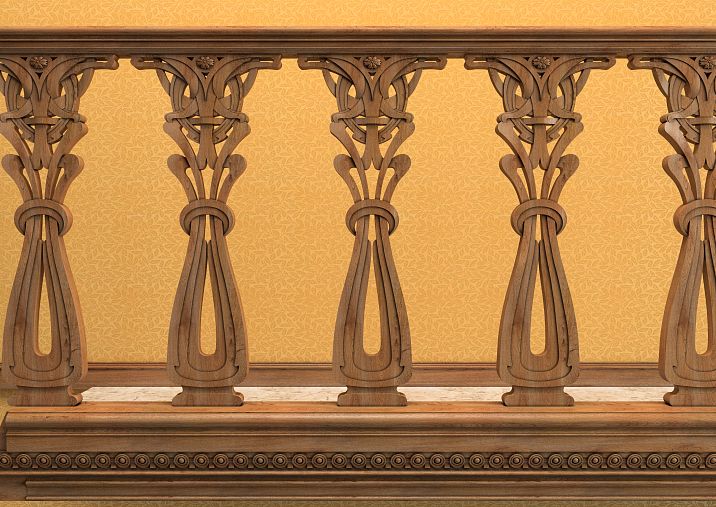
In the world of architectural decoration, there are elements that, despite their apparent secondary importance, can radically transform the appearance of a building, giving it completeness and aristocratic elegance. One such element is balustrade cornice – a detail combining functionality and aesthetic perfection. This architectural element, crowning balustrade compositions, does not merely complete the structure but also creates a harmonious transition between various exterior elements, emphasizing the building's status and stylistic affiliation.


History of Origin and Evolution of Balustrade Cornices




From Antiquity to the Present: A Journey of Thousands of Years
Historical Journey cornice of balustrade It begins in ancient Greece and Rome, where architecture elevated the art of proportions and decorative detailing to absolute perfection. Even then, architects understood that the upper part of a colonnade or balustrade required a finishing element that not only protected the structure from atmospheric elements but also created visual harmony.
In ancient buildings, cornices were often adorned with complex reliefs depicting mythological scenes or historical events. Each element had not only decorative but also symbolic significance, reflecting the worldview of the era.
The Middle Ages introduced mysticism and a focus on the heavens into architecture. Gothic cathedrals, with their delicate balustrades, required a special approach to cornice decoration — they became more elegant and elongated, often adorned with figures of chimeras and gargoyle-like creatures, fulfilling not only an aesthetic but also a practical function as gutters.
The Renaissance revived interest in ancient forms, but reinterpreted them within the context of new architectural solutions. Cornices of balustrades in palazzi and villas of that time were distinguished by mathematical precision in proportions and restrained elegance.
Baroque and Rococo transformed balustrade cornice into a true work of art — lavish, richly decorated, it became a symbol of the owner’s luxury and status. Masters of that time created true sculptural compositions integrated into the architectural solution.
Neoclassicism once again turned to ancient ideals, but introduced strictness and order into them. Cornices of this period are characterized by clear lines and precise proportions, creating an impression of monumental stability.
Modern architecture, despite its inclination toward minimalism, did not abandon cornices of balustrades, but reinterpreted them in the context of new materials and technologies. Today, this element can be made not only from traditional stone or wood, but also from composite materials, metal, glass, while retaining its primary function — creating a completed architectural image.
Modern architecture, despite its inclination toward minimalism, has not abandoned balustrade cornices but has reinterpreted them within the context of new materials and technologies. Today, this element can be made not only from traditional stone or wood, but also from composite materials, metal, glass, while retaining its primary function — creating a finished architectural form.
Our factory also produces:


Regional Characteristics and National Traditions
It is interesting to trace how the same architectural element transformed in different cultural contexts. In Italy, cornices of balustrades are distinguished by the elegance of lines and richness of decorative detailing. French tradition leans toward symmetry and order. English cornices are often more restrained, yet demonstrate impeccable craftsmanship.
Russian architectural school, absorbing influences from both the West and the East, created its own unique approach to decorating cornices of balustradesIn Petersburg palaces and Moscow mansions, this element became a symbol of imperial grandeur and refined taste. Particularly notable are cornices in the style of Russian Neoclassicism, combining the strictness of forms with the richness of decorative details.
Eastern traditions brought a unique philosophy to the decoration of cornices of balustrades. In Chinese and Japanese architecture, these elements often have curved forms, symbolizing harmony with natural forces. Decorative detailing of such cornices often includes images of dragons, phoenixes, and other mythological creatures, serving as protectors of the building.
Get Consultation
Materials and Manufacturing Technologies
Traditional Materials: Time-Tested Solutions
Over centuries, for manufacturing cornices of balustrades natural materials have been used, each possessing its own unique characteristics and aesthetic qualities.
Natural stone — marble, granite, limestone, sandstone — is traditionally considered the most prestigious material. Stone cornices are distinguished by durability, resistance to atmospheric effects, and noble appearance. Marble, with its unique pattern of veins, evokes a sense of luxury and solidity. Granite attracts with its strength and variety of shades. Limestone and sandstone are more workable, allowing for the creation of complex decorative elements.
Wood — a material combining natural beauty with relatively easy processing. For manufacturing cornices of balustrades, traditional hardwoods such as oak, beech, walnut, and teak are used. They possess high density, resistance to rot and mechanical damage. Wooden cornices require regular maintenance and protective treatment, but with proper care, they can last for decades, acquiring a noble patina over time.
Terracotta and ceramics — materials with a rich history of architectural application. Terracotta cornices are distinguished by their warm, natural color and good resistance to atmospheric effects. Glazed ceramics allow for the creation of bright, colorful elements resistant to fading and pollution.
Bronze and other metals were used to create cornices in especially luxurious interiors. Metallic elements can be solid or hollow inside, reducing their weight. Patination, gilding, and embossing — these techniques allow metallic cornices to achieve a unique expressiveness.
Modern Materials and Innovative Technologies
Advancements in construction technologies have led to the emergence of new materials for manufacturing cornices of balustrades, combining aesthetic qualities with practicality and economic efficiency.
Fiber concrete — a composite material consisting of cement, sand, water, and reinforcing fibers. Fiber concrete cornices can imitate the texture and color of natural stone, yet they are lighter, cheaper, and easier to install. High flexural strength allows for creating elements of complex shapes without the risk of breakage.
Polyurethane — a lightweight, moisture-resistant material, ideal for creating decorative elements. Polyurethane cornices are distinguished by precise reproduction of the finest details, resistance to rot, corrosion, and insect damage. They are easy to install, require no special maintenance, and can be painted in any color.
Glass fiber reinforced plastic (GRP) — a material combining the strength of glass fibers with the flexibility of polymer resins. GRP cornices are resistant to ultraviolet radiation, temperature fluctuations, and mechanical impacts. They can imitate various materials — from stone to wood — while retaining low weight and high durability.
Aluminum alloys are increasingly used to create cornices in modern architecture. They are lightweight, corrosion-resistant, and can be painted in any color using powder coating. Aluminum cornices are especially popular in minimalist projects, where the clarity of lines and simplicity of forms are valued.
3D printing opens new horizons in the production of architectural elements. The technology allows creating cornices with complex geometry that would be difficult or impossible to manufacture using traditional methods. Materials for 3D printing are constantly improving, increasing their strength, resistance to external influences, and expanding their color range.
Technological process of manufacturing
Production cornice of balustrade – a complex technological process requiring highly skilled craftsmen and modern equipment.
When working with natural stone, the process begins with selecting a block of appropriate size and quality. Then follows rough processing – giving the block an approximate shape of the future cornice. Next comes precise cutting and grinding. The final stage – polishing the surface to the desired gloss level and applying protective coatings.
Wooden cornices are made from carefully dried wood. The process includes sawing, planing, milling to create the profile, and sanding. Special attention is paid to end and joint treatments. Final finishing may include oiling, varnishing, waxing, or painting.
Production of cornices from modern materials often begins with creating a master model, from which a mold is then made for mass production. This ensures uniformity of all elements in the series. In the case of polyurethane and fiber concrete, casting technology is used, where liquid material is poured into the mold and hardens, taking the desired shape.
Regardless of the material, quality balustrade cornice – is the result of careful control at every stage of production, from raw material selection to final finishing. It is precisely attention to detail that determines the durability and aesthetic value of the finished product.
Architectural styles and balustrade cornices
Classicism: harmony of proportions and purity of lines
Classical architectural style, drawing inspiration from ancient models, imposes specific requirements for balustrade cornice design. Here, mathematical precision of proportions, symmetry, and restraint in decorative elements are valued.
Classical cornices typically have a clear profile with a characteristic overhang, creating a striking play of light and shadow. Decorative elements may include kymatia (ornament in the form of alternating leaves), ovals (egg-shaped elements), denticles (tooth-like projections). All these details adhere to a strict rhythm and scale.
Color solutions for classical cornices are usually restrained – white, cream, light gray – emphasizing the purity of lines and forms. Materials are predominantly natural: marble, limestone, high-grade wood.
Baroque and Rococo: triumph of ornamentation
In contrast to the restraint of classicism, baroque and rococo styles glorify ornamentation, opulence, and dynamic forms. Balustrade cornices in these styles become true works of art, showcasing the virtuosity of craftsmen.
Baroque cornice profiles are complex, often including multiple levels with different overhangs, creating a dramatic play of light and shadow. Decorative elements abound with vegetal motifs, volutes, mascarons, cartouches. Sculptural elements are often present – putti figures, allegorical images.
Rococo, developing trends from baroque, makes forms even more elegant and asymmetrical. Balustrade cornice designs feature shell motifs, whimsically curved lines, delicate openwork carving. The color palette becomes softer, pastel-like, with gold often used to accentuate details.
Modern: natural motifs and flowing lines
The modern style (art nouveau), emerging at the turn of the 19th and 20th centuries, brought a new aesthetic to architecture inspired by natural forms. Balustrade cornices in this style are characterized by smooth lines, absence of rigid symmetry, and rich vegetal motifs.
Cornice profiles in the modern style often have a wavy shape, creating a sense of movement. Decorative elements include stylized images of flowers, leaves, stems, sometimes insects or birds. The "whip crack" motif – a sharply curved line resembling a whip mark – is characteristic.
The color palette of modernism includes both muted, natural tones and bright accents. Materials are diverse – alongside traditional stone and wood, metal, ceramic, and glass are actively used, creating interesting textural and color contrasts.
Minimalism: functionality and simplicity
Contemporary architecture, especially in the direction of minimalism, offers a new perspective on balustrade cornice. Here, functionality, purity of lines, and absence of excessive decoration take precedence.
The profile of a minimalist cornice is extremely simple – often rectangular or sloped, without complex curves or protrusions. Decorative elements are practically absent; expressiveness is achieved through proportions, material quality, and texture play.
The color palette is restrained – white, gray, black, natural tones of wood and stone predominate. Materials are modern – metal, glass, composites, concrete, often combined in unexpected ways to create interesting visual effects.
Functional significance of balustrade cornices
Structural role: strength and durability
Beyond decorative function, balustrade cornice performs an important structural role. It serves as a finishing element, connecting balusters and imparting rigidity and stability to the entire structure.
A properly designed cornice evenly distributes load along the entire length of the balustrade, preventing deformation of individual elements. It also protects the upper ends of balusters from atmospheric precipitation, preventing premature deterioration.
An important aspect is the connection of the cornice to the supporting columns of the balustrade. Here, various technical solutions are applied – from traditional pegged joints to modern metal fasteners ensuring secure fixation.
To ensure the longevity of the cornice, material characteristics and operating conditions must be considered. For wooden cornices, it is important to provide a water drainage system to prevent moisture accumulation. Stone cornices must have sufficient thickness to withstand mechanical loads without risk of destruction.
Protective function: resistance to weather elements
One of the key tasks of the cornice is to protect the lower elements of the balustrade and facade from atmospheric precipitation. A properly designed cornice directs rain and meltwater away from the building surface, preventing premature material degradation.
To effectively perform its protective function, the cornice must have a certain overhang — an extension beyond the facade plane. The optimal overhang size depends on climatic conditions, building height, and facade material. In regions with heavy precipitation, the overhang is made more substantial.
The underside of the cornice often has a special profile with a drip edge — a protrusion that prevents water from running down vertical surfaces. This simple yet effective element significantly extends the lifespan of the facade.
In modern construction, the protective function of the cornice is often supplemented by an integrated water drainage system — gutters and downspouts that direct precipitation into the drainage system, preventing foundation flooding.
Aesthetic function: architectural completeness
balustrade cornice Plays a key role in forming the overall architectural image of the building. It serves as a visual conclusion to vertical elements, creates a smooth transition between different planes, and emphasizes horizontal divisions of the facade.
The proportions, profile, and decorative treatment of the cornice must correspond to the building's overall style, scale, and functional purpose. An overly massive cornice may visually weigh down a light structure, while an excessively modest one may deprive a monumental building of necessary completeness.
The play of light and shadow on the profiled surface of the cornice creates expressive visual effects that change throughout the day depending on the sun's position. This dynamic aspect of perception is considered by architects during design — the cornice can be designed to appear most striking at a specific time of day.
The cornice's color solution can either support the overall facade color scheme or create contrast, drawing attention to this element. In historical architecture, it was often customary to highlight the cornice with white against a darker facade, visually lightening the upper part of the building.
Design and installation of balustrade cornices
Engineering calculations: safety above all
Design cornice of balustrade Begins with engineering calculations ensuring the safety and longevity of the structure. Numerous factors are considered: cornice material, geometric parameters, anticipated loads, and climatic conditions of operation.
Particular attention is paid to strength calculations — the cornice must withstand both permanent loads (its own weight) and temporary loads (snow, wind, potential human load). For stone cornices, bending calculation is critical, especially with significant overhangs.
Thermal calculation considers the geometry of the cornice that ensures effective removal of atmospheric precipitation without risk of infiltration into the building structure. Factors considered include precipitation intensity typical for the region, prevailing wind direction, and potential for ice formation.
Installation of balustrade cornices is a critical stage requiring high skill from installers and strict adherence to technological discipline. The process varies depending on the cornice material and construction type.
Installation technology: from project to implementation
Installation of the balustrade cornice is a critical stage requiring high skill from the workers and strict adherence to technological discipline. The process varies depending on the material of the cornice and the type of construction.
For monolithic stone cornices, proper foundation preparation is critical — it must be level, strong, and capable of supporting significant weight. Cornice elements are mounted on cement-sand mortar with mandatory reinforcement. Joints between individual blocks are filled with special compounds preventing moisture penetration.
Wooden cornices require special attention to the fastening system. Traditional methods use dovetail joints reinforced with glue. In modern construction, metal fasteners — brackets, angles, concealed fasteners — are also used. All wooden elements must be pre-treated with antiseptics and moisture-resistant compounds.
Cornices made of modern materials (polyurethane, fiber concrete) typically have less weight, simplifying installation. They are fastened using special adhesives, anchors, and self-tapping screws. Ensuring joint airtightness is crucial — silicone or polyurethane sealants are used for this purpose.
Regardless of material, careful attention must be paid to the horizontal alignment during cornice installation, controlled using laser levels. Even minor deviations may be visually noticeable and disrupt the aesthetic perception of the entire structure.
Restoration of historical cornices — a specialized field requiring not only technical knowledge but also understanding of architectural styles, historical technologies, and principles of cultural heritage preservation.
The process begins with a thorough examination of the existing cornice — its dimensions, profile, material condition, and damage are recorded. Based on these data, a restoration project is developed, which must be approved by heritage protection authorities.
In cases of fragmented damage, the insertion method is applied — damaged sections are removed and replaced with new elements made of similar material. It is critically important to select a material as close as possible to the original in both physical and aesthetic characteristics.
When the original cornice is completely lost but historical photographs or drawings remain, reconstruction is performed. Templates matching the historical profile are manufactured, and new elements are produced based on these templates.
Special attention during restoration is given to preserving the patina of time — natural signs of aging that give historical buildings authenticity. New elements may be artificially aged to achieve visual harmony with the preserved historical parts.
Special attention during restoration is given to preserving the patina of time — natural signs of aging that give historical buildings their authenticity. New elements may be artificially aged to achieve visual harmony with the preserved historical parts.
Design solutions and modern trends
Integration with lighting: functionality and expressiveness
One of modern trends is integrating lighting systems into the structure cornice of balustradeThis solution combines functionality—ensuring safe movement at night—with a decorative effect that highlights the architectural features of the building.
There are several approaches to organizing such lighting. Recessed lights embedded in the lower surface of the cornice create directional light that highlights balusters and creates expressive play of light and shadow. Linear LED systems placed in special channels provide even illumination of the entire balustrade, emphasizing its horizontal lines.
Modern technologies allow creating dynamic lighting with adjustable intensity and color temperature. This enables adapting the lighting scenario to different conditions—from bright functional lighting to subdued decorative lighting that creates a specific mood.
An important aspect is the energy efficiency of the lighting system. Using LED technology, motion sensors, and automated control systems allows minimizing energy consumption while maintaining high-quality lighting.
Combining materials: play of contrasts
Modern design actively uses the technique of combining different materials in one structure, allowing the creation of interesting visual and tactile contrasts. This trend is also reflected in the design of balustrade cornices.
Classic combination—stone and metal. A massive stone cornice can be complemented by thin metallic inserts, creating a graphic pattern. Alternatively, the cornice base can be made of metal, while decorative elements are made of stone, creating an interesting contrast of textures and visual 'weight' of materials.
Wood combined with glass creates an effect of lightness and airiness. A wooden cornice with integrated glass elements allows light to pass through, creating interesting light and shadow effects. Such a solution looks especially advantageous in modern interiors with large windows and abundant natural light.
Concrete, long considered exclusively a structural material, is now actively used for decorative purposes. Architectural concrete cornices can be combined with wooden, metallic, or composite elements, creating expressive contrasts between industrial aesthetics and natural materials.
Ecological Sustainability
Modern trends in architecture and design are inseparably linked with the concept of sustainable development and ecological responsibility. This is reflected in the approaches to designing and manufacturing balustrade cornices.
Choosing materials with minimal ecological footprint has become a priority for many projects. Preference is given to wood from certified forests, local natural stone, recycled materials. Bio-composites—materials based on plant raw materials, combining ecological properties with high performance—are actively developing.
Durability of the structure is another aspect of a sustainable approach. A quality balustrade cornicedesigned to account for all loads and operating conditions, will serve for decades without requiring replacement, thus minimizing resource consumption in the long term.
The possibility of repair and modernization is also considered during the design of modern cornices. Modular constructions allow replacing individual elements without dismantling the entire system, extending the overall service life and reducing the amount of construction waste.
Energy efficiency has become an important criterion in designing cornices, especially in the context of their integration with lighting and drainage systems. Using renewable energy sources, such as built-in solar panels, allows creating autonomous systems that do not require connection to the power grid.
Balustrade cornices in various architectural contexts
Urban architecture: from classic to modern
In an urban environment balustrade cornice performs not only a functional and aesthetic role, but also becomes an element of shaping the urban landscape, contributing to the creation of the characteristic appearance of streets and squares.
In the historic centers of European cities, balustrade cornices are an integral part of the architectural ensemble. They form expressive silhouettes of buildings, create rhythmic divisions of facades, and emphasize the stylistic unity of the built environment. Restoration and preservation of historical cornices become an important task in the context of preserving cultural heritage.
Modern urban architecture offers new interpretations of traditional elements. Balustrade cornices in new buildings can be executed in a minimalist style, using innovative materials, yet still maintain dialogue with historic buildings through proportions, rhythm, and scale.
Projects involving the reconstruction of historic buildings with the addition of modern elements are particularly interesting. Here, the cornice can become a connecting link between the old and the new, preserving historical proportions while interpreting them using modern materials and technologies.
Suburban architecture: harmony with nature
In the context of suburban architecture balustrade cornice acquires special significance as an element forming the relationship between the building and its surrounding landscape. Here, not only aesthetic qualities but also the ability to harmoniously blend into the natural environment are important.
Traditional suburban architecture often refers to regional building traditions, where cornices have characteristic forms and decorative motifs. This may be a carved wooden cornice in the Russian style, a stone cornice with vegetal ornamentation in Mediterranean tradition, or a minimalist and functional cornice in Scandinavian style.
Modern suburban homes are often designed with large terraces and open spaces, where balustrades with expressive cornices become an important element in organizing space. They define functional zones, ensure safety, and create visual connection between architecture and landscape.
Materials for cornices in suburban construction are selected based on their ability to harmoniously age in a natural environment. Natural wood, acquiring a silver hue over time, stone with patina, metal with a naturally oxidized surface—these materials allow the building to 'blend' into the landscape, becoming an organic part of it.
Interior solutions: elegance of interior space
Balustrade cornices are used not only in exteriors but also in interior design, where they become an important element of architectural articulation of space. Interior balustrades with expressive cornices are often used on staircases, galleries, and mezzanines, defining the character and style of the room.
In classical interiors, balustrade cornices are often an extension of the overall architectural decoration, harmonizing with ceiling cornices, door and window casings, creating a cohesive ensemble. Materials and finishes are selected in accordance with the overall style — this may include polished hardwoods, marble, or gilded bronze.
Modern interiors offer new interpretations of traditional elements. Cornices can be made from glass, stainless steel, or composite materials, creating interesting contrasts with traditional interior elements. A popular solution is integrating lighting into the cornice structure, producing expressive lighting effects and highlighting architectural features of the space.
Projects for reconstructing historical interiors are particularly interesting, where preserving and restoring original balustrade cornices becomes a key task. Here, technical skill is required alongside a deep understanding of historical styles, technologies, and materials.
Conclusion: Timeless elegance of an architectural element
balustrade cornice — an architectural element that has endured through centuries and retained its relevance in modern construction. Combining functionality with aesthetic expressiveness, it remains a crucial detail shaping the character and style of a building.
From monumental stone cornices of palaces to elegant wooden elements of country homes, from classical profiles to modern minimalist solutions — this architectural element demonstrates an amazing ability to adapt to various styles, materials, and technologies, while preserving its essence and purpose.
Modern approaches to designing and manufacturing balustrade cornices are based on a rich historical heritage, yet actively utilize innovative materials and technologies, responding to the challenges of the time — requirements for eco-friendliness, energy efficiency, and cost-effectiveness.
STAVROS, specializing in producing architectural elements from solid wood, offers a wide range of balustrade cornices combining traditional craftsmanship with modern technologies. Each STAVROS product is the result of careful material selection, precise design, and virtuoso execution, guaranteeing durability, aesthetic expressiveness, and flawless quality.
Choosing balustrade cornice From STAVROS, you receive not just an architectural element, but a piece of multi-century construction culture embodied in a modern, high-quality product that will become a worthy adornment of your home for many years.