












































































Article Contents:
- Architecture of success: creating a sales-oriented salon atmosphere
- Psychology of space in furniture retail
- Merchandising: the art of product presentation
- Creating a comfortable environment for decision-making
- Consultant mastery: from meeting to deal
- First seconds: the art of proper greeting
- Needs diagnosis: the art of asking the right questions
- Product presentation through the prism of client benefits
- Product expertise: deep knowledge as the foundation of trust
- Materials science in the furniture industry
- Constructive features and hardware
- Stylistic directions and design trends
- Psychology of buyer behavior in furniture retail
- Emotional and rational motives for purchase
- Customer typology and individual approach
- Working with buyer fears and doubts
- Technologies and tools of modern furniture retail
- Digitalization of the sales process
- CRM systems and customer database management
- Innovative product presentation formats
- Sales management in a furniture salon
- KPI and staff motivation system
- Inventory management
- Pricing policy and promotional offers
- Service and after-sales support
- Logistics of bulky goods
- Warranty and post-warranty service
- Specialization by furniture categories
- Soft furniture: comfort and emotions
- Solid furniture: functionality and quality
- Kitchen furniture: complexity and high cost
- Staff development and corporate culture
- Consultant Training System
- Service Standards and Corporate Ethics
- Marketing and Advertising of a Furniture Store
- Local Marketing and Community Engagement
- Digital Marketing of a Furniture Store
- Loyalty Programs and Customer Retention
- Risk Management and Crisis Planning
- Typical Risks in Furniture Retail
- Anticrisis Strategies
- The Future of Furniture Retail: Trends and Prospects
- Technological Innovations
- Changes in Consumer Behavior
- Conclusion
- Frequently Asked Questions
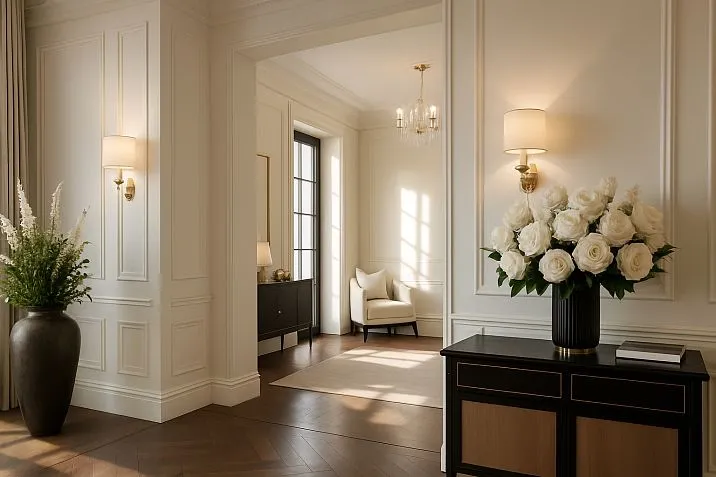
A furniture store is not just a retail outlet. It is a theater where hundreds of stories unfold every day about how homes become cozier and families happier. The question of how tosell in a furniture storeeffectively, concerns everyone who has tied their career to this amazing field, where the art of communication meets an understanding of human needs for comfort and beauty.
Why some furniture stores thrive, turning every visitor into a customer, while others struggle for years to make each sale? The secret lies not in magical formulas or supernatural abilities of staff. Success is built on a deep understanding of buyer psychology, mastery of product presentation techniques, and creating an atmosphere in the store where the client feels not just like a customer, but like a welcome guest, for whom genuine help is offered.
Architecture of Success: Creating a Sales-Generating Store Atmosphere


Architecture of Success: Creating a Sales-Driven Salon Atmosphere




Psychology of Space in Furniture Retail
The client’s first impression is formed within seconds after entering the store. The space must 'speak' to the visitor in the language of comfort and trust, creating a sense that here they are understood and ready to help find exactly what is needed.
Zoning of the trading space plays a critical role in guiding the client through the store. Logical division into thematic sections — living rooms, bedrooms, children’s areas, office furniture — helps the customer quickly orient themselves and find the required items. At the same time, it is important to create natural movement routes that will guide visitors past key product groups.
Compositional interior solutions demonstrate furniture not as individual items, but as elements of a holistic lifestyle.Unique InteriorsThey are created precisely based on understanding how different pieces of furniture interact with each other, complement one another, and form the overall atmosphere of the room.
Lighting as a sales tool requires a professional approach. Different lighting scenarios highlight the advantages of furniture, create moods, and influence the perception of colors and textures. Warm lighting in the soft furniture zone creates a sense of coziness, while bright cool lighting emphasizes the functionality of office solutions.
Our factory also produces:


Merchandising: The Art of Product Presentation
Correct product display is a scientifically grounded methodology that can significantly increase sales without additional advertising investments.
The golden triangle principle in furniture retail means placing the most profitable and popular items in areas of greatest customer attention. The first three meters from the entrance, the right side of the main aisle, eye-level zones — these are the areas where anchor positions should be located.
Cross-merchandising involves placing complementary products in close proximity. A sofa next to a coffee table and a floor lamp, a bed with bedside tables, a dining table surrounded by chairs — such arrangement stimulates bundled purchases.
The pricing architecture of the hall should take into account the psychological aspects of value perception. Placing products of different price categories next to each other creates an anchoring effect, making mid-priced models appear more accessible against the backdrop of premium examples.
Get Consultation
Creating a comfortable environment for decision-making
Buying furniture is a process that requires time for consideration. The store should provide comfortable conditions for this important process.
Rest and discussion zones allow clients to take their time in making decisions, discuss options with family members, and reconsider their purchase. Comfortable chairs, tables, and the option to have coffee or water create a friendly atmosphere.
Children’s corners solve the practical problem for parents, allowing them to calmly consider furniture without being distracted by children. Satisfied children — calm parents — more time for choosing — higher likelihood of purchase.
Informational materials must be easily accessible at any point during consultation. Catalogs, price lists, brochures with additional information about materials and production technologies help clients make informed decisions.
Consultant's Craft: From Meeting to Sale
First Seconds: The Art of Proper Greeting
The success of a sale is largely determined in the first 30 seconds of interaction with the client. It is precisely during this time that basic trust or distrust is formed, determining the tone of further interaction.
Visual contact and body language speak louder than words. An open posture, genuine smile, confident stride create an impression of a competent professional whom one can trust to choose furniture for the home.
Personalized greetings work much more effectively than standard phrases. Instead of the cliché 'How may I help you?', try 'Welcome! Are you planning to update your interior or looking for something specific?'. Such an opening immediately sets the tone for a constructive dialogue.
Determining the client type should occur in the first minutes of interaction. A single visitor or a family couple, young people or mature buyers, calm analysts or emotionally driven choosers — each type requires its own approach.
Needs Diagnosis: The Art of Asking the Right Questions
A professional consultant's work begins not with presenting the product, but with a deep understanding of the client's needs. Quality diagnosis is the foundation of a successful sale.
Open-ended questions help uncover the true motivations behind a purchase. 'Tell us about the space for which you're choosing furniture,' 'What does your ideal living room look like?,' 'What atmosphere do you want to create in your home?' — such questions provide far more information than direct inquiries about size and color.
Active listening requires full concentration on the client. It is important to hear not only the spoken words, but also the emotions behind them. When a client says 'I want something cozy', they may mean entirely different things depending on their understanding of coziness.
Clarifying questions help avoid misunderstandings. 'When you say 'modern style', what exactly do you mean?' Specificity eliminates situations where the client and consultant are talking about the same thing but interpret it differently.
Presenting the product through the lens of client benefits
Technical specifications of furniture interest clients only in the context of how these features improve their lives. The consultant's art is to translate product features into client-understandable advantages.
Storytelling in furniture sales transforms dry descriptions into living stories. Instead of 'sofa with independent spring block', say 'a sofa where you can fully relax after a hard day, without disturbing your partner when changing position'. Stories create an emotional connection with the product.
Demonstration of functionality should be interactive. Let the client personally test mechanisms, feel the comfort of seating, evaluate material quality. Personal experience convinces better than any words.
Handling objections as an opportunity to deepen understanding of the client's needs. Behind every objection lies an unmet need or fear. The consultant's task is to uncover the true cause of doubts and offer a solution.
Product Expertise: Deep Knowledge as the Foundation of Trust
Material Science in the Furniture Industry
Modern furniture buyers are well-informed and often ask complex questions about materials, technologies, and eco-friendliness. The consultant must be prepared to provide comprehensive answers.
What new-generation furniture is made of — a question customers must receive comprehensive answers to. Eco-friendliness, durability, ease of care — specific advantages speak louder than abstract 'innovation'.Knowledge of various categories — information that should become the second nature of the seller. Laminated boards and MDF, solid wood of various species, modern composite materials — each has its own advantages, limitations, and optimal application areas.
Ecological aspects of materials are gaining increasing importance, especially when selecting children's furniture or for people with allergic reactions. Knowledge of formaldehyde emission classes, FSC certification, characteristics of natural finishes helps the consultant professionally answer relevant questions.
Durability and care for various materials — information that influences the purchase decision. The client must clearly understand how to care for furniture, what to avoid, and what lifespan to expect from the product under proper use.
Constructive Features and Hardware
The quality of furniture is largely determined not only by materials, but also by constructive solutions, quality of hardware, and assembly technologies.
Types of connections in cabinet furniture affect the durability and reliability of structures. Dowels, eccentric bolts, and scarf joints — each type has its own characteristics and optimal application areas.
Drawer slides vary by type of mounting, load capacity, smoothness of operation, and presence of soft-close mechanisms. Demonstrating the differences in performance between cheap and quality slides often justifies the price difference.
Hinges and door mechanisms in cabinets, their adjustment features, durability, and quiet operation — details that determine the comfort of daily furniture use.
Stylistic Directions and Design Trends
A furniture store consultant must understand interior design styles, comprehend their characteristics, be able to explain differences, and help the client make a choice.
Classic styles — Baroque, Empire, English Classicism — require corresponding materials, proportions, and decorative elements.where to buy furniture decorClassic style — a question that often arises among customers purchasing such furniture.
Modern trends — minimalism, Scandinavian style, loft, high-tech — have their distinctive features in material selection, color palette, and functional solutions.
Eclecticism and fusion allow mixing elements of different styles, but require a refined sense of proportion and understanding of principles of harmonious combination.
Psychology of customer behavior in furniture retail
Emotional and rational motives for purchase
Furniture is purchased both emotionally and rationally. The emotional component often determines initial interest in the product, while the rational component determines the final purchase decision.
Emotional triggers include the desire to create comfort, demonstrate status, ensure family comfort, and follow fashion trends. Understanding emotional motivation helps consultants find the right arguments.
Rational factors — price, quality, functionality, durability, warranty terms — require factual arguments with specific examples and evidence.
The balance of emotions and logic in presenting the product should match the customer's type. Analysts require more facts and figures, while emotionally driven customers respond better to vivid imagery and stories.
Customer typology and individual approach
Each customer is unique, but there are common behavioral patterns that help choose the optimal interaction strategy.
Family buyers make decisions collectively, often require time for discussion, prioritize practicality and durability. It is important to involve all family members in the selection process and find a solution that satisfies everyone.
Single customers are more prone to impulsive decisions, focus on personal preferences, and are open to considering unusual design solutions. With them, you can be more creative in your proposals.
Corporate clients focus on price-to-quality ratio, compliance with corporate standards, and the ability to deliver large volumes. Here, a professional approach, technical documentation, and clear deadlines are crucial.
Working with customers' fears and doubts
Buying furniture is a serious decision accompanied by various fears and doubts. Professional handling of objections turns obstacles into opportunities to strengthen trust.
Fear of making the wrong choice is especially strong when buying expensive furniture. The possibility of exchange within reasonable limits, detailed consultation on care, and warranty obligations help reduce this fear.
Doubts about quality are overcome by demonstrating materials, explaining production technologies, and providing manufacturer certificates and awards.
Financial concerns require a flexible pricing approach. Installment plans, discounts, bundled offers, and trade-in programs are tools that make purchasing more accessible.
Technologies and tools of modern furniture retail
Digitalization of the sales process
Modern technologies fundamentally change the process of selecting and purchasing furniture, making it more visual and convincing.
Augmented Reality (AR) allows customers to see how selected furniture will look in their interiors. Mobile apps with AR functionality significantly increase customers' confidence in their choices.
3D visualization of spaces enables creating complete design projects with selected furniture. This is especially important when selling kitchen sets and comprehensive solutions for living spaces.
Interactive catalogs on tablets expand presentation possibilities without the need to physically display all models in the showroom. Customers can browse different finishes, color options, and additional features.
CRM systems and customer database management
Professional customer service requires a systematic approach to collecting and using information.
Customer database should include not only contact information but also style preferences, information about previous purchases, interior specifics, and budget constraints. This information helps personalize offers.
Interaction history allows any showroom staff member to continue working with a customer from the point where a colleague left off. This creates a sense of professionalism and customer care.
Marketing automation through CRM systems helps maintain contact with customers. Birthday greetings, notifications about new arrivals, personalized offers — all of this can be automated without losing a personal touch.
Innovative product presentation formats
Traditional sample exhibitions are supplemented with new furniture display formats.
Studio apartments create complete interior compositions where clients can evaluate furniture in the context of real usage. This is especially effective for showcasing collections and stylistic solutions.
Interactive zones with the ability to independently test mechanisms, compare materials, and study construction features increase customer engagement in the selection process.
Video presentations of manufacturing processes, collection creation stories, and interviews with designers create additional brand value and increase trust in product quality.
Sales management in a furniture store
KPI and staff motivation system
The efficiency of a furniture store's operations depends on the proper setup of performance metrics and employee motivation systems.
Visitor-to-customer conversion rate is a key performance indicator for consultants. The average conversion rate in furniture stores is 15-25%, but top consultants achieve 40-50%.
Average check reflects a consultant's ability to present additional products and services, handle price objections, and offer comprehensive solutions.
Customer satisfaction index is measured through post-purchase surveys, analysis of online reviews, and the number of complaints and returns.
The motivation system should stimulate not only sales volume but also service quality. Points for positive reviews, bonuses for no complaints, and additional payments for training create the right incentives.
Inventory management
Effective assortment management is critically important for furniture retail due to the large size of products and high cost of warehouse space.
ABC analysis helps identify the most important product items. Category A items require constant availability and active promotion, while category C items can operate on order.
XYZ analysis evaluates demand stability and helps plan purchases. Items with unstable demand require a more conservative approach to inventory levels.
Seasonality in furniture sales is quite pronounced. Spring activity peak, summer decline, autumn revival before holidays — cycles that must be considered when planning the assortment.
Pricing policy and promotional offers
A sound pricing policy is a balance between competitiveness and profitability.
Monitoring competitor prices should be conducted regularly, especially for key product items. Price intelligence helps remain competitive without harming profitability.
Flexible pricing allows for quick response to market changes. Special offers for corporate clients, discounts for bulk purchases, loyalty programs create additional incentives.
Pricing psychology takes into account how customers perceive price. Anchoring effect, price breakdown into components, comparison with alternatives — techniques that influence purchase decisions.
Service and after-sales support
Logistics of large items
Furniture delivery and installation is a complex logistical task, and quality solutions often determine the overall impression of the purchase.
Delivery planning must consider the item's dimensions, building access features, ability to lift to floors, and loader work schedules. Pre-arranging all details eliminates unpleasant surprises.
Professional furniture assembly requires skilled specialists familiar with the construction specifics of different manufacturers. Quality assembly guarantees furniture longevity and eliminates complaints.
Additional services — removal of packaging, disposal of old furniture, minor adjustments at installation site — create additional value and increase customer loyalty.
Warranty and post-warranty service
Quality service does not end with product delivery — it is the beginning of long-term customer relationships.
Warranty obligations must be clearly defined and understandable to the customer. Different warranty periods for frames, mechanisms, and upholstery require detailed explanation during sales.
Prompt response to warranty cases demonstrates serious commitment to customers. Quick defect resolution, replacement of defective parts, compensation for inconvenience build a positive company image.
Post-warranty service maintains contact with customers and creates opportunities for additional sales. Preventive maintenance, repairs, upholstery renewal — services that extend furniture life and generate revenue.
Specialization by furniture category
Soft Furnishings: Comfort and Emotions
Selling soft furnishings requires a special approach, where tactile sensations and comfort take center stage.
Testing is mandatory — the client must sit, recline, and find a comfortable position. Testing time is not limited — comfort cannot be assessed in a few seconds.
Upholstery materials require detailed presentation. Natural leather, eco-leather, various types of fabric — each material has its own care requirements, durability, and tactile qualities.
Fillers and construction affect comfort and longevity. Spring blocks, polyurethane foam, latex, hybrid fillers — each type has its advantages and target audience.
Cabinet Furniture: Functionality and Quality
When selling cabinet furniture, the emphasis is on functionality, quality of materials, and hardware.
Demonstration of features must be comprehensive. Open all doors, pull out drawers, show adjustable shelf options. The client must evaluate the thoughtfulness of each element.
Manufacturing quality is demonstrated through details. Clean cuts, quality edge finishing, precision of component fitting, smooth operation of hardware — indicators by which the client assesses the overall product quality.
Customization options are especially important for cabinet furniture. Changing dimensions, additional sections, alternative front colors expand adaptability to specific needs.
Kitchens: Complexity and High Cost
Kitchens are the most complex furniture category to sell due to technical requirements and high cost.
Layout solutions require understanding kitchen ergonomics principles. The work triangle rule, zoning by function, optimizing the cook’s movements — foundations of professional planning.
Kitchen materials must meet special requirements. Moisture resistance, temperature stability, ease of cleaning, compliance with hygiene standards — factors determining suitability for kitchen use.
Appliance integration requires precise planning and coordination with appliance suppliers. Errors in dimensions may result in inability to install expensive equipment.
Staff Development and Corporate Culture
Consultant Training System
Continuous staff training is an investment in the salon’s future profitability.sell in a furniture storeProfessionally — a skill that requires continuous development.
Product training must be systematic and regularly updated. New collections, changes in assortment, seasonal product specifics — information the staff must absorb promptly.
Sales technique training includes communication psychology, handling objections, product presentation, closing deals. Regular training and role-playing maintain skills at a high level.
Developing design skills transforms consultants into interior design experts. Understanding styles, color coordination principles, current trends makes communication with clients more meaningful.
Service Standards and Corporate Ethics
Uniform standards ensure consistently high-quality service regardless of which consultant the client interacts with.
Appearance standards create a professional team image. Dress code, grooming, alignment with salon status — elements influencing first impressions.
Verbal standards include greetings, farewells, standard phrases for various situations. It is important to maintain natural communication, avoiding robotic script-following.
Ethical principles define relationships with clients, colleagues, and competitors. Honesty in product presentation, respect for the client’s choice, support for colleagues — foundations of a healthy corporate culture.
Marketing and Advertising for a Furniture Salon
Local marketing and community engagement
Furniture store — a business closely tied to the local community. Local marketing activities often prove more effective than mass advertising.
Participation in local events — real estate exhibitions, fairs, festivals — builds brand recognition and demonstrates active involvement in community life.
Partnerships with regional designers and architects open access to projects of various scales. Professional recommendations hold special value in interior design solutions.
Working with developers allows offering furniture to buyers of new constructions during the interior planning stage. "Repair + furniture" bundled solutions are gaining growing demand.
Digital marketing for a furniture store
Online presence has become a mandatory condition for success in modern furniture retail.
Local SEO helps appear in search results for queries like "furniture + city name." Optimization for local search is critically important for stores operating in regional markets.
Social networks allow showcasing products in an attractive context, sharing interior design solutions, and gathering customer feedback. Instagram is especially effective for furniture retail due to the visual nature of the products.
Email marketing maintains contact with customers between purchases. Informing about new arrivals, seasonal promotions, and design trends builds loyalty and stimulates repeat purchases.
Loyalty programs and customer retention
Acquiring a new customer costs five times more than retaining an existing one. Loyalty programs are an investment in long-term profitability.
Accumulative discount systems motivate repeat purchases and increase average order value. Progressive discount scales encourage customers to make larger purchases.
Exclusive events for loyal customers — private previews of new collections, meetings with designers, special sales — create a sense of special status.
Service programs include free maintenance, priority warranty service, discounts on additional services. Quality service is the foundation of long-term relationships.
Risk management and crisis planning
Typical risks in furniture retail
Understanding and managing risks is a crucial component of sustainable business.
Seasonal fluctuations in demand require flexible inventory and cash flow management. Reserves for low seasons, promotional planning to stimulate sales — measures of crisis management.
Supplier price increases can significantly impact profitability. Long-term contracts with fixed prices, supplier diversification help reduce price risks.
Changing consumer preferences may render part of the assortment less in demand. Regular trend monitoring, rapid assortment rotation, clearance sales of outdated collections minimize losses.
Anti-crisis strategies
Being prepared for crisis situations increases the chances not only to survive, but also to strengthen market position.
Diversifying revenue streams through additional services reduces dependence on furniture sales. Design, assembly, and repair services create additional profit sources.
Cost optimization without compromising service quality. Reviewing rental agreements, optimizing staff, automating processes — measures that help weather difficult periods.
Focusing on loyal customers during crises yields more stable results than attempts to attract new buyers. Special offers for loyal customers, personalized service, referral programs work more effectively than mass advertising.
The future of furniture retail: trends and prospects
Technological Innovations
Furniture retail actively adopts new technologies that change the customer experience.
Smart furniture with built-in electronics, sensors, and integration capabilities with smart home systems opens new product categories and additional profit sources.
Blockchain in supply chains ensures transparency of material origins, confirms eco-certifications, and combats counterfeiting.
Warehouse automation and process automation reduce operational costs, increase order processing speed, and minimize errors.
Changes in consumer behavior
A new generation of buyers is changing the rules of the game in furniture retail.
Conscious consumption places ecological and social responsibility among key factors of choice. FSC certification, recycling programs, local production become competitive advantages.
Personalization requires flexible production systems capable of economically manufacturing individual items. Modular systems, configurators, and customization of standard models meet this need.
Subscription models in furniture retail are still exotic, but may find their customers among mobile professionals who frequently change their place of residence.
Conclusion
The mastery ofsell in a furniture storeAt the highest level, it consists of many components — from creating the right atmosphere in the showroom to a deep understanding of each client's needs. It is an art that requires continuous development, studying new technologies and trends, refining communication and professional skills.
A modern furniture showroom is much more than a retail outlet. It is a place where dreams of a beautiful home meet professional solutions, where every client finds not just furniture, but elements of their future comfort and happiness.where to buy moldings for decorationorwhere to buy moldingsSuch questions from clients open opportunities for comprehensive consultation on creating a complete interior.
Technology changes the ways products are demonstrated, methods of interaction with clients, and sales management processes. But at the center always remains the person — the consultant who knows how to listen, understand, find the right solutions, and create an atmosphere of trust.
The future of furniture retail belongs to those who can harmoniously combine traditional values of personal service with innovative technologies, mass efficiency with individualized approaches, commercial success with genuine care for clients.
Success in furniture retail is built on reputation, which is formed every day through quality service, honesty in communication with clients, and professionalism of the team. Every satisfied customer becomes advertising for the showroom, every well-furnished space confirms the consultants' expertise.
The company STAVROS embodies the best traditions of furniture retail, combining long-standing experience working with clients with innovative approaches to organizing sales processes. Our showrooms are spaces where classical craftsmanship meets modern sales technologies.
Over the years, STAVROS has developed a unique service philosophy that places the client at the center of all processes. Our consultants are not just furniture sellers — they are experts in creating comfortable and beautiful interiors who help every visitor find exactly the solutions that will make their home special.
We understand that buying furniture is an investment in quality of life for many years. Therefore, every recommendation from our specialists is based on a deep analysis of the client's needs, understanding of their lifestyle, requirements for functionality and aesthetics.
Frequently asked questions
How to properly greet clients in a furniture showroom?
The greeting of the client should be friendly but not intrusive. Allow the visitor 2-3 minutes for initial viewing, then approach with a personalized greeting. Instead of the standard "How can I help you?", ask: "Are you planning to update your interior or looking for something specific?" This opens a dialogue and shows interest in the client's needs.
What questions to ask the client to identify needs?
Use open-ended questions: "Tell us about the space for which you are choosing furniture," "What atmosphere do you want to create in your home?", "How do you usually spend time in this room?", "Do you have favorite colors or styles?". These questions help understand not only functional requirements, but also the client's emotional preferences.
How to handle the objection "It's too expensive?"
First, clarify what the client means by "expensive". "Expensive" may mean "more than planned budget", "more than competitors", or "I don't see the price-quality match". After clarification, offer alternatives: models within the appropriate price range, installment plans, bundled discounts. Always explain what the price consists of and what benefits the client receives.
How to increase average transaction value?
Use cross-selling techniques: suggest a coffee table and floor lamp with the sofa, chairs and buffet with the dining table. Show products in complete interior solutions. Offer additional services: delivery, assembly, protective furniture treatments. Educate the client on the advantages of a comprehensive approach to interior design.
How to retain a client who wants to "think it over?"
Do not hinder the desire to think — it is natural for major purchases. Offer to assist in the decision-making process: provide catalogs, material samples, contact information. Clarify which specific questions concern the client, and offer solutions. Agree on a specific time for the next contact and definitely follow up.
What knowledge about furniture is most important for a salesperson?
The consultant must know: materials used in manufacturing and their properties, structural features of different types of furniture, principles of care and operation, interior styles and their characteristics, current design trends. It is also important to understand production technologies, quality of hardware, warranty conditions, and customization possibilities of products.


