Article Contents:
- Technological Foundations of the Production Process
- Materials Science in Relief Production
- Production Technologies and Equipment
- Artistic Techniques and Stylistic Directions
- Specialized Tools and Fixtures
- Quality Control and Standardization
- Finishing Operations and Protective Coatings
- Logistics and Packaging of Finished Products
- Economic Aspects of Production
- Technology Development Prospects
- Ecological aspects of production
- Control of Microclimate in Production Areas
- Conclusion
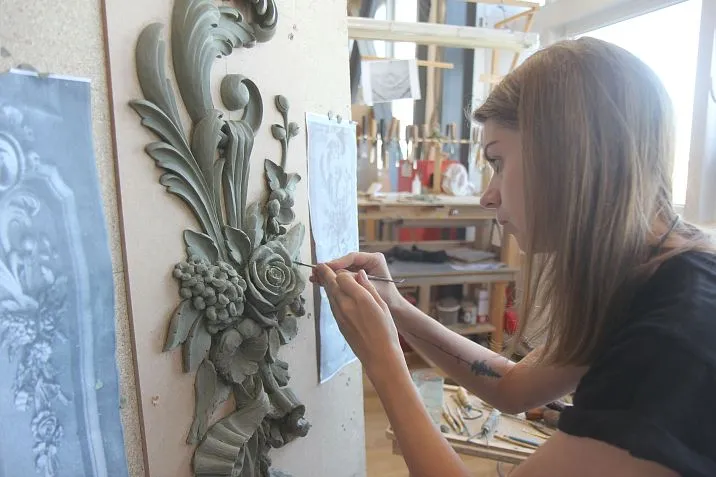
Ancient art of creating three-dimensional images is experiencing a true renaissance in modern interior design. Relief production requires a deep understanding of materials, technological processes, and artistic vision. In an era of standardized solutions, relief sculpture becomes a manifestation of individuality, allowing the creation of unique works that transform ordinary walls into art galleries.
Modern relief production combines traditional hand modeling techniques with innovative technologies, opening up boundless possibilities for realizing the most daring creative ideas. From miniature decorative elements to monumental panels — each item becomes the result of a carefully refined technological process.




Technological Foundations of the Production Process
The heart of any relief is a precisely refined technology, where each stage affects the quality of the final result. The process of relief production begins with a detailed analysis of the artistic concept and selection of optimal technical solutions.
The preparatory stage includes creating a scaled sketch with detailed development of all compositional elements. Professional masters use specialized 3D modeling programs, allowing them to visualize the future product taking into account lighting and perspective characteristics.
Creating the master model represents the most responsible stage of production. The sculptor works with high-quality clay, enabling the creation of the finest details. Modern sculpting clay retains plasticity at room temperature, does not deform under its own weight, and ensures clear transmission of the finest surface nuances.
Molding operations require special skill and precision. For creating working molds, the latest generation silicone compounds are used, ensuring reproduction accuracy down to 0.1 mm. Multi-component silicones allow producing molds that withstand hundreds of casting cycles without loss of surface quality.




Materials Science in Relief Production
Material selection determines not only the appearance of the finished product, but also its durability, processing capabilities, and operating conditions. Modern relief production uses a wide range of materials, each possessing unique characteristics.
Architectural plaster remains a classic material for interior reliefs. Modern plaster compositions contain polymer modifiers, increasing strength by 40-60% compared to traditional mixes. Setting time is regulated by special retarders, allowing the craftsman to work with the material for up to 45 minutes.
Gypsum casting technology requires strict adherence to proportions: the gypsum/water ratio is 100:65 for standard items and 100:55 for thin-walled elements. Water temperature must be maintained within the 18-22°C range to ensure optimal setting time.
Polyurethane resins open new possibilities for creating ultra-light reliefs. Two-component systems allow obtaining products with density ranging from 0.6 to 1.2 g/cm³ while maintaining high surface detail. Polyurethane does not absorb moisture, is resistant to temperature fluctuations, and is easily colored with any dyes.
Composite materials based on mineral fillers combine the strength of stone with the processability of casting materials. Marble chips, quartz sand, perlite create various textural effects, imitating natural materials.
Our factory also produces:




Production Technologies and Equipment
Modern relief production uses both traditional craft techniques and high-tech equipment, enabling new levels of quality and productivity.
Vibrating tables ensure uniform filling of molds and removal of air inclusions. A vibration frequency of 50-60 Hz creates optimal conditions for material flow without damaging delicate mold elements. Adjustable amplitude allows adapting the process to different types of products.
Vacuum chambers are used to degas liquid components before casting. Residual pressure of 10-20 mbar completely removes dissolved air, preventing the formation of pores in the finished product. Vacuum application is especially important when working with fast-setting materials.
Climate chambers provide controlled curing conditions. Temperature of 20±2°C and relative humidity of 65±5% create optimal conditions for gypsum product strength gain. Forced air circulation prevents surface crust formation.
The relief production process becomes especially efficient when using specialized equipment that allows controlling each stage of production.
Get Consultation
Artistic techniques and stylistic directions
The diversity of artistic approaches in creating reliefs reflects the richness of world art and modern design trends. Each technique requires specific skills and tools.
Classical modeling involves gradually building up volume from general forms to details. The artist works with a set of scrapers of different configurations: flat ones for creating wide surfaces, shaped ones for detailing ornaments, and curved ones for removing excess material. Traditional technique requires perfect mastery of proportions and understanding of anatomy.
Modern interpretation of classical motifs allows adapting historical samples to contemporary aesthetics. Simplification of forms, stylization of details, and use of contrasting textures create works that fit organically into modern interiors.
Nature-inspired motifs remain the most in-demand in interior design. Floral compositions require deep study of botanical forms. Each leaf, petal must be anatomically accurate, yet artistically expressive.
Abstract compositions open up boundless opportunities for creative experimentation. Play of volumes, rhythmic repetitions, and contrasts of textures create dynamic compositions capable of radically altering the perception of space.
Specialized tools and equipment
The quality of the relief directly depends on the tools used. A professional set includes dozens of specialized tools, each designed for specific operations.
Scrapers are made from various materials — hardwoods, metal, plastic. Wooden scrapers do not damage clay, allowing for soft transitions. Metal scrapers provide sharp contours and are suitable for working with hard materials. Plastic scrapers leave no marks and are ideal for finishing work.
Texture rollers create repeating textures — imitation of wood grain, stone masonry, fabric surfaces. Silicone rollers with relief patterns allow quickly processing large areas, creating uniform texture.
Molding brushes of varying stiffness are used for applying release agents, creating fine textures, and cleaning molds of material residues. Natural bristles hold release agents better, while synthetic bristles are more durable when working with aggressive environments.
Modern Relief production It is impossible without professional equipment that ensures precision and quality of each operation.
Quality control and standardization
Industrial relief production requires strict adherence to technological norms and systematic quality control at every stage of manufacturing.
Incoming material inspection includes checking physical and chemical properties. Gypsum is tested for setting time, strength, and fineness of grind. Polymer materials are checked for compliance with declared viscosity, gelation time, and final hardness.
Operational control is performed at critical production stages. Temperature of materials, mixing time of components, and mold filling quality are monitored. Documenting parameters ensures reproducibility of results.
Final inspection includes visual examination, measurement of geometric parameters, and strength tests. Each item undergoes multi-stage inspection before packaging and delivery to the customer.
Traceability system allows tracking the origin of each item, materials used, and production conditions. This enables quick response to complaints and continuous improvement of technological processes.
Finishing operations and protective coatings
Finishing operations determine the appearance and operational characteristics of the finished product. Modern finishing technologies allow creating effects unattainable by traditional methods.
Mechanical processing includes sanding, polishing, and creating additional textures. Abrasive materials of different grits allow achieving surfaces ranging from rough to mirror-like. Use of diamond pastes ensures the highest quality polishing of hard materials.
Chemical treatment is used to create aging, patina, and color change effects. Acidic compositions create a matte surface on gypsum, while alkaline solutions can alter the structure of the surface layer.
Protective coatings ensure the longevity of items under various operating conditions. Acrylic varnishes create a transparent protective film that preserves the natural appearance of the material. Polyurethane compositions provide maximum resistance to mechanical impacts.
Decorative coatings include a wide range of materials — from traditional paints to modern metallic compositions. Pearl pigments create a depth effect, while chameleon paints change color depending on viewing angle.
Logistics and packaging of finished items
Preservation of reliefs during transportation requires special solutions taking into account the fragility of the items and the need to protect decorative elements.
Protective packaging is developed individually for each type of item. Multi-layer system includes soft padding, rigid elements, and moisture-resistant materials. Use of molded polystyrene ensures perfect fit of the item in the packaging.
Marking contains complete information about the item, storage conditions, and installation methods. QR codes allow access to electronic documentation and installation video instructions.
Storage is conducted in climate-controlled rooms. Temperature of 15–25°C and relative humidity of 40–60% prevent deformation and cracking. Special racks prevent mechanical damage during storage.
Economic Aspects of Production
The cost of bas-reliefs is determined by a variety of factors — from the complexity of the artistic solution to production volumes and materials used.
Material costs account for 25-40% of the cost depending on the materials used. Premium polymers and imported pigments significantly increase the cost but provide unique performance characteristics.
Labor costs vary from 30 minutes for the simplest mass-produced items to several weeks for unique, artist-crafted works. The high skill level of artisans determines product quality and influences pricing.
Equipment depreciation constitutes a significant portion of overhead costs. Modern molding systems, climate chambers, and specialized tools require substantial investments but ensure stable quality and productivity.
Marketing expenses include catalog development, participation in exhibitions, and creation of demonstration samples. Investments in promotion are especially important for manufacturers of exclusive products.
Prospects for technology development
Bas-relief production actively adopts innovative technologies, opening new possibilities for creative expression and enhancing production efficiency.
3D printing of master models allows creating complex compositions with precision unattainable through manual sculpting. Modern 3D printers offer resolutions down to 25 microns, enabling reproduction of the finest details.
Digital scanning of historical samples creates electronic archives preserving cultural heritage and enabling precise reproduction of unique works.
Nanotechnologies incorporated into materials provide self-cleaning surfaces, antibacterial properties, and adjustable permeability. Nanostuctured coatings can alter their properties depending on external conditions.
Intelligent systems for controlling production processes ensure quality stability, reduce defects, and optimize material usage. Computer vision systems monitor surface quality in real time.
Bas-relief production under modern conditions is a high-tech process requiring deep integration of artistic skill and technical knowledge.
Ecological Aspects of Production
Modern bas-relief production increasingly focuses on the ecological safety of technological processes and materials used.
Ecologically clean materials are becoming an industry standard. Water-based polymers replace solvent systems, biodegradable fillers reduce environmental impact. Mineral-based natural pigments eliminate toxic effects of heavy metals.
Closed water circulation systems minimize water resource consumption. Filtration and recirculation systems allow reusing up to 95% of process water. Local wastewater treatment facilities ensure compliance with ecological standards.
Waste disposal is organized according to a zero-waste production principle. Gypsum waste is used in construction material production, polymer waste undergoes pyrolysis to obtain secondary raw materials.
Energy-efficient technologies reduce the carbon footprint of production. Use of LED lighting, energy-efficient motors, and heat recovery systems reduce energy consumption by 30-40%.
Control of microclimate in production areas
Stable climatic conditions are critically important for bas-relief production quality. Even minor deviations in temperature and humidity can result in defects in costly items.
Air conditioning systems maintain temperature within ±1°C. Multi-zone control allows creating different climatic conditions for various technological processes. Molding areas require 18-20°C, drying chambers — 25-30°C.
Humidity control is performed with precision ±2%. Excessive humidity slows gypsum setting, insufficient humidity causes surface cracking. Automatic humidification/dehumidification systems respond to changes in real time.
Air purification through multi-stage filters prevents dust from settling on forming surfaces. HEPA filters capture particles as small as 0.3 microns, activated charcoal adsorbs chemical impurities.
Control of airflows prevents turbulence in work zones. Laminar flows create protective barriers over open molds, preventing contamination from foreign inclusions.
Conclusion
Modern bas-relief manufacturing is a high-tech process combining artistic craftsmanship with advanced manufacturing technologies. From the initial sketch to the final product, each stage requires professionalism, precision, and a creative approach.
Investments in high-quality production equipment, use of premium materials, and continuous improvement of technological processes ensure the creation of world-class bas-reliefs. Modern manufacturers do not merely produce decorative elements — they create artworks capable of transforming any space.
Industry development prospects are linked to the adoption of digital technologies, eco-friendly materials, and automated quality control systems. Bas-reliefs of the future will become even more advanced, accessible, and environmentally safe.
Choosing a bas-relief manufacturer is choosing a partner in creating a unique interior. Quality items serve for decades without losing their aesthetic and functional characteristics. Investments in professionally manufactured bas-reliefs are rewarded with beauty, prestige, and longevity.
In progress of decorative bas-reliefs Every detail matters — from material selection to final surface finishing. Only a comprehensive approach, taking into account all aspects of the manufacturing process, ensures the creation of top-quality items.
STAVROS, recognized as a leader in creating exclusive interior solutions, demonstrates the highest standards in producing reliefs. A team of highly skilled artists and technicians, modern equipment, and strict quality control at every stage — all this guarantees the creation of works worthy of the most discerning clients.
Rich experience working with various materials and techniques, deep understanding of modern design trends, and an individual approach to each project make STAVROS a reliable partner in creating unique relief compositions. From classic interiors to avant-garde spaces — every project is executed with maximum attention to detail and flawless craftsmanship.