Article Contents:
- Durability and Noble Aging
- Natural beauty and uniqueness
- Ecological and natural properties
- Types of Wooden Decor for Modern Interiors
- Wall Decor: More Than Just Decoration
- Decorative Elements for Tables and Shelves
- Decorative elements for tables and shelves
- Functional Decor: Beauty in Details
- Photo Frames: The Art of Framing Memories
- Classic Frames: Eternal Elegance
- Collages and Compositions: A Story in Pictures
- Three-Dimensional Structures: A New Perspective on Photo Decor
- Choosing Wood: Character and Soul of the Future Product
- Exquisite Hardwoods
- Exotic Woods: Special Charm
- Softwoods: Accessibility and Ease of Processing
- Woodworking Techniques: From Tradition to Modernity
- Carving: An Art Tested by Time
- Turning: Harmony of Form
- Inlay and Marquetry: Play of Contrasts
- Modern Technologies: New Possibilities
- Styles of Wooden Decor: From Classic to Avant-Garde
- Classic style: Eternal elegance
- Scandinavian Style: Simplicity and Naturalness
- Rustic Style: Proximity to Nature
- Ethnic Style: Exoticism and Originality
- Modern Style: Innovations and Experiments
- Creating Wooden Decor Yourself: From Idea to Reality
- Basic Tools and Materials
- Simple Projects for Beginners
- Advanced Techniques and Projects
- Finishing Touch: Revealing the Beauty of Wood
- Professional Wooden Decor: When to Consult Masters
- Complex Carved Work
- Restoration of Antique Items
- Large-Scale Projects
- Custom Design and Manufacturing
- Care for Wooden Decor: Preserving Beauty for Years
- Regular Cleaning
- Protection from Moisture and Sun
- Updating protective coating
- Restoration of Damage
- Conclusion: Wooden Decor as an Expression of Individuality
Have you ever noticed how one detail can completely change the perception of a space? Imagine a room - ordinary, unremarkable. Now add a few thoughtfully chosen accents: an elegant wooden frame with a photo, a carved wall element, an unusual candlestick made of natural material. The space instantly transforms, filled with character and individuality. This is the magical art of interior transformation that we will discuss today.
Decorative Photo Wooden elements are not just a fashionable trend, but a centuries-old tradition experiencing a true revival today. In an era of mass production and synthetic materials, more and more people turn to natural, authentic, handcrafted items. And it’s not surprising — wood possesses a unique energy that can fill a home with warmth and coziness.


The Magic of Wooden Decor: Why It Never Goes Out of Fashion
Wood is one of the oldest materials used by humans. For millennia, people have created not only functional items from it, but also works of art. And today, despite the abundance of modern materials, wooden decor remains unmatched for a number of reasons.




Natural Beauty and Uniqueness
Every piece of wood is unique — with a distinctive grain pattern, texture, and tone. Even two items created by the same master from the same sketch will differ from each other. This natural uniqueness adds special value to wooden decor.
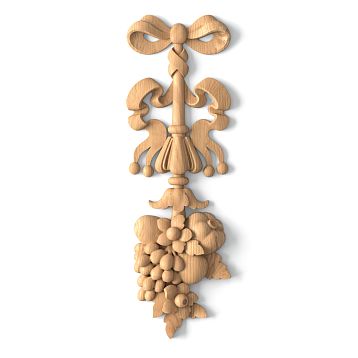
When we talk about decorative photo made of wood, we mean not just a functional item for displaying images, but a true work of art capable of becoming a central element of the interior. Carved frames, photo panels, three-dimensional compositions — all of this can turn ordinary photos into impressive art objects.
Our factory also produces:


Ecological and natural properties
In a world where ecological issues are becoming increasingly urgent, choosing natural materials is not only an aesthetic but also an ethical decision. Wooden decor created with respect for nature, from responsibly sourced wood, becomes part of conscious consumption.
Moreover, wood is a 'breathing' material that positively affects the microclimate in a room. It regulates humidity, releases beneficial phytoncides, and creates a special atmosphere of naturalness and harmony.
Get Consultation
Durability and Elegant Aging
Quality wooden items can serve for decades, sometimes even centuries. Over time, they do not lose their appeal but acquire a special patina that only adds to their character and charm.
Wooden Decorative Photo Over the years, it can become a true family heirloom, preserving not only images but also the history of generations. Imagine an antique carved frame, where photographs change, reflecting the passage of time and the transition of eras — can any modern material create such an emotional connection?
Types of Wooden Decor for Modern Interiors
The modern market offers a vast variety of wooden decorative elements — from minimalist to extravagantly adorned, from tiny accents to large items that set the tone for the entire space.
Wall Decor: More Than Just Decoration
Walls occupy a large portion of the visual space in any room, so their decoration plays a key role in creating an atmosphere. Wooden wall decor can be presented in various forms:
- Panels and paintings — carved or inlaid compositions that become the focal point in the interior.
- Wooden clocks - a functional element that can become a true work of art.
- Shelves and consoles - not only practical storage items, but also decorative accents.
- Wooden masks and sculptures - ethnic elements that add character and exoticism.
Photo and picture frames occupy a special place. They not only frame images but also emphasize their significance, create context, and enhance emotional impact. A carved wooden frame can turn even a simple photo into a work of art.
Decorative elements for tables and shelves
Small wooden items can enliven any horizontal surface:
- Boxes and trinket containers - practical and beautiful items for storing small things.
- Candlesticks - create an atmosphere of coziness and romance.
- Figurines and statuettes - reflect the interests and tastes of the home's owners.
- Decorative vases - can be used with flowers or on their own.
Functional decor: beauty in details
Some items combine practical function and decorative value:
- Wooden key holders - a necessary item that can become an accent in the entryway.
- Book stands - protect books and decorate the library.
- Decorative baskets - help organize space and add coziness.
- Wooden trays - functional items that can become the focal point of a composition on a table or console.
Photo decor: the art of framing memories
Photos are not just images; they are frozen moments of our lives, our memories and emotions. And how we present them in the interior has great significance. Wooden frames and other photo decoration elements can completely change the perception of the image, emphasize its importance, and create the desired mood.
Classic frames: eternal elegance
Traditional wooden frames never go out of style. They can be simple and minimalist or richly adorned with carving and gilding. The choice depends on the interior style and the nature of the photograph.
For family portraits, classic frames with carved elements are often chosen, emphasizing the importance and solemnity of the moment. For landscape and nature photos, frames made of untreated wood are suitable, preserving the natural beauty of the material.
Collages and compositions: a story in pictures
Compositions of multiple photos in wooden frames allow creating a visual story, showing the development of events or simply collecting important moments together. Such collages can be organized chronologically, thematically, or simply by aesthetic principles.
An interesting approach - combining frames of different sizes and styles, united by a common material or color palette. This creates a dynamic, lively composition that attracts attention and encourages viewing each photo closely.
Three-dimensional structures: a new perspective on photo decor
Modern wood processing technologies allow creating complex three-dimensional structures for displaying photos. These can be multi-level panels, three-dimensional frames with niches and shelves, wooden 'trees' with photo frames instead of leaves.
Such unusual solutions become not just a way to display photos, but independent art objects that can become a central element of the interior.
Choosing wood: the character and soul of the future item
Choosing the type of wood for decorative elements is not only an aesthetic but also a practical question. Different types of wood have different characteristics that affect the appearance, durability, and cost of the item.
Exotic hardwoods
Oak, walnut, ash, maple — these species are distinguished by high strength, beautiful texture, and durability. Items made from them are more expensive but last for decades, acquiring an even more noble appearance over time.
Oak, with its expressive texture and warm golden hue, is ideal for classic interiors. Walnut, with its deep dark color, creates a sense of luxury and elegance. Maple, with its light wood and delicate grain, fits well into modern minimalist spaces.
Exotic species: special charm
Teak, wenge, padauk, ebony — these and other exotic species attract with their unusual color and texture. They are often used to create unique, exclusive decorative items.
Teak, with its golden-brown hue and high natural oil content, is resistant to moisture and ideal for bathroom decor. Wenge, with its nearly black color and contrasting veins, creates a dramatic effect in interiors. Padauk, with its rich reddish-brown palette and complex grain, adds luxury and exoticism.
Soft species: accessibility and ease of processing
Spruce, fir, linden — these species are easier to process and more affordable. They are well-suited for creating rustic, countryside-style items or for items intended to be painted.
Spruce, with its clearly visible annual ring pattern and resin pockets, evokes a sense of naturalness and closeness to nature. Linden, with its uniform structure and soft light tone, is ideal for carved items with fine details.
Woodworking techniques: from tradition to modernity
Methods of wood processing for creating decorative elements are diverse and allow for the production of items with completely different characteristics and styles.
Carving: an art tested by centuries
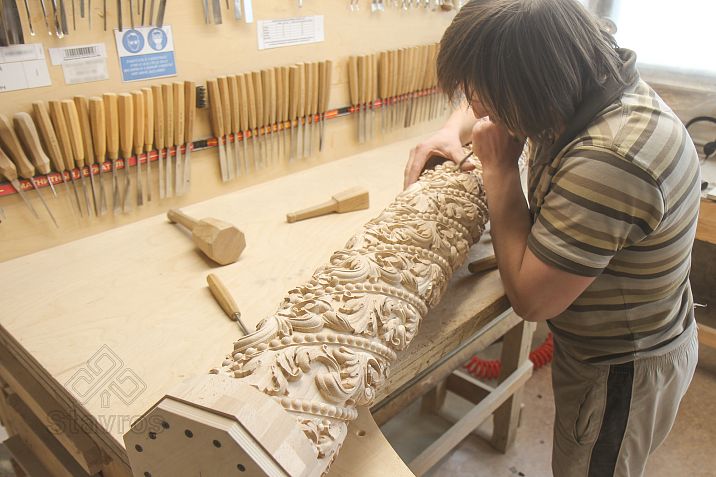
Wood carving is one of the oldest techniques of decorative-applied art. It can be flat relief, where the pattern slightly protrudes from the surface, or deep, three-dimensional, creating complex compositions.
Traditional floral ornaments, geometric patterns, narrative compositions — all of this can be embodied in wood carving. Carving on photo frames is especially effective, as it creates an ornate, refined frame for the image.
Turning: harmony of form
Turning allows for the creation of perfectly symmetrical, smooth forms. This technique is used for making candlesticks, vases, decorative columns, and other items with a round cross-section.
Turning elements are often combined with carving, allowing for the creation of items with rich texture and complex form.
Inlay and marquetry: play of contrasts
Inlay is a technique where elements made from other materials — other wood species, mother-of-pearl, metal, stone — are inserted into the main material. Marquetry is a type of inlay, where the pattern is created using thin veneer strips of different wood species.
These techniques allow for the creation of refined, detailed images, which look especially effective on boxes, panels, and decorative frames.
Modern technologies: new possibilities
Laser cutting and engraving, CNC milling, 3D printing with wooden composites — modern technologies expand the possibilities of working with wood, allowing for the creation of complex, precise shapes and patterns.
These technologies make accessible items that were previously only possible to create by hand with highly skilled masters, and open new horizons for designers and decorators.
Styles of wooden decor: from classic to avant-garde
Wooden decor can fit into almost any interior style, as long as the shape, finish, and wood species are chosen appropriately.
Classic style: eternal elegance
In a classic interior, items made from noble wood species with carving, gilding, or patina are appropriate. These may include richly decorated photo and picture frames, decorative panels, carved consoles.
The color palette usually includes dark, saturated tones: mahogany, walnut, dark oak. The forms are symmetrical, proportional, and rich in classical decorative elements: acanthus leaves, volutes, rosettes.
Scandinavian style: simplicity and naturalness
Light wood species with minimal processing are characteristic of the Scandinavian style. Items have simple, minimalist forms, often preserving the natural texture and color of the wood.
In such an interior, simple frames made of light wood, minimalist shelves, and decorative elements with geometric patterns look great.
Rustic style: closeness to nature
Such decor brings a sense of closeness to nature, naturalness, authenticity.
Ethnic style: exoticism and uniqueness
Ethnic motifs in wooden decor — this is an opportunity to bring a piece of another culture into the interior. African masks, Indian carved panels, Japanese miniature gardens — all of this can become a striking accent in a modern space.
Ethnic motifs in wooden decor offer the opportunity to bring a piece of another culture into the interior. African masks, Indian carved panels, Japanese miniature gardens — all of this can become a striking accent in a modern space.
The ethnic style is characterized by the use of exotic wood species, handcrafted items, traditional ornaments, and processing techniques.
Modern style: innovations and experiments
Modern wooden decor can be the most diverse: from minimalist geometric forms to complex abstract compositions. Often, combinations of wood with other materials — metal, glass, concrete — are used.
An interesting trend — using 'salvaged' wood: old beams, boards from dismantled buildings, driftwood washed ashore. Such items carry history, character, and uniqueness.
Creating wooden decor yourself: from idea to realization
Creating wooden decor can become an engaging hobby that not only decorates your home but also brings satisfaction from the creative process and working with natural materials.
Basic tools and materials
To start working with wood, no complex equipment is required. Basic tools:
- Saws of different types (hand saw, jigsaw, circular saw)
- Sandpaper of various grits
- Chisels and gouges
- Hammer and mallet
- Wood glue
- Protective coatings (varnish, oil, wax)
Regarding materials, it is better to start with accessible and easy-to-process species: pine, linden, birch. As your skill grows, you can move on to harder and more demanding species.
Simple projects for beginners
If you are just starting to work with wood, it is advisable to choose simple projects that will help you master basic techniques:
- Simple photo frames — rectangular frames made from planks joined at 45-degree angles.
- Candle holders from tree stumps — simply drill a hole for the candle into an attractive tree stump.
- Wall shelves — a functional element that can also serve as a decorative accent.
- Decorative stands — for hot items, cups, phones.
Advanced techniques and projects
With experience, you can move on to more complex projects:
- Carved frames and panels — require skills in working with gouges and chisels.
- Inlaid boxes — a combination of carpentry skills and decorative techniques.
- Three-dimensional sculptures — working with form, volume, texture.
- Combined items — combining wood with other materials: metal, glass, leather.
Final finishing: revealing the beauty of wood
Proper final finishing can completely transform a wooden item, highlight the beauty of its texture, and protect against damage and moisture:
- Sanding — a gradual transition from coarse to fine sandpaper to achieve a smooth surface.
- Waxing — changing the color of wood without hiding its texture.
- Lacquering — creating a protective layer with varying degrees of gloss.
- Waxing and oiling — natural protection methods that highlight the natural beauty of wood.
Professional wooden decor: when to consult masters
Although many decorative elements can be made by hand, some projects require a professional approach, specialized tools, and years of experience.
Complex carved work
Fine, detailed wood carving is an art that requires not only technical skill but also artistic vision. Professional carvers can create true masterpieces: from elegant floral ornaments to complex narrative compositions.
Restoration of antique items
Restoring antique wooden items is a specialized field requiring knowledge of historical techniques, materials, and styles. Professional restorers can bring back to life old frames, boxes, and panels, preserving their historical value and authenticity.
Large-scale projects
If you plan to extensively decorate your interior with wooden elements — for example, creating carved wall panels, decorative columns, or complex ceiling structures — it is better to consult professionals who have experience working with large volumes and complex constructions.
Custom design and manufacturing
Professional craftsmen can create unique items according to your design or develop a design specifically for your interior. This allows you to obtain truly exclusive pieces that will perfectly fit your space and reflect your individuality.
Care for wooden decor: preserving beauty for years
Wooden decorative elements can serve for decades, but this requires proper care, which depends on the type of item, wood species, and final finish.
Regular cleaning
Wooden items should be regularly cleaned of dust with a soft dry cloth. For more thorough cleaning, a slightly damp cloth can be used, but the surface must be wiped dry afterward.
Avoid aggressive cleaning agents that may damage the protective coating and the wood itself. For most wooden items, simple water or specialized wood care products are sufficient.
Protection from moisture and sun
Wood is a material sensitive to changes in humidity and temperature. Wooden decor should not be placed near radiators, air conditioners, or humidifiers. Direct sunlight should also be avoided, as it may cause fading and cracking.
In rooms with high humidity (bathrooms, kitchens), it is better to use items made from moisture-resistant species (teak, iroko) or with a reliable protective coating.
Updating the protective coating
Over time, the protective coating on wooden items may wear down or dull. Depending on the type of coating, it can be renewed:
- Lacquer — usually requires complete removal of the old layer and application of a new one.
- Oil — it is sufficient to clean the surface and apply a new layer over the old one.
- Wax - can be renewed by applying a new layer after lightly cleaning the surface.
Damage Restoration
Minor damage to wooden items can often be repaired yourself:
- Scratches - can be masked with special pencils or wax crayons of the appropriate color.
- Dents - sometimes can be "pushed out" using a damp cloth and an iron.
- Broken pieces - can be glued back in place using wood glue.
For serious damage, it is better to consult professional restorers, especially if the item is valuable or antique.
Conclusion: wooden decor as an expression of individuality
Wooden decorative elements are not just interior items; they are a way to express your individuality, create a space that reflects your character, tastes, and values. Decorative Photo Wood and other elements can tell the story of your home, preserve memories of important moments, and create an atmosphere where you will feel comfortable and cozy.
In a world of mass production and fast fashion, wooden decor becomes an island of authenticity, a connection to traditions, nature, and the craftsmanship of human hands. This is the choice of those who value quality over quantity, uniqueness over standardization, and naturalness over artificiality.
Whether it's an antique carved frame holding family photos, a modern wooden sculpture by a young designer, or a simple candlestick made by hand - every wooden item carries the warmth and energy of living material transformed by human talent and craftsmanship.
And perhaps, it is precisely in this that lies the secret of the enduring popularity of wooden decor - its ability to create not just beautiful, but truly alive, animated interiors, where one wants to live, create, and dream.