Article Contents:
- Evolution of Decorative Art: From Antiquity to the Present
- Psychology of perception of decorative elements
- Material Science: Choosing the Foundation for Creativity
- Classification of Decorative Elements by Functional Purpose
- Architectural elements
- Furniture Decorative Elements
- Decorative elements for walls
- Ceiling Decorative Elements
- Trim Elements
- Stylistic Directions in Decorative Art
- Classical styles
- National Styles
- Modern styles
- Manufacturing Technologies: From Hand Carving to Digital Production
- Principles of Composition and Placement
- Integration with modern technologies
- Economic Aspects of Using Decorative Elements
- Conclusion: STAVROS — Workshop of Beauty and Perfection
- Frequently Asked Questions about Decorative Elements
- Conclusion: STAVROS — The Embodiment of Craftsmanship in Every Detail

What distinguishes a magnificent palace from an ordinary building? Why do some interiors inspire awe and a desire to admire every detail, while others leave us indifferent? The secret lies in the details — in those verydecorative elementsthat transform a simple space into a true symphony of beauty and elegance.
Decor is the language in which space speaks. It is a means of expressing individuality, status, taste, and understanding of beauty. In a world where mass production blurs the boundaries between unique and commonplace, decorative elements become the last bastion of true beauty and craftsmanship.
Imagine a room without a single decorative accent — bare walls, simple furniture, no artistic details whatsoever. Now, mentally add an elegant cornice under the ceiling, graceful moldings on the walls, carved appliqués on furniture. Do you feel how the space comes alive, filled with character and nobility?
This is the magic of decorative elements — they can transform the most ordinary interior, give it individuality, and create an atmosphere that will delight the eyes and soul for years to come. But how to choose the right elements? Which materials to prefer? And most importantly — how to harmoniously integrate them into modern space, without turning the house into a museum exhibit?


Evolution of Decorative Art: From Antiquity to the Present
The history of decorative elements spans millennia and is closely intertwined with the development of human civilization. Each era has left its unique mark on the art of decorating space, creating a rich heritage of forms, motifs, and stylistic solutions.
Ancient Egypt gifted the world with majestic columns topped with lotus and papyrus capitals, complex hieroglyphic ornaments, symbolic depictions of gods and pharaohs. Egyptian artisans were the first to understand that architectural elements could carry not only functional but also symbolic loads, telling stories and conveying sacred knowledge.
Ancient Greece systematized architectural orders, creating canonical forms that remain the standard of harmony and proportion to this day. Doric, Ionic, and Corinthian columns, pediments with relief compositions, meanders, and palmettes — all these elements became the foundation of classical decorative language.Capitalwhich became a true work of art, demonstrating the skill of carvers and their understanding of beauty.
The Roman Empire developed Greek traditions, adding practicality and monumentality. Romans perfected construction technologies, enabling the creation of more complex and grandiose decorative compositions. Arches, domes, coffers, relief panels — Roman heritage continues to inspire architects and designers.
Byzantium introduced Eastern opulence and religious symbolism into decorative art. Mosaics, carved iconostases, intricate ornaments with floral and geometric motifs created a new style, blending ancient traditions with Christian aesthetics.
The Gothic era revolutionized the approach to decorating space. Vertical lines reaching upward, intricate stone carvings, rose windows, chimerae, and gargoyles created a completely new visual language. Gothic masters proved that decorative elements could be not only beautiful but also functional, such as gargoyles serving as water spouts in the form of fantastical creatures.
The Renaissance revived interest in ancient forms, but reinterpreted them according to new aesthetic ideals. Italian Renaissance masters created magnificent palaces and churches, where every decorative element served as part of a grand artistic concept.
Baroque and Rococo pushed the art of decoration to unprecedented heights of opulence and refinement. Gilded carving, complex stucco compositions, play of light and shadow, dynamic forms — these styles demonstrated that decoration could be a standalone art form.
Neoclassicism restored strictness and noble restraint, creating decorative art samples that remain relevant today. Empire and Napoleon styles added grandeur and pomp, using decorative elements to express ideas of greatness and power.
Modernism radically changed approaches to decoration, drawing inspiration from natural forms. Curved lines, floral ornaments, asymmetry, and dynamism created a new decorative language that liberated art from academic canons.




Psychology of Perception of Decorative Elements
Why do decorative elements have such a powerful effect on our perception of space? The answer lies in the peculiarities of the human psyche and the mechanisms of beauty perception, shaped over millennia of evolution.
The human brain is structured to constantly seek patterns, symmetry, and harmonious proportions. Decorative elements satisfy this need, creating visual order and predictability. The rhythmic repetition of moldings, symmetrical compositions, mathematically precise proportions of classical orders — all this activates pleasure centers in the brain.
The color impact of decorative elements is equally important. Warm tones of natural wood create a sense of coziness and safety, while cool tones of stone and metal add strictness and respectability. The play of light and shadow on relief surfaces creates dynamism and liveliness, preventing the eye from becoming bored.
Tactile sensations also play an important role in perceiving decor. Even if we do not touch decorative elements, the brain automatically "reads" their texture, imagining how they would feel to the touch. Smooth surfaces are perceived as modern and technological, while textured surfaces are perceived as traditional and handcrafted.
The symbolic meaning of decorative elements affects us on a subconscious level. Columns are associated with strength and stability, arches with movement and transition, rosettes with the sun and life energy. These archetypal images are rooted in the collective unconscious and influence our perception regardless of cultural context.
Scaling decorative elements creates illusions of space change. Large elements visually reduce a room but add significance and grandeur. Small details create a sense of elegance and refinement, but may disappear in large spaces.
The contrast between decorated and neutral surfaces creates visual hierarchy, directing the viewer's attention and forming perception routes. Skilled use of this principle allows controlling attention and creating memorable interiors.
Our factory also produces:


Material Science: Choosing the Foundation for Creativity
Choosing a material for manufacturing decorative elements is not only a technical but also a creative question. Each material has unique properties that determine not only the appearance of the finished product but also its performance characteristics, durability, and cost.
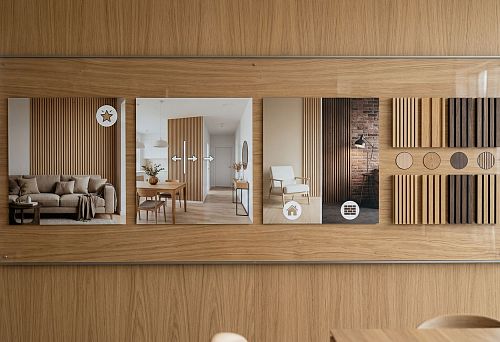
Natural wood remains one of the most popular materials for creating decorative elements.Wooden itemsThey possess unique warmth and lively energy that cannot be imitated by artificial materials. Each wood species has its own character: oak — powerful and noble, linden — delicate and easy to carve, pine — democratic and versatile.
The advantages of wooden decorative elements are obvious: eco-friendliness, possibility of fine detailing, ease of processing, repairability. An experienced carver can create true masterpieces from wood, where every leaf and swirl is worked with jewel-like precision.Door DecorationMade from natural wood, it can turn an ordinary interior door into a work of art.
Gypsum is a classic material for creating sculptural decorative elements. Its plasticity in the working state allows obtaining items of any complexity with the finest details. Gypsum molding creates an atmosphere of palace luxury and historical authenticity. However, gypsum has drawbacks: brittleness, fear of moisture, significant weight, and complex installation.
Polyurethane — the material of the 21st century, combining the beauty of traditional materials with the advantages of modern technologies.MoldingsMade from polyurethane is indistinguishable visually from gypsum, but surpasses it in all performance characteristics. Lightness, moisture resistance, ease of installation, durability — these qualities make polyurethane an ideal material for modern construction.
Metal in decorative elements is used to create accents and contrasts. Wrought iron elements, bronze inlays, steel inserts add industrial notes or historical character to interiors. Metallic elements are especially effective when combined with other materials — wood, stone, glass.
Natural stone is a material for creating truly monumental decorative elements. Marble columns, granite pilasters, travertine panels create a sense of eternity and immutability. However, using stone requires serious structural solutions due to the material's great weight.
Ceramics and porcelain allow creating elegant decorative details with unique properties. Colored glaze, painting, relief texture — ceramic elements can become striking accents in a neutral interior.
Modern composite materials open new possibilities for creating decorative elements. Glass-fiber, carbon-fiber, various polymer compositions allow obtaining items with specified properties — ultra-light or ultra-strong, transparent or luminous.
Get Consultation
Classification of decorative elements by functional purpose
The world of decorative elements is incredibly diverse, and to understand all possible applications, a clear classification is necessary. Each type of element has its own purpose and specific usage in interiors.
Architectural elements
Architectural decorative elements form the structural basis of interiors and define their style. These include columns,pilasters, arches, vaults, cornices. These elements not only decorate space but also visually organize it, creating rhythm and proportions.
Columns and pilasters serve as vertical accents, visually increasing the height of a room. They can be either load-bearing structural elements or purely decorative. The choice of order — Doric, Ionic, or Corinthian — determines the overall character of the interior.
Arches and vaults create smooth transitions between spaces, adding dynamism and picturesque quality to interiors. Semi-circular, pointed, multi-leaf arches allow creating interiors in various historical styles.
Cornices complete wall compositions and create a transition to the ceiling.Wooden baseboardIt performs a similar function at the lower part of the wall, concealing the junction between the wall and floor and giving the interior a sense of completeness.
Furniture decorative elements
decor for furnitureThey transform ordinary interior items into works of art. Carved inlays, panels, moldings, handles can radically change the appearance of furniture.
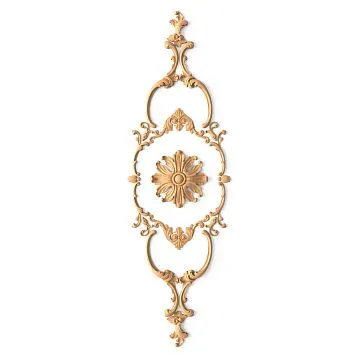
Overlay elements allow updating old furniture or adding individuality to new pieces. Receptacles, corner elements, central medallions create complex compositions on furniture surfaces, drawing attention and highlighting the craftsman's skill.
Profile elements — various types of moldings and picture frames — are used to frame flat surfaces, create framed compositions, and conceal joints between different materials. Properly selected profiles can visually alter the proportions of furniture.
Wall decorative elements
Wall decor includes panels, moldings, receptacles, medallions, and friezes. These elements allow creating complex compositions on walls that imitate classical architecture or modern design solutions.
Wall panels divide the wall surface into separate sections, creating rhythm and proportions. They can be simple rectangles or have complex configurations with arched, circular, or oval elements.
Moldings are used to create framed compositions, frame door and window openings, and divide walls into tiers. Different molding profiles allow creating effects of depth and volume on flat surfaces.
Ceiling decorative elements
Ceiling decor includes cornices, coffered ceilings, receptacles, and beams. These elements not only decorate the ceiling but can also conceal engineering utilities and improve room acoustics.
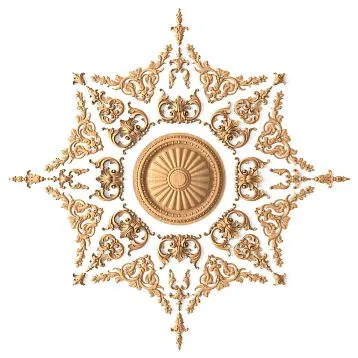
Ceiling receptacles are traditionally placed in the center of the ceiling and serve to mount chandeliers. Modern receptacles can be not only round but also square, oval, or have a complex multi-tiered structure.
Coffered ceilings — recesses in the ceiling with regular geometric shapes — create a sense of volume and grandeur. Coffered ceilings are especially effective in rooms with high ceilings.
Trim elements
This category includesWooden casings create a frame around the opening, visually highlighting it from the wall plane. A classic casing has a profiled section that corresponds to the profiles of baseboards and moldings., window and door trim, baseboards, picture frames. Their main function is to create neat transitions between different surfaces and materials.
Baseboards not only conceal mounting gaps but also serve as important decorative elements. Carved baseboards in Russian style can give a modern interior an ethnic character.
Frames for paintingsThey perform a dual function — protecting artworks and emphasizing their significance. The choice of frame affects how a painting is perceived and integrated into the interior.
Stylistic directions in decorative art
Each historical style created its own unique decorative language, and understanding these features is necessary to create stylistically cohesive interiors. Moderndecorative elementsallow recreating the atmosphere of any era.
Classic styles
Neoclassicism in decorative arts is characterized by strict proportions, symmetry, and use of classical motifs. Fluted columns, triangular pediments, meanders, and palmettes are key elements of classical decor.Classic FurnitureIt requires appropriate decorative treatment of the space.
Empire added symbols of greatness and power — eagles, laurel wreaths, military insignia — to classical forms. Gilding, rich drapery, massive forms create an atmosphere of imperial luxury.
Baroque impresses with the opulence and dynamism of its decor. Curved lines, abundance of carving, gilding, and play of light and shadow — all this creates a sense of movement and theatricality. Baroque decorative elements require large spaces and high ceilings.
Rococo brought elegance and refinement. Asymmetric compositions, shells, scrolls, floral garlands create an intimate, chamber-like atmosphere. Pastel colors, gilding on white backgrounds, delicate carving — characteristic features of the style.
National styles
Russian style in decorative elements is characterized by rich carving, use of plant motifs, and bright colors. House carving, iconostases, carved furniture — all this creates an atmosphere of a Russian estate or merchant's house.
Scandinavian style prefers simplicity of forms, light colors, and functionality. Decorative elements are minimal but carefully thought out. Natural materials, clean lines, absence of excessive ornamentation.
Eastern styles — Japanese, Chinese, Arabic — use specific decorative motifs and color combinations. Chinese characters, dragons, plant ornaments, geometric patterns create an exotic atmosphere.
Modern Styles
Modernism revolutionized decorative arts, abandoning historical stylization in favor of natural forms. Curved lines, plant motifs, asymmetry, new materials — all this created a fundamentally new decorative language.
Art Deco combined luxury with geometric forms, creating a style symbolizing the jazz era and technological progress. Zigzags, sun rays, stylized animals and plants, contrasting color combinations.
Minimalism took the idea 'less is more' to its logical conclusion. Decorative elements are reduced to a minimum; their beauty lies in perfect proportions and quality of execution.
Manufacturing technologies: from hand carving to digital production
Modern production of decorative elements combines traditional craftsmanship techniques with the latest technologies, enabling the creation of high-quality items at a reasonable cost.
Hand carving remains the pinnacle of skill in manufacturing decorative elements. An experienced carver can create a unique piece where every detail bears the imprint of individual craftsmanship. Hand carving is indispensable for producing exclusive items, restoring historical landmarks, and creating original works.
The hand carving process begins with creating a sketch and preparing the material. The rough piece of selected wood undergoes preliminary processing — drying, planing, and marking. Then the craftsman sequentially removes excess material, gradually approaching the final shape.
A carver's tools include various chisels, knives, rasps, and grinding devices. Each tool has its specific purpose and requires corresponding skills for use. An experienced craftsman can work with dozens of different tools, selecting the optimal one for each operation.
Mechanized production methods allow creating decorative elements in series while maintaining high quality. CNC milling machines can cut the most complex profiles with precision down to tenths of a millimeter.
Turning is used for manufacturing rotating elements — balusters, columns, vases. Modern turning machines allow creating items of any complexity with perfect dimensional repeatability.
Laser cutting opens new possibilities in creating intricate decorative elements. A thin laser beam can cut the finest details without risking damage to the material. Laser cutting is especially effective for creating complex ornaments and inscriptions.
3D printing is beginning to gain ground in the production of decorative elements. Modern 3D printers can work with various materials — plastics, metals, ceramics. Layer-by-layer synthesis technology allows creating items of any complexity without limitations associated with traditional processing methods.
Combined technologies combine the advantages of various production methods. The basic shape can be created mechanically, while decorative details can be refined by hand or laser. This approach ensures an optimal balance of quality, uniqueness, and cost.
Principles of Composition and Placement
Creating a harmonious interior using decorative elements requires understanding the basic principles of composition. Incorrect placement or disproportions can ruin even the most quality and beautiful elements.
The principle of scale is one of the fundamental principles in placing decorative elements. The size of the decor should correspond to the size of the room and furniture. Small elements will disappear in a large space, while large ones will appear intrusive in a small room.
The golden ratio is a mathematical proportion perceived by the human eye as the most harmonious. Placing decorative elements according to this proportion creates a sense of natural beauty and balance.
Rhythm in placing decorative elements creates dynamics and unifies different parts of the interior into a cohesive whole. Uniform repetition of elements creates a calm rhythm, while acceleration or slowing down — dynamic.
Symmetry and asymmetry are two opposing principles of space organization. Symmetrical compositions create a sense of stability and solemnity, while asymmetrical compositions — dynamics and modernity.
Dominance — the main element of composition that first attracts attention. In an interior, dominance may be a fireplace with a decorative archway, an eye-catching ceiling rose with a chandelier, or a decorated wall.
The visual weight of elements affects the perception of balance in the interior. Dark, heavy, textured elements appear heavier than light, smooth, or delicate ones. Proper distribution of visual weight creates a sense of equilibrium.
The color harmony of decorative elements should match the overall color concept of the interior. Elements may be executed in tones matching the main finish or contrast with it, but they must always harmoniously fit into the color palette.
Integration with modern technologies
Modern technologies open new possibilities for using decorative elements in interior design. Integration of lighting, "smart home" systems, and multimedia solutions transforms traditional decor into functional elements.
Hidden lighting in decorative elements creates striking light compositions. LED strips built into moldings or cornices provide soft ambient lighting. Spotlights integrated into ceiling roses or wall panels create accent lighting.
Climate control systems can be seamlessly integrated into decorative elements. Air ducts of air conditioners are concealed behind decorative panels, and ventilation grilles are styled as historical ornaments.
Multimedia systems require special solutions for equipment placement and wiring. Decorative elements can conceal cables, speakers, projectors, making them invisible in the interior.
Security systems — video cameras, motion sensors, alarms — can be integrated into decorative elements, preserving the interior's aesthetics.
"Smart" materials open prospects for creating interactive decorative elements. Changing color, transparency, or shape depending on external conditions or user commands — all of this becomes possible.
Economic Aspects of Using Decorative Elements
Investing in quality decorative elements is not merely spending money on beauty, but a wise investment that pays off many times over. A properly chosen decor increases property value, creates a comfortable environment for living and working, and highlights the owner's status.
The cost of decorative elements depends on the material, manufacturing complexity, order volume, and manufacturer's reputation. Handmade items cost more than mass-produced ones, but they possess uniqueness and exclusivity.
Savings on decorative elements often result in higher costs in the future. Cheap items made from low-quality materials quickly lose their appearance, requiring frequent replacement or repair.
A comprehensive approach to interior decoration allows optimizing expenses. Ordering all elements from one manufacturer enables discounts and guarantees stylistic unity.
Phased decoration is a sensible strategy for large projects. Starting with basic elements, one can gradually add details, spreading expenses over time.
Universal elements that suit various styles are a more cost-effective investment compared to strictly styled items. When changing the interior concept, they do not need to be replaced.
Care and maintenance of decorative elements
Proper care of decorative elements extends their service life and preserves their original beauty. Different materials require specific maintenance approaches.
Wooden elements require regular dust cleaning and periodic renewal of protective coating. Air humidity should be maintained within optimal limits to prevent wood deformation.
Gypsum items require careful handling due to the fragility of the material. Cleaning is done with soft brushes, and restoration of damaged areas is performed with special compounds.
Polyurethane appliquésMost simple to maintain. They are not afraid of moisture, easily cleaned with regular cleaning agents, and do not require special care.
Metallic elements require protection against corrosion. Regular treatment with protective compounds, timely removal of rust spots, and polishing are the main maintenance measures.
Preventive inspections allow problems to be identified at an early stage. Loosening of fasteners, appearance of cracks, color changes — all of this requires immediate attention.
Professional restoration may be required after several years of use. Experienced craftsmen are able to restore even severely damaged elements, returning them to their original appearance.
Frequently Asked Questions about decorative elements
Can decorative elements be used in small rooms?
Yes, but with certain limitations. In small rooms, use elements of appropriate scale — thin moldings, small rosettes, elegant appliqués. Avoid bulky elements that visually reduce space. Light colors and simple shapes are preferable to dark and complex ones.
How to combine decorative elements made of different materials?
The main rule — maintaining stylistic unity. Wooden and polyurethane elements can be successfully combined if they are made in the same style and color palette. Contrasting combinations — wood with metal, stone with glass — require a professional design approach.
Which decorative elements are suitable for humid rooms?
For bathrooms, kitchens, and pools, polyurethane items are best suited as they are not afraid of moisture. Natural stone is also moisture-resistant but requires special treatment of joints. Wooden elements are possible only if properly treated with moisture-resistant coating.
How long does it take to manufacture custom decorative elements?
Manufacturing time depends on the complexity of the items and production load. Simple polyurethane elements may be ready in 1-2 weeks, complex carved wooden items — in 1-2 months. Exclusive handmade elements may take up to half a year.
Can decorative elements be installed by oneself?
Simple elements — moldings, appliqués, small rosettes — can be installed by oneself if one has basic skills in using tools. Large and heavy elements are better left to professionals. Incorrect installation may result in damage to the elements or the base.
How to determine the quality of decorative elements?
Pay attention to the clarity of relief, absence of chips and cracks, uniform color, quality of joints. Serious manufacturers have quality certificates and warranty obligations. Company reputation and customer reviews are important indicators of product quality.
Is special permission required for using decorative elements?
In most cases, special permits are not required. Exceptions are cases of major facade changes in historical zones or work on architectural monuments. In such cases, coordination with cultural heritage protection authorities is required.
Conclusion: STAVROS — embodiment of craftsmanship in every detail
In a world where standardization and mass production blur the boundaries of individuality, the company STAVROS remains true to the principles of authentic craftsmanship and impeccable quality. Our decorative elements are not just interior ornaments — they are embodiments of centuries-old artisanal traditions, adapted to modern requirements.
STAVROS combines the best achievements of traditional craftsmanship with innovative manufacturing technologies. Our masters carefully preserve the secrets of hand carving, passing them down from generation to generation, while modern equipment allows us to create items with unparalleled precision and surface quality.
Every element leaving the STAVROS production facility undergoes the strictest quality control. We use only premium materials — high-quality wood, eco-friendly polymers, safe finishing materials. Our products comply with international quality and environmental safety standards.
The STAVROS assortment includes thousands of decorative element names suitable for any style and design direction. From classic carved items to modern minimalist forms — we are able to meet the most demanding requirements of designers and architects.
Individual approach to each client — the foundation of STAVROS philosophy. Our specialists are ready to develop unique elements based on your sketches, adapt existing items to specific tasks, and propose optimal solutions for any budget.
STAVROS delivery geography covers the entire territory of Russia and CIS countries. A developed logistics network ensures fast and safe delivery of products to any point in the region. Professional packaging guarantees the preservation of items during transportation.
STAVROS service includes professional consultations, assistance in selecting elements, design project development, installation supervision, warranty and post-warranty service. Our specialists are always ready to share their experience and knowledge.
Choosing STAVROS decorative elements means investing in beauty, quality, and longevity. Our products will become a decoration of your home for many years, creating an atmosphere of elegance and highlighting your impeccable taste. Entrust the creation of beauty to professionals — choose STAVROS!