Article Contents:
- Climate Characteristics of the Region and Their Impact on Material Selection
- Humidity Regime and Temperature Fluctuations
- Choosing Wood Species for Siberian Conditions
- Production Technology in Tymen
- Innovative Woodworking Methods
- Precision Processing on Modern Equipment
- Design Trends in the Tymen Region
- Siberian Classicism in Modern Interpretation
- Modern Urban Style
- Ethno-Siberian Style
- Baluster Assortment and Classification
- Classification by Material of Manufacture
- Classification by Processing Method
- Price Categories
- Technical Requirements and Quality Standards
- Geometric parameters
- Requirements for material quality
- Process of selecting and purchasing balusters
- Defining needs
- Supplier Selection
- Quality control upon receipt
- Installation and Mounting in Siberian Conditions
- Preparatory work
- Fastening technology
- Seasonal installation specifics
- Maintenance and Care in Siberian Conditions
- Seasonal maintenance
- Protection from Dry Air
- Economic Aspects and Investment Appeal
- Cost Formation
- Long-Term Economic Efficiency
- Market development prospects
- Technological Innovations
- Ecological trends
- Individualization and customization
The Siberian oil capital has always been renowned for its unique approach to construction and architecture. Under conditions of harsh winters and hot summers Tymen balusters must meet not only aesthetic requirements but also withstand extreme climatic loads. A city where modern oil derricks coexist with historic wooden mansions dictates special requirements for the quality and durability of stair elements.
Tymen craftsmen have refined the art of working with wood for centuries, creating items capable of withstanding the whims of Siberian weather. Today, these traditions live on and evolve, embodied in modern baluster production technologies. Each stair railing element here is crafted with the understanding that it must serve not just years, but decades, preserving its original beauty and reliability.
Choosing balusters in Tymen is not just purchasing building material. It is an investment in family safety, home prestige, and creating a unique atmosphere that will delight not just one generation. In a city that values quality and solidity, every interior detail must meet the highest standards.


Climate Characteristics of the Region and Their Impact on Material Selection
The Tymen region is characterized by a sharply continental climate with long, cold winters and relatively warm summers. Temperature fluctuations from -40°C in winter to +30°C in summer create serious challenges for wooden structures. That is why selecting material for balusters in this region requires special attention to wood quality and processing technology.




Humidity Regime and Temperature Fluctuations
Relative humidity in Tymen varies from 60% in summer to 80% in winter, creating additional loads on wooden elements. Quality balusters must be made from wood with moisture content no more than 8-10%, ensuring dimensional stability even under significant environmental humidity fluctuations.
Local manufacturers pay special attention to drying technology. Chamber drying under controlled conditions allows achieving uniform moisture distribution throughout the wood volume, eliminating internal stresses that could lead to cracking of finished products.
Our factory also produces:


Choosing Wood Species for Siberian Conditions
Siberian Larch is an undisputed favorite among materials for manufacturing balusters in the Tymen region. This unique coniferous species has density comparable to hardwoods, yet retains all the advantages of coniferous wood. High resin content provides natural protection against moisture and biological damage.
Siberian Cedar is valued not only for its technical properties but also for its unique medicinal properties. Phytoncides emitted by cedar wood create a healthy microclimate in rooms. Cedar balusters are characterized by dimensional stability and a pleasant aroma that lasts for years.
Angarsk Pine is a traditional material for Siberian craftsmen. Due to harsh growing conditions, this pine has a dense structure with narrow annual rings, ensuring high strength and beautiful finish of finished products.
Get Consultation
Production Technology in Tymen
Tymen baluster manufacturers combine traditional woodworking methods with modern technologies, enabling the creation of high-quality products adapted to local operating conditions.
Innovative Wood Processing Methods
Regional modern enterprises use a multi-stage wood preparation system. The first stage includes careful raw material selection — only samples with correct grain direction and minimal defects are chosen. Then follows a stabilization process, which may include thermal treatment to enhance material biostability.
Kiln drying is performed according to specially developed modes, taking into account the characteristics of each wood species. The process is controlled by automated systems that maintain optimal temperature and humidity at each stage. This allows achieving uniform moisture content throughout the entire piece and eliminates internal stresses.
Protection with protective compositions is carried out under pressure, ensuring deep penetration of protective substances into the wood structure. Environmentally safe compositions are used, which not only protect against biological damage but also enhance the fire resistance of the material.
Precision processing on modern equipment
CNC lathes allow creating balusters of the most complex shapes with micron-level accuracy. This is especially important when manufacturing large batches of items, where each baluster must be identical to the others.
Milling centers are used to create balusters with square and rectangular cross-sections, as well as to apply decorative elements. Modern equipment allows performing complex operations — from simple profiling to creating three-dimensional carving.
Sanding machines ensure ideal surface quality. Multi-stage sanding with gradually decreasing abrasive grit allows achieving mirror-smooth finish, which is especially important for items intended for transparent finishing.
Design trends in the Tyumen region
The architectural appearance of Tyumen has been shaped by various epochs and styles. From wooden architecture of the 18th-19th centuries to modern glass skyscrapers — such diversity creates unique requirements for the design of stair elements.
Siberian Classicism in modern interpretation
This style combines the monumentality of classical forms with the practicality required in harsh Siberian conditions. Balusters in Tyumen In this style, balusters are characterized by massiveness and clarity of lines. Simple yet expressive profiles are used, emphasizing the solidity and reliability of the structure.
The color palette leans toward natural wood tones — from golden pine to dark larch. Surfaces are treated with matte finishes that highlight the natural wood texture and create a sense of warmth and coziness.
Modern urban style
The development of the oil industry brought modern architectural trends to Tyumen. Balusters in the urban style are characterized by minimalist forms and use of contrasting materials. Wood can be combined with metal, glass, or stone, creating dynamic compositions.
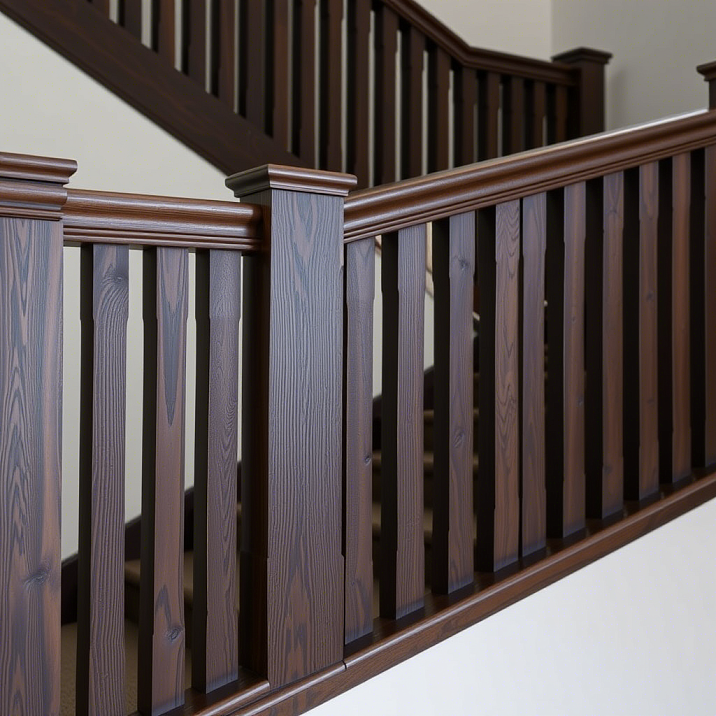
A distinctive feature of this style is the use of geometric forms — square and rectangular cross-sections, clear lines, minimal decoration. Such balusters are ideally suited for modern cottages and office buildings.
Ethno-Siberian style
The revival of interest in national traditions led to the emergence of the ethno-Siberian style in baluster design. This style reproduces motifs of traditional Siberian wooden architecture, adapting them to modern requirements.
Characteristic elements include carved ornaments with plant and geometric motifs, stylized animal images — symbols of Siberia. Balusters with bear motifs occupy a special place, becoming a distinctive regional hallmark.
Baluster assortment and classification
The Tyumen market offers a wide variety of balusters, which can be classified according to various criteria: material of manufacture, processing method, stylistic direction, and price category.
Classification by material of manufacture
Coniferous species form the basis of the assortment due to the availability of raw materials and excellent operational characteristics in local conditions. Pine balusters are the most popular choice for residential homes. They combine reasonable cost with good quality and pleasant aroma.
Larch balusters belong to the premium segment of coniferous species. Their high density and resin content ensure exceptional durability, which is especially important in Siberian climate conditions.
Deciduous species are mainly represented by local birch and aspen, as well as imported oak, ash, and beech. Birch balusters are characterized by uniform structure and are easily stained, allowing them to imitate more expensive species.
Classification by processing method
Turned balusters are manufactured on lathes and have round cross-sections with various profiles. This is the most common type, suitable for most interior styles. The variety of profiles allows selecting balusters to meet any design requirements.
Milled balusters have square, rectangular, or more complex cross-sections. They are manufactured on milling machines and may feature various decorative elements — grooves, chamfers, profiled edges.
Carved balusters are works of art. Each item is individually crafted by a master carver. Such balusters adorn the most prestigious interiors and become central elements of staircase compositions.
Price categories
Economy class includes pine and birch balusters of simple forms. The price of such items starts from 200-300 rubles per piece. Despite their affordable cost, these balusters provide necessary functionality and have an acceptable appearance.
The mid-range features balusters made of high-quality pine, larch, and birch with more complex processing. The cost is 400-800 rubles per piece. This segment offers the optimal price-to-quality ratio.
The premium class includes balusters made of valuable wood species with artistic processing. The price may reach 2000-5000 rubles per piece and more. Such items are created for exclusive projects and represent true works of art.
Technical requirements and quality standards
The production of balusters in Tyumen is regulated by strict technical requirements that take into account both general Russian standards and specific operating conditions in the region.
Geometric Parameters
The standard height of balusters is 900 mm, which corresponds to safety requirements for residential spaces. However, in Tyumen, where people often wear bulky winter clothing, the height may be increased to 950-1000 mm to ensure additional comfort.
The cross-section of balusters varies from 40×40 mm to 80×80 mm for square profiles and from 40 to 100 mm in diameter for round ones. The choice of size depends on architectural requirements, load conditions, and aesthetic preferences.
The distance between balusters should not exceed 150 mm for safety of children. In families with young children, this distance is often reduced to 120 mm.
Requirements for Material Quality
The moisture content of wood should not exceed 10% to ensure dimensional stability. In the Siberian climate, this parameter is especially critical, as significant temperature fluctuations may cause deformation at elevated moisture levels.
The wood should be free of through cracks, rot, large knots, and other critical defects. Healthy knots up to one-third the thickness of the baluster are allowed provided they are securely fastened.
The strength characteristics must ensure the ability to withstand a horizontal load of at least 100 kg/m applied to the top part of the baluster. This requirement guarantees safety when relying on the railing.
The process of selecting and purchasing balusters
Selecting balusters is a responsible process requiring consideration of multiple factors: from technical characteristics to aesthetic preferences. In Tyumen, this process has its own features related to climatic conditions and local traditions.
Defining Needs
The first step is accurately determining the number of required balusters. This requires measuring the total length of stair treads, accounting for turns and landings. The calculation is performed considering the chosen baluster spacing and their own thickness.
It is also important to determine stylistic requirements. Balusters must harmonize with the overall interior design, architectural style of the building, and surrounding environment. In Tyumen’s historic center, classical forms are appropriate, while modern districts favor more minimalist solutions.
Supplier selection
When selecting a supplier balusters in Tyumen Attention should be paid to several key factors. The company’s reputation, portfolio of completed projects, presence of modern equipment and skilled craftsmen — all of these influence the quality of the final product.
It is important to ensure that the manufacturer uses quality raw materials and follows technological processes. The presence of quality certificates and warranty obligations also indicates a serious approach to the business.
Quality control upon receipt
When receiving an order, each baluster must be carefully inspected. Geometric dimensions, surface finish quality, absence of wood defects, and damage during transportation are checked.
Special attention should be paid to the moisture content of the wood. Exceeding allowable values may lead to deformation and cracking after installation. Moisture is checked using an electronic moisture meter.
Installation and mounting in Siberian conditions
Installation of balusters in Siberian climate conditions has its own features, which must be considered to ensure the longevity of the structure.
Preparation Work
Before beginning installation, it is necessary to ensure that the staircase structure is fully prepared and has the correct geometry. All steps must be installed and leveled, and handrails must be ready for attaching balusters.
Special attention is given to acclimatizing balusters. The items must be kept in a room with a working temperature of at least 48 hours before installation. This allows the wood to adapt to operating conditions and prevents deformation after installation.
Fastening Technology
In conditions of significant temperature fluctuations, the choice of baluster mounting method is especially important. The most reliable method is mounting on metal bolts with a diameter of 8-12 mm. Such a connection ensures strength while allowing compensation for minor temperature deformations.
Adhesive joints must be made using frost-resistant compositions that retain elasticity at low temperatures. It is especially important to properly seal all joints to prevent moisture penetration.
Seasonal installation characteristics
The optimal time for installing balusters in Tyumen is late spring or early summer, when the moisture content of the wood stabilizes after the winter period. Installation in winter is possible but requires additional precautions.
During winter installation, it is necessary to maintain a constant room temperature not lower than +15°C and relative humidity of 40-60%. Sharp fluctuations in these parameters may cause deformation of newly installed balusters.
Maintenance and care in Siberian conditions
Proper care of balusters in Siberian climate conditions ensures their longevity and preservation of the original appearance for many years.
Seasonal maintenance
In spring, after the end of the heating season, it is recommended to inspect all balusters for possible damage. Special attention is paid to connection points and areas with the highest loads.
In summer, with high humidity, it is important to ensure good ventilation in the room. Stagnant humid air may lead to fungal damage, especially in hard-to-reach areas.
In autumn, before the start of the heating season, preventive treatment with protective compositions is carried out. This is especially important for balusters located near heating appliances.
Protection from dry air
In winter, when heating is in operation, the humidity in rooms may drop to 20-30%, which is critical for wooden items. It is recommended to use humidifiers to maintain optimal humidity of 40-60%.
Balusters located near radiators require special attention. Direct exposure to dry hot air may cause wood cracking. In such cases, it is recommended to install protective screens or relocate heating appliances.
Economic Aspects and Investment Attractiveness
Investing in quality balusters is a long-term investment that pays off not only through aesthetic pleasure but also through increased property value.
Formation of cost
The price of balusters in Tyumen is influenced by several factors. The main one is the cost of raw material, which depends on the type of wood and its quality. Local coniferous species are cheaper than imported deciduous ones, but they provide excellent performance characteristics under local conditions.
Processing complexity also significantly affects the price. Simple turned balusters cost 2-3 times less than hand-carved items. However, investments in complex processing are rewarded by the uniqueness and artistic value of the products.
Order volume allows for significant discounts. When ordering a complete staircase set, savings can reach 15-20% compared to purchasing individual elements.
Long-term economic efficiency
Quality balusters made from Siberian larch or cedar can last 50-100 years without losing their functional or aesthetic qualities. This makes them extremely cost-effective in the long term.
Saving on the quality of balusters may result in higher costs in the future. Cheap items made from inferior wood require replacement after 10-15 years, ultimately costing more than initial investments in quality products.
Market Development Prospects
The market for balusters in Tyumen continues to develop, adapting to changing buyer needs and adopting new production technologies.
Technological Innovations
The introduction of CNC machines allows creating balusters of the most complex shapes with high precision. This opens new possibilities for designers and enables the realization of the most daring architectural ideas.
Advancements in wood protective treatment technologies increase the durability of products and expand their application possibilities. New formulations provide protection against biological damage, improve fire resistance, and enhance aesthetic properties.
Ecological trends
Growing attention to ecological issues stimulates demand for products made from natural wood. Tyumen manufacturers actively implement waste-free production technologies and use certified wood from sustainably managed forests.
The development of ecological construction creates new opportunities for baluster manufacturers. Wooden products receive additional points in building environmental certification systems.
Individualization and customization
Modern consumers increasingly demand customized solutions. This stimulates the development of small-batch production technologies and the creation of unique items based on individual projects.
Digital design technologies allow clients to participate in creating baluster designs, view the result in 3D, and make adjustments before production begins.
Tyumen’s baluster market offers unique opportunities to create staircase railings that combine functionality, safety, and aesthetic perfection. Local manufacturers, using rich Siberian woodworking traditions and modern technologies, produce world-class quality items.
Choosing Balusters in TyumenYou invest not only in the beauty of your home, but also in the safety of your family, prestige, and longevity. Quality items made from Siberian wood will adorn your interior for many years and delight multiple generations.
Current market trends open new opportunities for creating unique staircase compositions. Combining traditional craftsmanship with innovative technologies allows realizing the most daring design ideas, creating items that become true works of art.
STAVROS understands the specifics of the Siberian climate and the requirements of Tyumen clients. Our long experience working with various wood species, modern equipment, and highly skilled craftsmen enable us to create balusters perfectly suited for harsh Siberian conditions. We use only premium wood and apply proven processing technologies ensuring maximum product longevity. Each baluster undergoes strict quality control and is tailored to specific operating conditions. Choosing STAVROS, you receive a guarantee of quality, reliability, and professional approach to every project.