











































































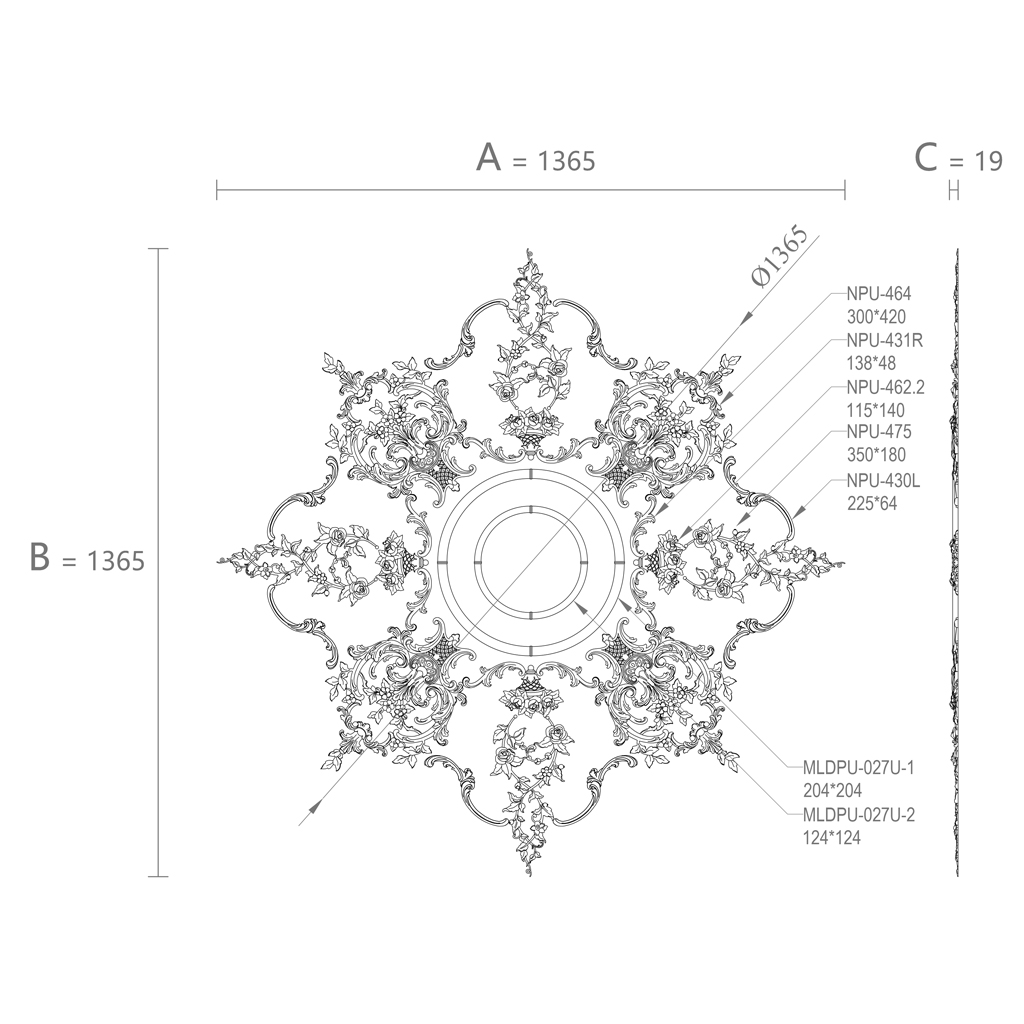
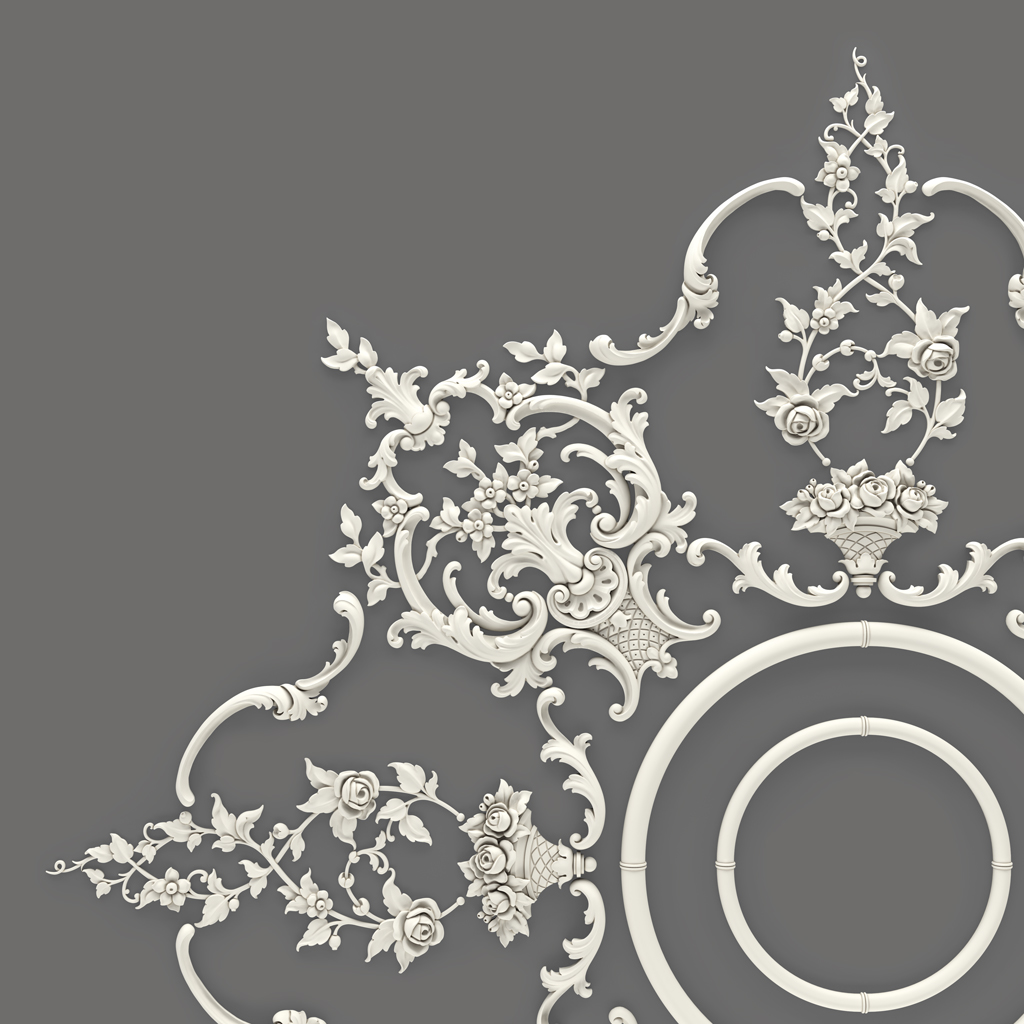

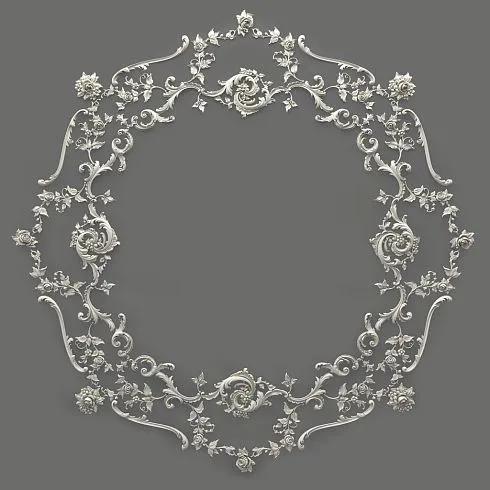
Ceiling rosette CPU-071
Dimensions and Options
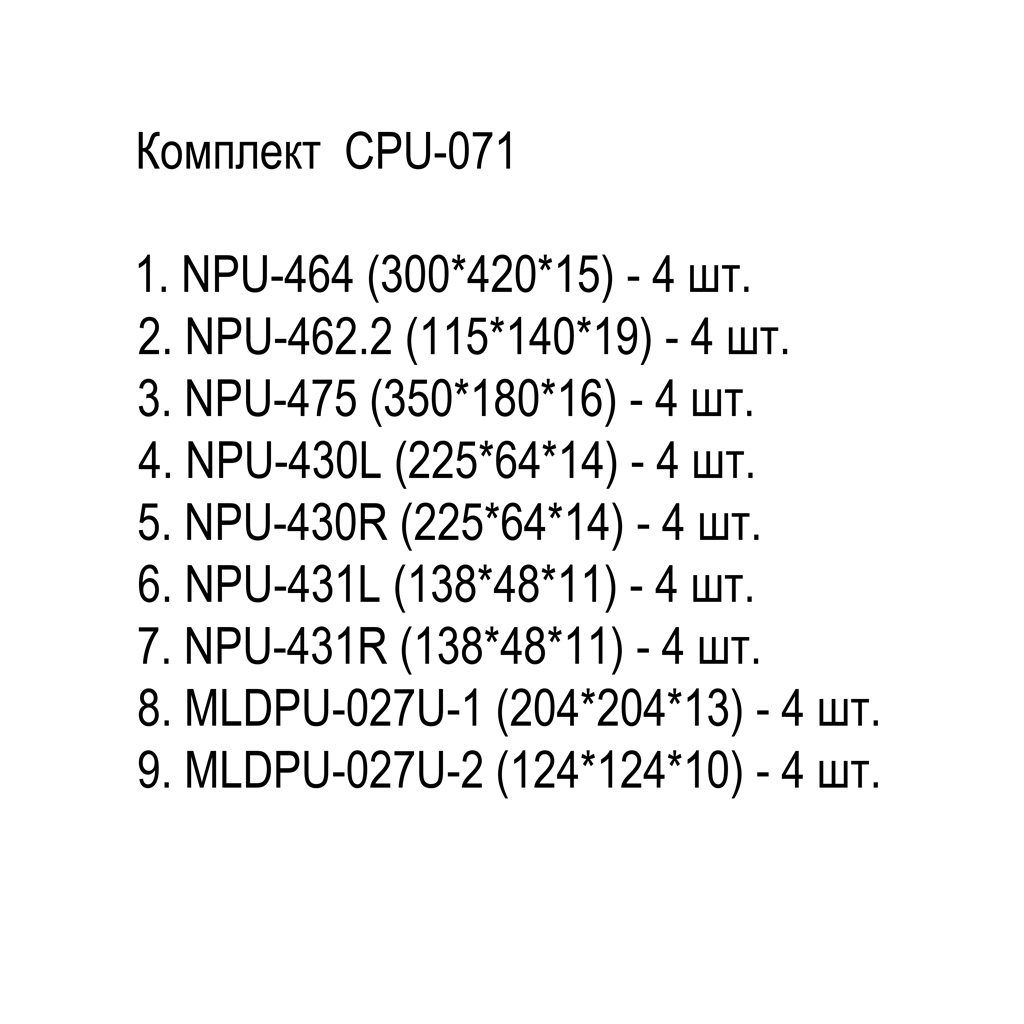
Set Composition


Have questions?
Customers also buy

Polina Sh.
February 4, 2026
Went on a tour. To say I'm delighted is an understatement. The largest production facility in Russia, impressive in its scale and dedication to the craft! It was very interesting and informative. You can immediately see - true masters of their trade! We were welcomed in the best possible way, were polite...
Elena B.
January 29, 2026
Thank you for always having a magnificent assortment and the possibility of manufacturing standard products to non-standard, individual dimensions. Special thanks to manager Oksana for her efficiency and quality of services provided.
Elena K.
January 27, 2026
The moldings are high-quality and beautiful, they were packaged very securely, I will order again, I liked everything!
More than 20 years on the market
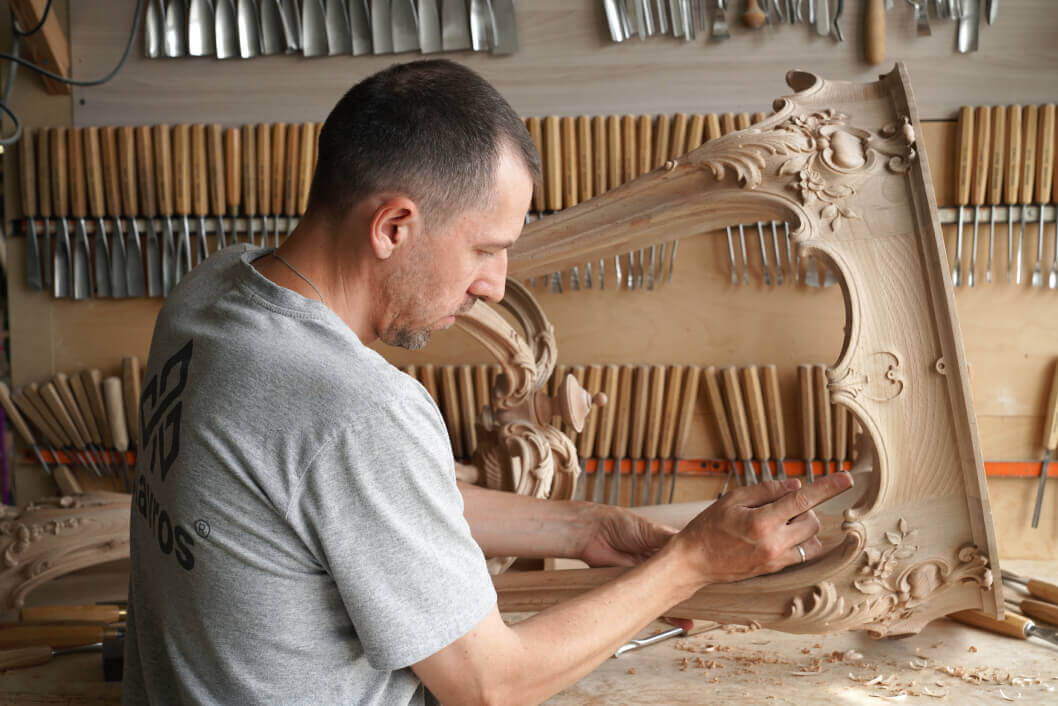
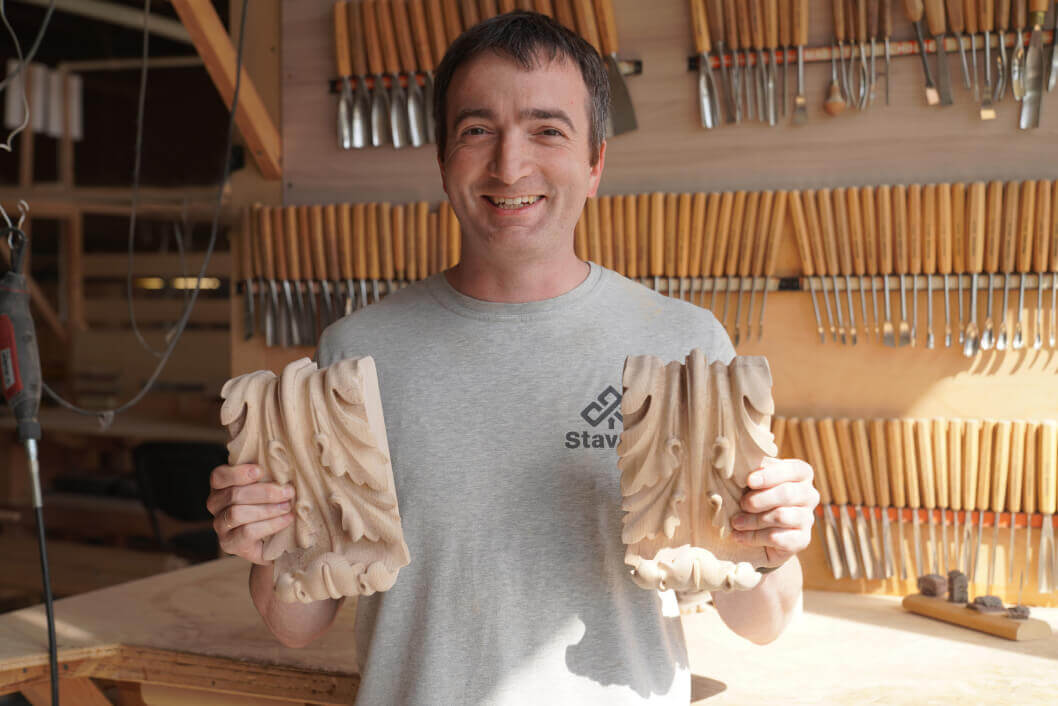
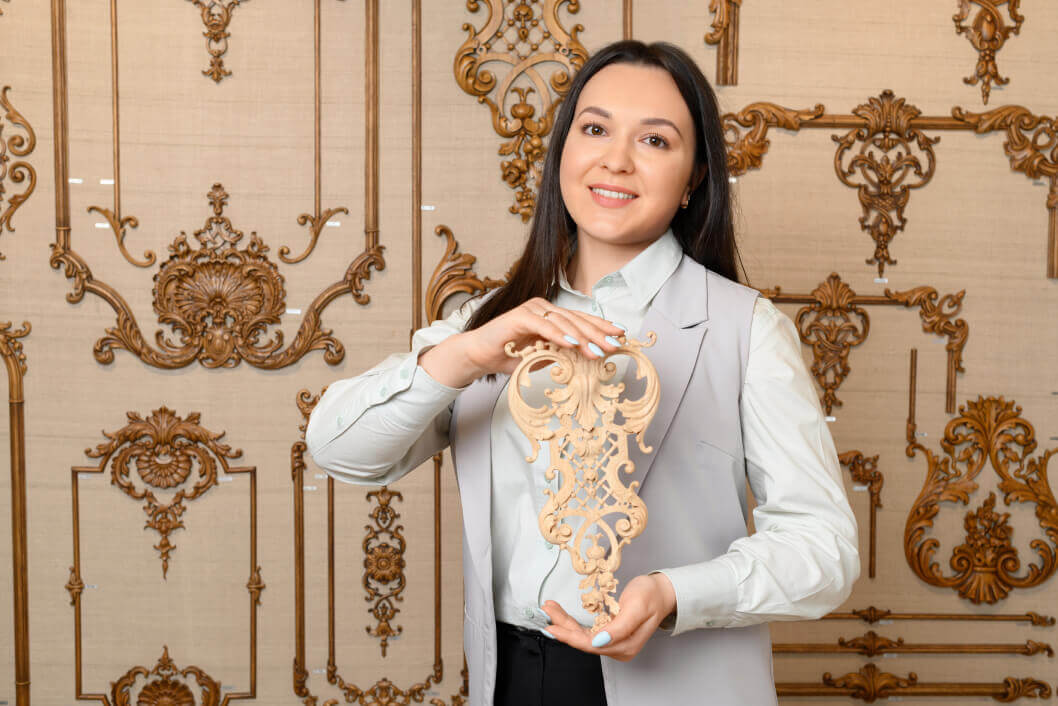
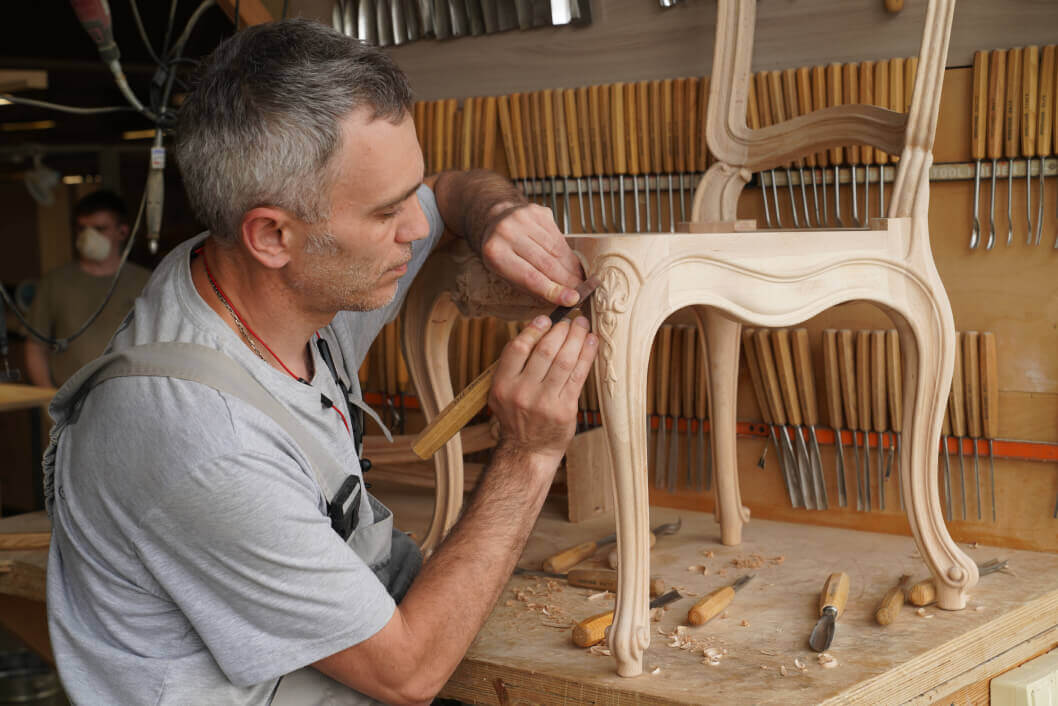
The company's success began in 2002, when two artists — Andrey Ragozin and Evgeny Tsapko — created a small creative workshop for producing wooden carved items. The masters' work was quickly noticed, and within a year they were invited to participate in the reconstruction of the Konstantinovskiy Palace in Strelna.
After the success of this project, the company focused on recreating palace interiors, furniture, church furnishings, and carved decorations in various artistic styles. They worked with cultural heritage sites: The Hermitage, the Alexandrovsky Palace, the Troitsko-Izmaylovsky Cathedral, the Sheremetyevsky Mansion, and many others.
The masters' task — and still is — to create wooden items with the highest level of detail and understanding of every element, based on impeccable knowledge of artistic laws and interior styles.
STAVROS Guarantees
Quality of products without complaints
We save your time, peace of mind, and budget
Large warehouse program
We solve your tasks with maximum speed
Adherence to production deadlines
Streamlined process reduces all risks
Delivery from 1 piece throughout Russia
Quality service regardless of order volume
Your positive business reputation
Reliable partner — the foundation of your business
More products in the ceiling sockets category
Frequently asked questions
Our showrooms are located in Saint Petersburg and Moscow. Production is located in Saint Petersburg.
Moscow contacts: https://www.stavros.ru/contacts_all/?tab=msk
Contacts of Saint Petersburg: https://www.stavros.ru/contacts_all/?tab=spb
- Send request by email [email protected]
- Write to us at WhatsApp
- Order by phone 8 (800) 55-46-75
- Visit our showroom in Saint Petersburg and Moscow
Yes, we ship orders throughout Russia and to CIS countries.
We cooperate with transportation companies such as СДЭК and DPD.
You can also arrange pickup of your order through any convenient transportation company for you.
Delivery cost depends on the size, weight of the item, and delivery address.
When placing an order, the delivery cost is calculated automatically and displayed as a separate line on our website.
Prices and availability of items on the website are always current. Data is updated daily.
Note: items in stock are stored on the warehouse in unpolished form and shipped within 3 working days.
If the item is not in stock, average production time: 5–10 working days.
This is the quality of polishing of the items.
Standard — machine polishing, at a more attractive price.
Prestige — detailed hand polishing, items do not require further work.
More details: https://www.stavros.ru/information/kachestvo/
This is the type of veneer of the items.
Under enamel: produced by gluing wooden laminates without color and texture matching. Contrast tonal and textural differences are noticeable. This blank should be chosen if the item is intended for opaque coating.
Under tinting: produced by gluing wooden laminates with color and texture matching. Tonal and textural differences may occur. This blank should be chosen if the item is intended for semi-transparent finish.
More details: https://www.stavros.ru/information/kachestvo/
Beech — dense, non-porous wood, most often used for items covered with enamel.
Oak — dense, porous wood with clearly visible natural grain. Due to its strength and decorative properties, it is often used in items with semi-transparent coating, highlighting the wood pattern.
Custom-made, if non-standard items are required, we can produce products from other types of wood, including blanks provided by the customer, manufactured according to our technical specifications.
All our furniture legs can withstand a vertical load of at least 100 kg.
Average production time for custom-made items: 5–10 working days.
Most items are stored on the warehouse in unpolished form. We need time to polish and pack orders.
Yes, we manufacture non-standard items according to individual projects, but we only accept orders with a minimum quantity.
We can manufacture items of the desired size, but we only work with bulk orders. For details, please consult the sales department manager.
Yes, some of our products can be used outdoors. For example, polyurethane items, as well as carved door casings made of pine.
Other items are produced to order using PUR glue, if minimum quantity is available. No warranty is provided for such products, as outdoor conditions are considered aggressive.
Yes, we paint items when ordering products for a total amount of 150,000 rubles or more.
- Dust removal. After sanding, the surface must be dusted.
- Priming. Apply primer in an even layer.
- Matting. After the primer has fully dried, the surface should be matted (lightly sanded for better adhesion).
- Finish coating. Apply finish coating: lacquer or enamel, in 2 layers, with interlayer drying.
More details: https://www.stavros.ru/information/sovety/
Apply adhesive to the decor. Place it on the surface and press briefly. Then, lift the decor from the surface and leave it open for 3–5 minutes. Press the decor firmly onto the surface and hold for 5–10 seconds.
More details: https://www.stavros.ru/information/sovety/
Ideally, you should prepare a design project before placing an order.
You can do this yourself by downloading drawings of our products from our website, or you can order a project from us.
If the number of decorative elements and fittings is small, our company's manager can assist you with selection.
Unfortunately, this service is not provided.
The packaging method depends on the type of items, but in each case, we ensure sufficient protection for safe transportation.
We most often use corrugated cardboard and stretch film. Fragile items are additionally secured on a rigid base to prevent damage during transport.
We ship all items starting from 1 piece.
Room measurements and item installation can be performed by our partners — carpentry companies represented in most regions of Russia.
Often searched in category Molded decor
1618
1483
1256
1145
347
221
72
Ceiling rosette CPU-071 made of polyurethane: luxurious decor for classic interiors
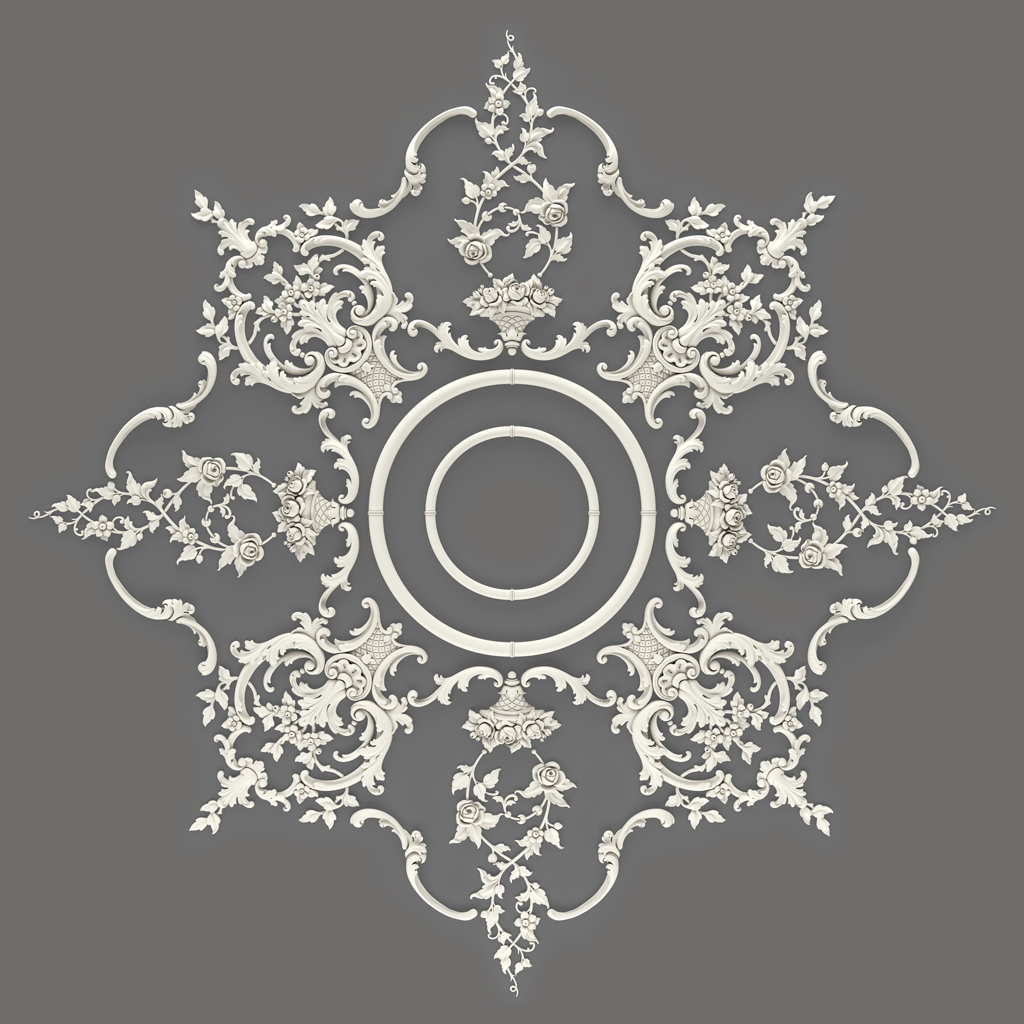
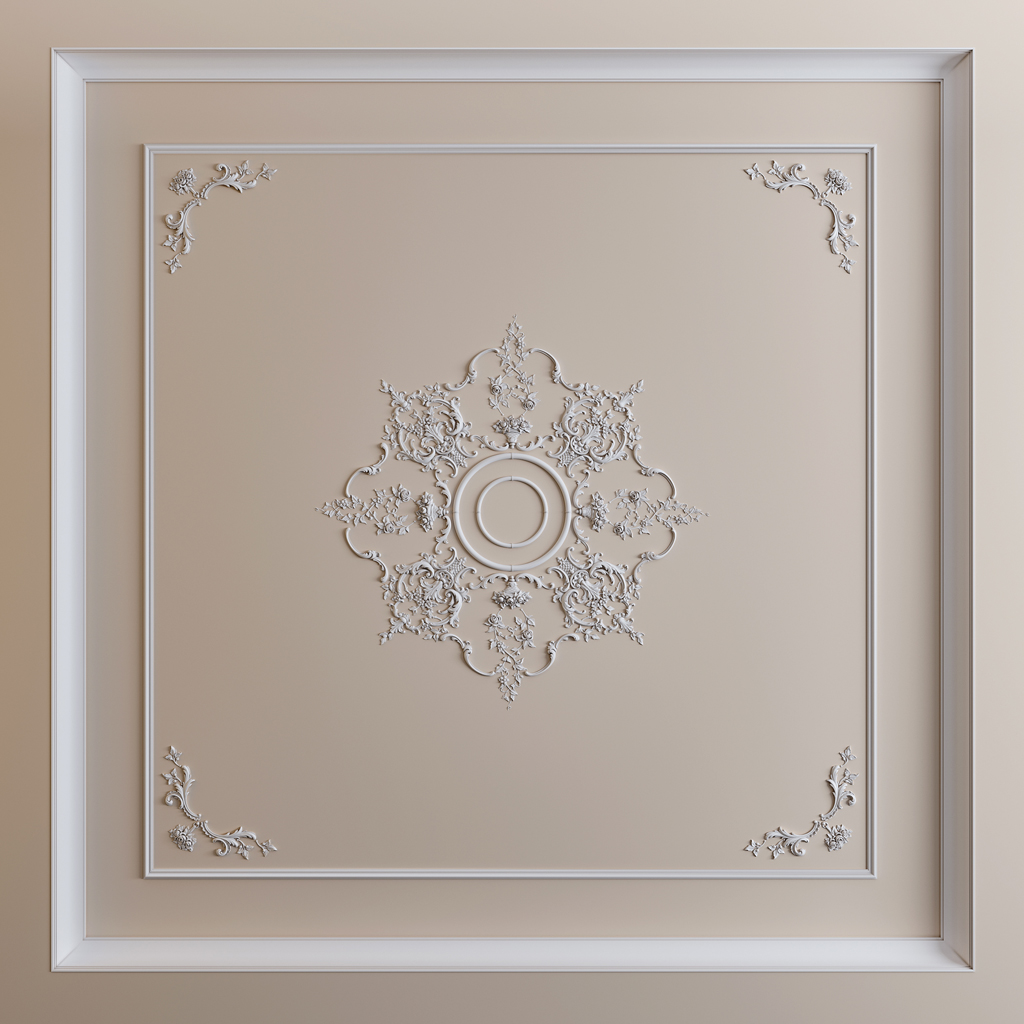
The Ceiling Rosette CPU-071 is a magnificent example of decorative molding, created for decorating spacious rooms with high ceilings. The product, with a diameter of 1365 millimeters and a thickness of 19 millimeters, is made of high-quality polyurethane, combining the exquisite aesthetics of classical ornamentation with the excellent performance characteristics of modern material. This monumental rosette with Baroque decor becomes the central element of the ceiling composition, transforming the space and giving it aristocratic elegance.
Technical specifications and design features
The CPU-071 model belongs to the category of large-format ceiling rosettes with dimensions of 1365 × 1365 × 19 millimeters. The square shape of the product with an inscribed circular composition allows for creating expressive decorative solutions in rooms with an area of thirty square meters or more. The element's thickness of nineteen millimeters provides sufficient relief depth to form a rich shadow pattern, which effectively emphasizes the complexity of the ornament under various lighting scenarios.
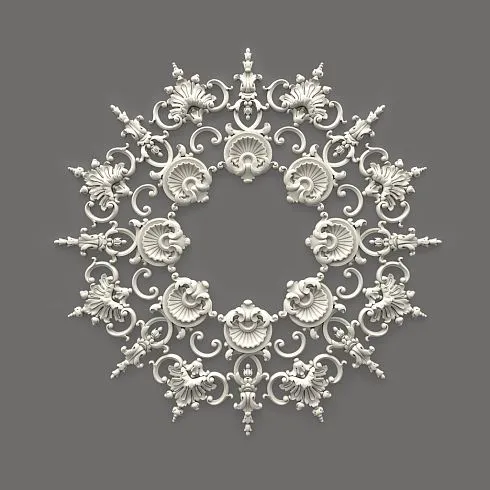
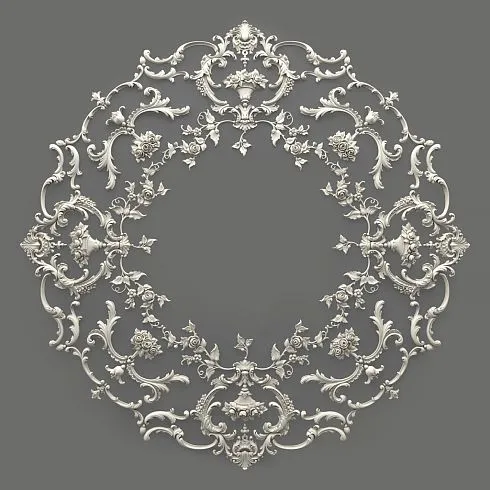
The rosette's composition is built on the principle of radial symmetry with central concentric rings designed for placing a chandelier or other ceiling light fixture. Eight rays radiating from the center form a star-shaped structure adorned with rich floral ornamentation. Decorative elements include acanthus scrolls, rosettes with floral buds, baskets with bouquets, and Rococo-style rocailles and graceful C-shaped volutes characteristic of Baroque, creating an impression of dynamism and volume.
The central part of the structure consists of two concentric rings of different diameters, which serve as a functional frame for the lighting fixture. The inner ring is intended for passing electrical wiring and mounting elements of the chandelier, while the outer ring creates a visual frame that accentuates the center of the composition. This solution allows for organically integrating the light fixture into the decorative structure, making the rosette a unified whole with the lighting device.
Polyurethane as a Premium-Class Material
The choice of polyurethane for producing decorative molding is due to the unique complex of physical and mechanical properties of this polymer. The material possesses exceptional lightness while maintaining high strength, which is critically important for large-format decorative elements. The CPU-071 rosette weighs several times less than a similar plaster product, which significantly simplifies transportation, reduces the risk of damage during delivery, and makes installation possible by two people without the use of specialized lifting equipment.
The mechanical strength of polyurethane surpasses the characteristics of traditional plaster. The material is resistant to impact loads, does not crack under minor base deformations, and does not crumble under accidental mechanical impacts. The polymer's elasticity allows the rosette to maintain integrity even with slight movements of the ceiling structure caused by building settlement or temperature fluctuations. The product retains its original shape and relief clarity for decades of operation without the need for restoration or repair.
The moisture resistance of polyurethane opens wide possibilities for using ceiling rosettes in rooms of various functional purposes. Unlike plaster molding, which deteriorates under moisture exposure, polyurethane products are absolutely inert to water and water vapor. The CPU-071 rosette can be installed in bathrooms, kitchens, winter gardens, swimming pools, and other spaces with high humidity without the risk of deformation, swelling, mold, or fungal growth.
The material's temperature stability allows the use of decor in rooms with a wide range of climatic conditions. Polyurethane retains its properties at temperatures from minus forty to plus eighty degrees Celsius, making it suitable for installation in unheated country houses, verandas, winter gardens, and other spaces with seasonal or irregular heating. The material does not deform under temperature fluctuations, does not change geometry, and does not form cracks during freeze-thaw cycles.
The environmental safety of polyurethane is confirmed by numerous studies and quality certificates. The material does not contain formaldehyde, phenols, heavy metals, or other toxic substances, and does not emit volatile organic compounds during operation. Polyurethane decor is absolutely safe for living rooms, children's rooms, medical institutions, educational facilities, and other spaces where air quality is of paramount importance.
The fire resistance of polyurethane meets the fire safety requirements for finishing materials. Modern compositions contain flame retardants that prevent ignition and flame spread. When exposed to open flame, the material does not support combustion, and when heated, it does not emit toxic gases, which increases the safety of using decorative elements in residential and public buildings.
Stylistics and ornamental design
The decorative design of the CPU-071 rosette is executed in the traditions of European Baroque with elements of Rococo and Classicism. The central composition is organized around two concentric rings, from which eight rays radiate radially, forming a star-shaped structure. Each ray represents an independent decorative composition consisting of plant scrolls, floral rosettes, and architectural elements.
Acanthus leaves, a characteristic motif of classical architecture, form dynamic wave-like shapes, creating an impression of movement and development of the ornament from the center to the periphery. The deep relief of the leaves with detailed veins and curled edges forms a rich play of light and shadow, changing depending on the position of light sources. The rosette looks especially impressive with side lighting, when the relief is maximally revealed and creates a three-dimensional volume.
Floral elements are represented by rosettes with blooming buds, gathered in baskets and bouquets. The motif of a basket with flowers, characteristic of French Rococo, gives the composition grace and lightness, softening the monumentality of Baroque scrolls. The combination of large architectural forms with delicate plant details creates a balance between grandeur and refinement, making the rosette universal for various interior solutions.
Rocailles and volutes form the framework of the composition, connecting individual elements into a unified structure. C-shaped scrolls of various sizes create a rhythmic organization of the ornament, directing the gaze from the center to the periphery and back. Asymmetric rocailles, characteristic of the Rococo style, introduce an element of picturesqueness and ease into the strict radial composition, giving the product artistic expressiveness and individuality.
Application in various interior styles
The Ceiling Rosette CPU-071 is created for spacious rooms with high ceilings, where its monumental dimensions are fully revealed. In living rooms with an area of thirty-five square meters or more and ceiling heights from three meters, the rosette becomes the dominant decorative element, organizing the space around the central composition. It is ideal for framing massive multi-arm chandeliers of classic design, creating a unified architectural solution with them.
In classic interiors, the CPU-071 rosette harmoniously complements cornices, moldings, pilasters, consoles, and other elements of architectural decor. The Baroque ornament organically fits into Palladian, Victorian, French, and Italian styles, emphasizing the aristocratic and respectable nature of the space. The combination of the ceiling rosette with wall panels, mirrors in carved frames, antique furniture, and textile decor creates an atmosphere of palace luxury.
In neoclassical interiors, the large-format rosette is used as an expressive accent, contrasting with the laconic wall finish and restrained color palette. Painted white and installed on a light ceiling, it creates a subtle play of light and shadow, adding volume and depth to the space without overloading it with details. This technique allows combining classical heritage with the modern aesthetics of minimalism.
In eclectic interiors, the CPU-071 rosette becomes the central element uniting objects from various eras and styles. Installed in a loft space with brick walls and industrial furniture, it creates an effective contrast between historical decor and modern urban aesthetics. A patinated or painted rosette in metallic shades introduces an element of glamour and artistry into the brutal setting.
In prestigious public spaces, a ceiling rosette serves as a status element, demonstrating the establishment's level and attention to detail. Installed in hotel lobbies, fine-dining restaurants, banquet halls, museums, or concert halls, it creates an impression of solemnity and formality. The combination of a ceiling rosette with crystal chandeliers, marble finishes, and gilded elements forms an atmosphere of luxury and respectability.
Installation of a large-format rosette
Installing the CPU-071 ceiling rosette requires thorough preparation and precise adherence to installation technology. Before starting work, it is necessary to prepare the ceiling surface by cleaning it of dust, dirt, remnants of old coatings, grease stains, and peeling paint. The surface must be dry, strong, and degreased to ensure maximum adhesion of the adhesive compound. Loose substrates should be treated with a deep-penetration strengthening primer.
Marking the installation location is done using a spirit level, tape measure, square, and pencil. It is necessary to accurately determine the center of the composition, which usually coincides with the electrical wiring exit point for the chandelier. The symmetry of the entire ceiling composition depends on the accuracy of the marking, so it is recommended to use a laser level or chalk line to create axial lines. The rosette must be positioned strictly in the center of the room or at the focal point of the interior composition.
For attaching polyurethane elements, specialized adhesive compounds based on acrylic or polyurethane are used, ensuring strong adhesion to various types of substrates. The adhesive is applied with a notched trowel to the back of the rosette along the perimeter and diagonals for even load distribution. The adhesive layer thickness should be three to five millimeters, which ensures reliable fixation and compensates for minor substrate irregularities.
Installation of a large-format rosette is carried out by two installers, who simultaneously press the product against the ceiling, ensuring the central hole aligns with the electrical wiring exit point. After positioning, the rosette is pressed against the substrate with uniform force across the entire area to ensure contact between the adhesive and the ceiling surface. Excess adhesive that squeezes out along the edges must be immediately removed with a damp sponge before the compound sets.
To secure the rosette during the adhesive curing period, temporary supports made of wooden blocks or telescopic stands are used, placed at an angle to the product. The supports prevent shifting or sagging of the rosette under its own weight until the adhesive compound fully cures, which takes from twelve to twenty-four hours depending on the adhesive type, room temperature, and humidity. After the adhesive cures, the supports are removed, and the contact points on the rosette are cleaned of any possible marks.
Additional fixation of large-format elements can be done using dowels and screws installed in areas concealed by the ornament. Holes for the fasteners are drilled through the rosette into the ceiling substrate, then dowels are installed and screws with decorative heads are screwed in, which are countersunk into the material and filled. Such combined fixation ensures maximum reliability of the attachment in rooms with high vibration or when installing heavy chandeliers.
Final finishing and decoration
After completing the installation and full curing of the adhesive, the final finishing of the rosette is performed, including sealing joints, priming, and painting. The joints between the rosette and the ceiling, as well as the fastener installation points, are filled with acrylic sealant or elastic filler, which is applied with a rubber spatula and smoothed with a damp sponge. After the filler dries, the surface is sanded with fine-grit sandpaper to create a smooth, seamless transition.
Priming the polyurethane surface is a mandatory step in preparation for painting. A special acrylic primer for plastics is used, ensuring reliable adhesion of paint and varnish materials to the polymer base. The primer is applied with a brush to the relief areas, thoroughly working into all recesses of the ornament, and with a short-nap roller on smooth surfaces to create an even coating. The primer drying time is from two to four hours at a temperature of twenty degrees Celsius.
Painting the ceiling rosette is done with water-based or acrylic paints, providing a durable matte or semi-matte finish. For classic interiors, white is most often used, creating the effect of plaster stucco and emphasizing the ornament's relief through the play of light and shadow. The paint is applied in two to three coats with a brush or spray gun, with intermediate drying of each coat for four to six hours.
Decorative painting techniques allow for creating impressive artistic solutions that imitate valuable materials and antique patina. Gilding is done with special paints containing metallic pigment or gold leaf, applied to the protruding elements of the ornament to accentuate the relief. Patination creates an effect of noble antiquity by applying a tinted compound into the recesses of the relief, followed by blending and polishing the protruding parts.
Silver and bronze plating are used to create cool or warm metallic shades that harmonize with corresponding hardware of light fixtures, furniture, and accessories. The two-tone painting technique involves applying a base light tone to the entire rosette surface, followed by highlighting ornamental details with a contrasting color to enhance the composition's three-dimensionality. Combining matte and glossy finishes creates additional visual effects under different lighting.
Combination with lighting fixtures
The CPU-071 ceiling rosette is designed to frame massive chandeliers of classic design with a diameter from eighty to one hundred twenty centimeters. The proportional relationship between the rosette size and the light fixture is critical for the harmony of the composition. The rosette's central hole must freely allow the passage of the chandelier's mounting elements, while the decorative bowl of the light fixture should partially overlap the inner ring, creating a visual connection between the elements.
Multi-arm chandeliers with crystal pendants, bronze or brass fittings, and textile shades perfectly complement the baroque ornament of the CPU-071 rosette. Wrought-iron light fixtures with floral motifs, candelabras, chandeliers in Empire or Rococo style emphasize the historical stylistics of the decor and create a unified artistic composition. It is important that the decorative elements of the chandelier—scrolls, leaves, flowers—echo the rosette's ornament, forming visual unity.
Modern-design LED chandeliers can also be combined with a classic rosette, provided that scale relationships and color harmony are observed. Minimalist light fixtures with geometric shapes create an effective contrast with baroque decor, emphasizing the interior's eclecticism. Matte metallic surfaces of chandeliers harmonize with a patinated or metal-toned rosette.
Additional lighting of the rosette can be achieved using an LED strip installed along the perimeter of the product in a specially created technological gap between the rosette and the ceiling. Contour lighting creates a floating composition effect and enhances the perception of relief in the evening. Adjustable brightness of the lighting allows for creating various lighting scenarios depending on the functional purpose of the space and time of day.
Care and Maintenance
The polyurethane rosette CPU-071 does not require complex maintenance due to the material's antistatic properties, which prevent dust accumulation. Regular dry cleaning with a soft brush or microfiber cloth maintains the freshness of the coating and preserves color saturation. Relief elements with deep recesses are cleaned using a vacuum cleaner with a soft attachment at minimum suction power to prevent damage to the painted surface.
Wet cleaning of the painted rosette is performed as needed using a mild soap solution or special products for painted surfaces. The solution is applied to a soft sponge, which is used to gently wipe the surface without excessive pressure, then any remaining moisture is removed with a dry cloth. It is not recommended to use abrasive cleaners, solvents, or aggressive chemical compounds that could damage the paint and varnish coating.
Mechanical damage to the painted surface is repaired by local retouching of the damaged area with paint of a similar shade. Small chips and scratches are filled with acrylic sealant, sanded with fine-grit sandpaper, primed, and painted to match the main surface. When decorative techniques like patination or gilding are used, restoration requires repeating the entire coating application sequence to ensure color match.
The service life of a polyurethane rosette, when usage and care recommendations are followed, is several decades without loss of decorative and functional properties. The material is not susceptible to biological degradation, does not attract insects, does not deform over time, and maintains geometric stability throughout the entire period of use. High-quality paint and varnish coating protects the polyurethane from ultraviolet radiation, preventing material fading and yellowing.
Advantages of choosing the CPU-071 model
The CPU-071 ceiling rosette represents an optimal combination of artistic expression, functionality, and practicality. The monumental dimensions of the product allow for creating impressive interior compositions in spacious rooms, where standard rosettes appear disproportionately small and get lost in the space. The rich baroque ornament with meticulously detailed elements demonstrates a high level of craftsmanship and the artistic taste of the owner.
Using polyurethane instead of traditional plaster provides significant advantages in installation, operation, and product durability. The rosette's light weight allows it to be installed on various types of ceilings, including drywall constructions and stretch systems, without the risk of overloading load-bearing elements. The material's moisture resistance expands the scope of decor application, making installation possible in rooms with any humidity level without restrictions.
The versatility of the stylistic solution allows the CPU-071 rosette to be integrated into interiors of various directions—from strict classicism to modern eclecticism. The possibility of painting in any colors and applying decorative techniques opens unlimited opportunities for creative realization of design concepts. The rosette becomes not just a functional element for framing a chandelier, but a full-fledged work of decorative and applied art, defining the character of the entire interior.
The economic feasibility of choosing a polyurethane rosette is due to its long service life without the need for repair or restoration, ease of maintenance, and the possibility of self-installation without involving professional craftsmen. The one-time costs of purchase and installation are offset by decades of flawless operation and the enduring aesthetic value of classic decor, which never goes out of style and always remains a symbol of refined taste and respectability.
Your request has been sent!
Our manager will contact you within 5 minutes