












































































Polyurethane Moldings NPU-500
Dimensions and Options
Have questions?
Customers also buy

Polina Sh.
February 4, 2026
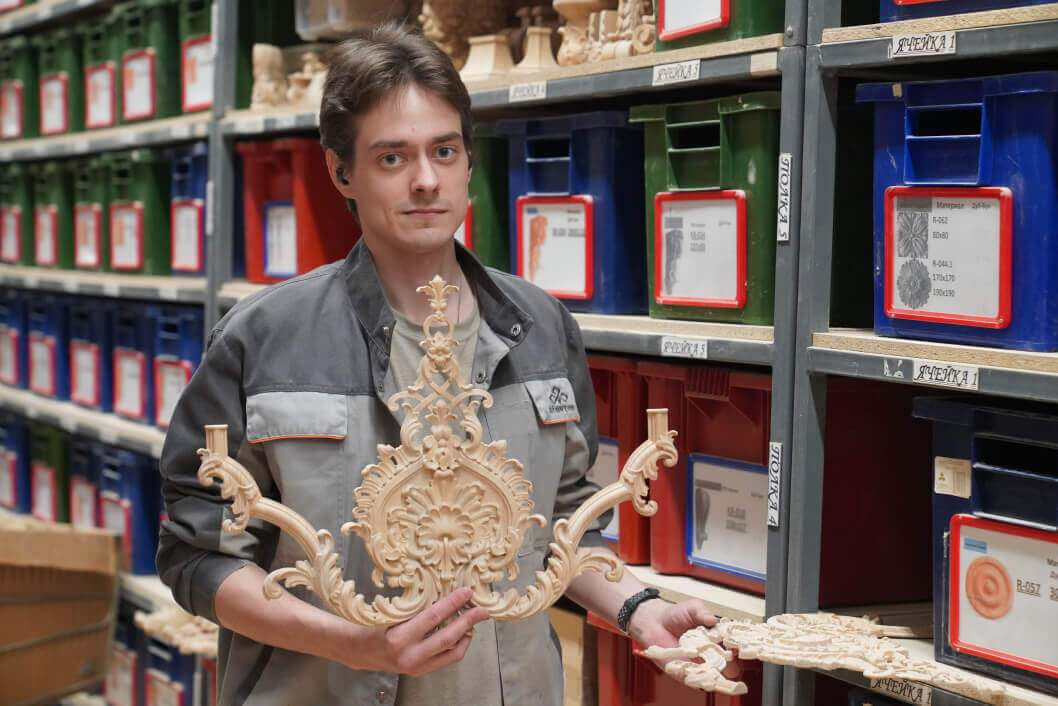
Went on a tour. To say I'm delighted is an understatement. The largest production facility in Russia, impressive in its scale and dedication to the craft! It was very interesting and informative. You can immediately see - true masters of their trade! We were welcomed in the best possible way, were polite...
Elena B.
January 29, 2026
Thank you for always having a magnificent assortment and the possibility of manufacturing standard products to non-standard, individual dimensions. Special thanks to manager Oksana for her efficiency and quality of services provided.
Elena K.
January 27, 2026
The moldings are high-quality and beautiful, they were packaged very securely, I will order again, I liked everything!
More than 20 years on the market
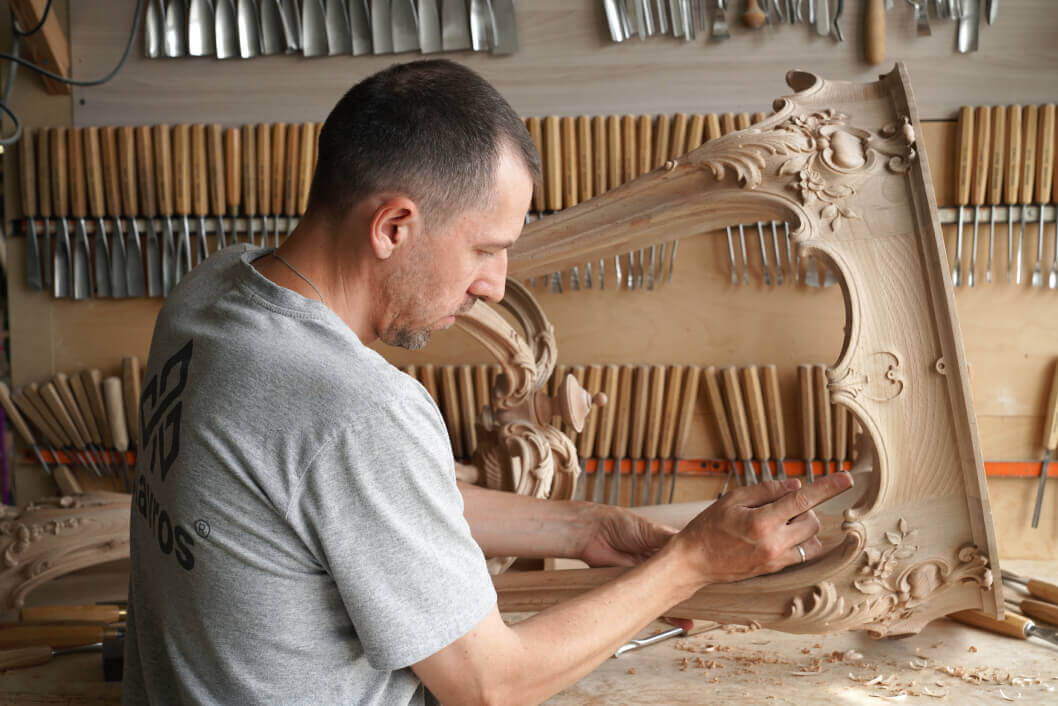
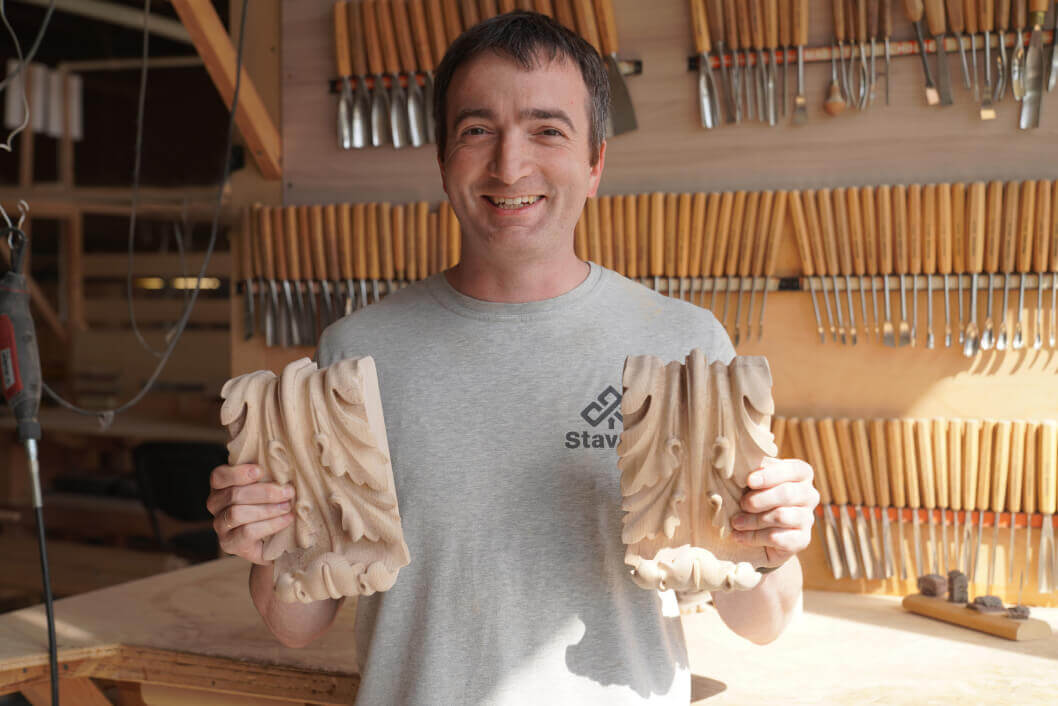
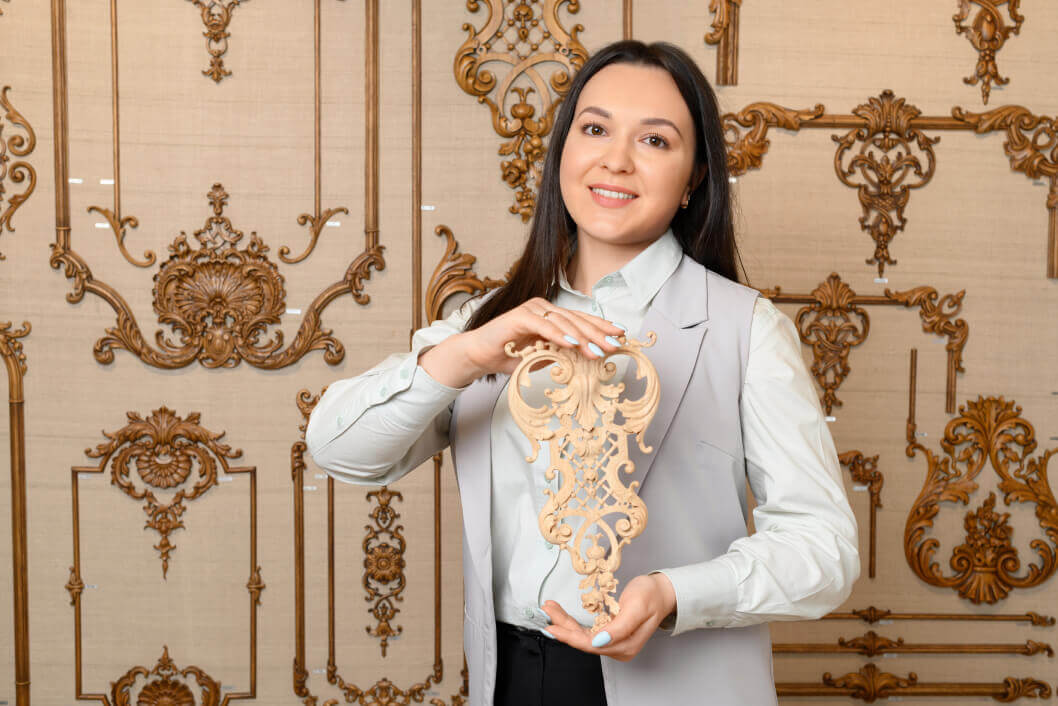
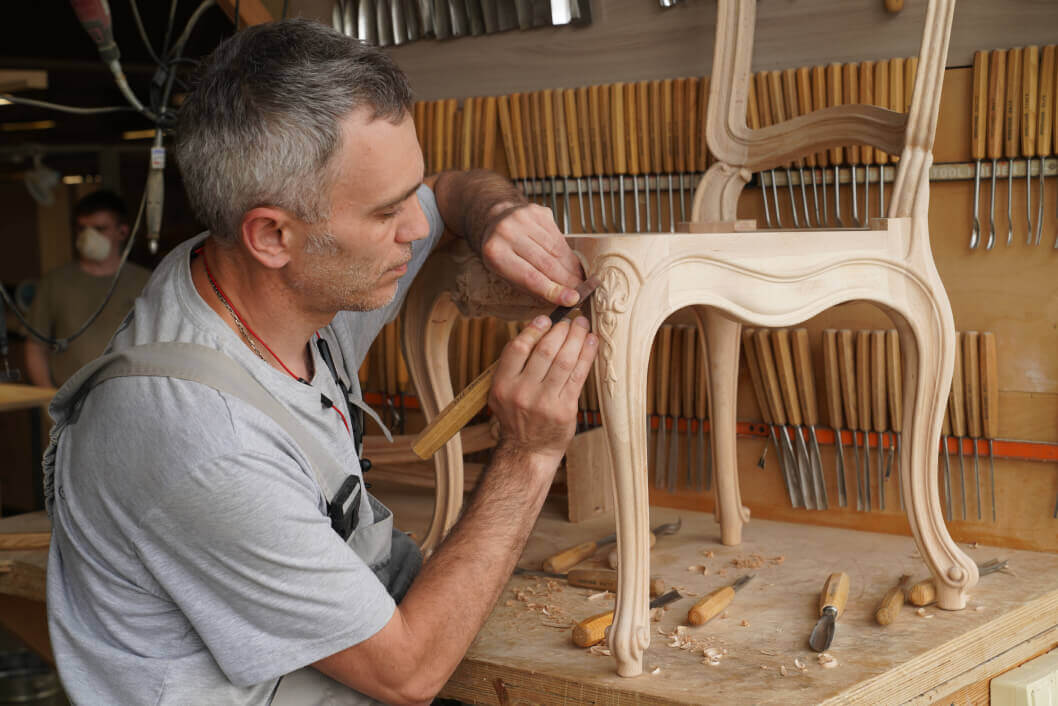
The company's success began in 2002, when two artists — Andrey Ragozin and Evgeny Tsapko — created a small creative workshop for producing wooden carved items. The masters' work was quickly noticed, and within a year they were invited to participate in the reconstruction of the Konstantinovskiy Palace in Strelna.
After the success of this project, the company focused on recreating palace interiors, furniture, church furnishings, and carved decorations in various artistic styles. They worked with cultural heritage sites: The Hermitage, the Alexandrovsky Palace, the Troitsko-Izmaylovsky Cathedral, the Sheremetyevsky Mansion, and many others.
The masters' task — and still is — to create wooden items with the highest level of detail and understanding of every element, based on impeccable knowledge of artistic laws and interior styles.
STAVROS Guarantees
Quality of products without complaints
We save your time, peace of mind, and budget
Large warehouse program
We solve your tasks with maximum speed
Adherence to production deadlines
Streamlined process reduces all risks
Delivery from 1 piece throughout Russia
Quality service regardless of order volume
Your positive business reputation
Reliable partner — the foundation of your business
More products in the molding decor category
Frequently asked questions
Our showrooms are located in Saint Petersburg and Moscow. Production is located in Saint Petersburg.
Moscow contacts: https://www.stavros.ru/contacts_all/?tab=msk
Contacts of Saint Petersburg: https://www.stavros.ru/contacts_all/?tab=spb
- Send request by email [email protected]
- Write to us at WhatsApp
- Order by phone 8 (800) 55-46-75
- Visit our showroom in Saint Petersburg and Moscow
Yes, we ship orders throughout Russia and to CIS countries.
We cooperate with transportation companies such as СДЭК and DPD.
You can also arrange pickup of your order through any convenient transportation company for you.
Delivery cost depends on the size, weight of the item, and delivery address.
When placing an order, the delivery cost is calculated automatically and displayed as a separate line on our website.
Prices and availability of items on the website are always current. Data is updated daily.
Note: items in stock are stored on the warehouse in unpolished form and shipped within 3 working days.
If the item is not in stock, average production time: 5–10 working days.
This is the quality of polishing of the items.
Standard — machine polishing, at a more attractive price.
Prestige — detailed hand polishing, items do not require further work.
More details: https://www.stavros.ru/information/kachestvo/
This is the type of veneer of the items.
Under enamel: produced by gluing wooden laminates without color and texture matching. Contrast tonal and textural differences are noticeable. This blank should be chosen if the item is intended for opaque coating.
Under tinting: produced by gluing wooden laminates with color and texture matching. Tonal and textural differences may occur. This blank should be chosen if the item is intended for semi-transparent finish.
More details: https://www.stavros.ru/information/kachestvo/
Beech — dense, non-porous wood, most often used for items covered with enamel.
Oak — dense, porous wood with clearly visible natural grain. Due to its strength and decorative properties, it is often used in items with semi-transparent coating, highlighting the wood pattern.
Custom-made, if non-standard items are required, we can produce products from other types of wood, including blanks provided by the customer, manufactured according to our technical specifications.
All our furniture legs can withstand a vertical load of at least 100 kg.
Average production time for custom-made items: 5–10 working days.
Most items are stored on the warehouse in unpolished form. We need time to polish and pack orders.
Yes, we manufacture non-standard items according to individual projects, but we only accept orders with a minimum quantity.
We can manufacture items of the desired size, but we only work with bulk orders. For details, please consult the sales department manager.
Yes, some of our products can be used outdoors. For example, polyurethane items, as well as carved door casings made of pine.
Other items are produced to order using PUR glue, if minimum quantity is available. No warranty is provided for such products, as outdoor conditions are considered aggressive.
Yes, we paint items when ordering products for a total amount of 150,000 rubles or more.
- Dust removal. After sanding, the surface must be dusted.
- Priming. Apply primer in an even layer.
- Matting. After the primer has fully dried, the surface should be matted (lightly sanded for better adhesion).
- Finish coating. Apply finish coating: lacquer or enamel, in 2 layers, with interlayer drying.
More details: https://www.stavros.ru/information/sovety/
Apply adhesive to the decor. Place it on the surface and press briefly. Then, lift the decor from the surface and leave it open for 3–5 minutes. Press the decor firmly onto the surface and hold for 5–10 seconds.
More details: https://www.stavros.ru/information/sovety/
Ideally, you should prepare a design project before placing an order.
You can do this yourself by downloading drawings of our products from our website, or you can order a project from us.
If the number of decorative elements and fittings is small, our company's manager can assist you with selection.
Unfortunately, this service is not provided.
The packaging method depends on the type of items, but in each case, we ensure sufficient protection for safe transportation.
We most often use corrugated cardboard and stretch film. Fragile items are additionally secured on a rigid base to prevent damage during transport.
We ship all items starting from 1 piece.
Room measurements and item installation can be performed by our partners — carpentry companies represented in most regions of Russia.
Often searched in category Molded decor
1618
1483
1256
1145
347
221
72
Polyurethane Moldings NPU-500 – elegant corner decoration for classic interiors
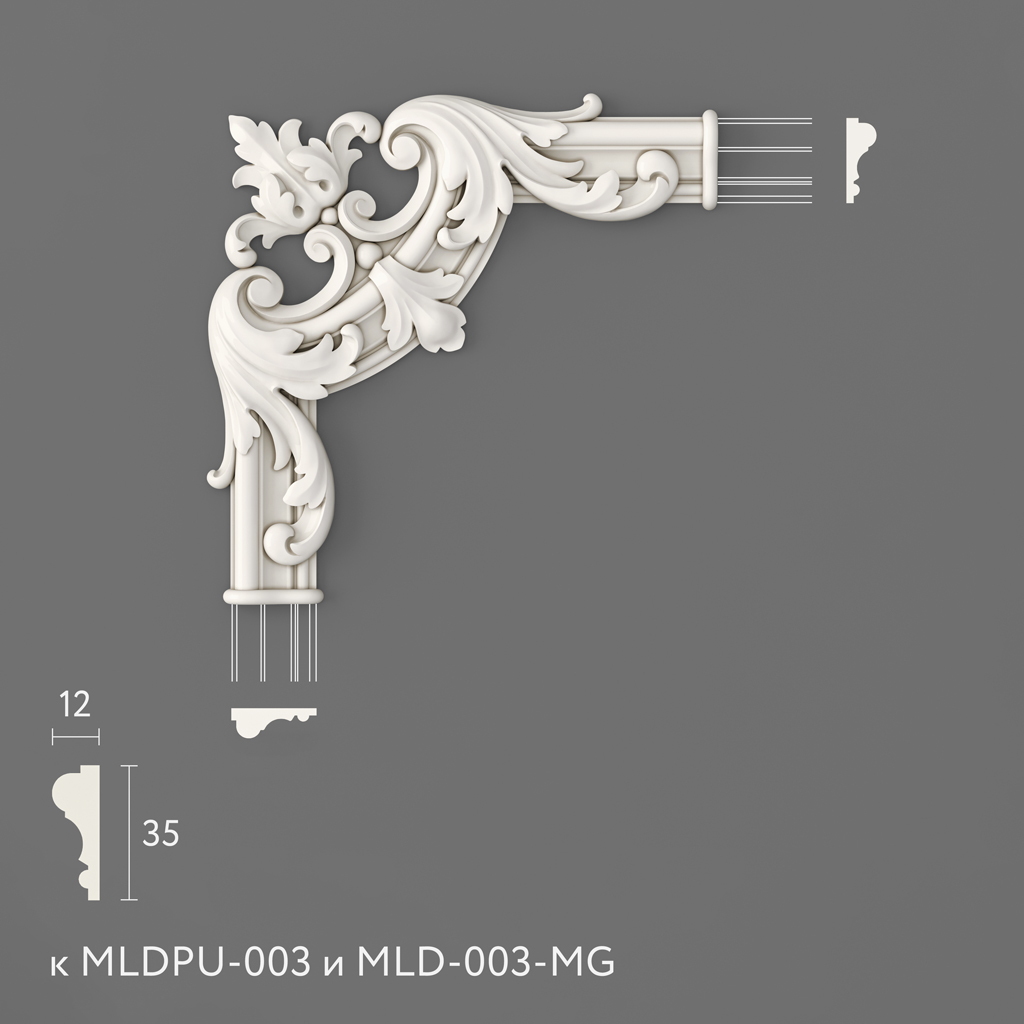
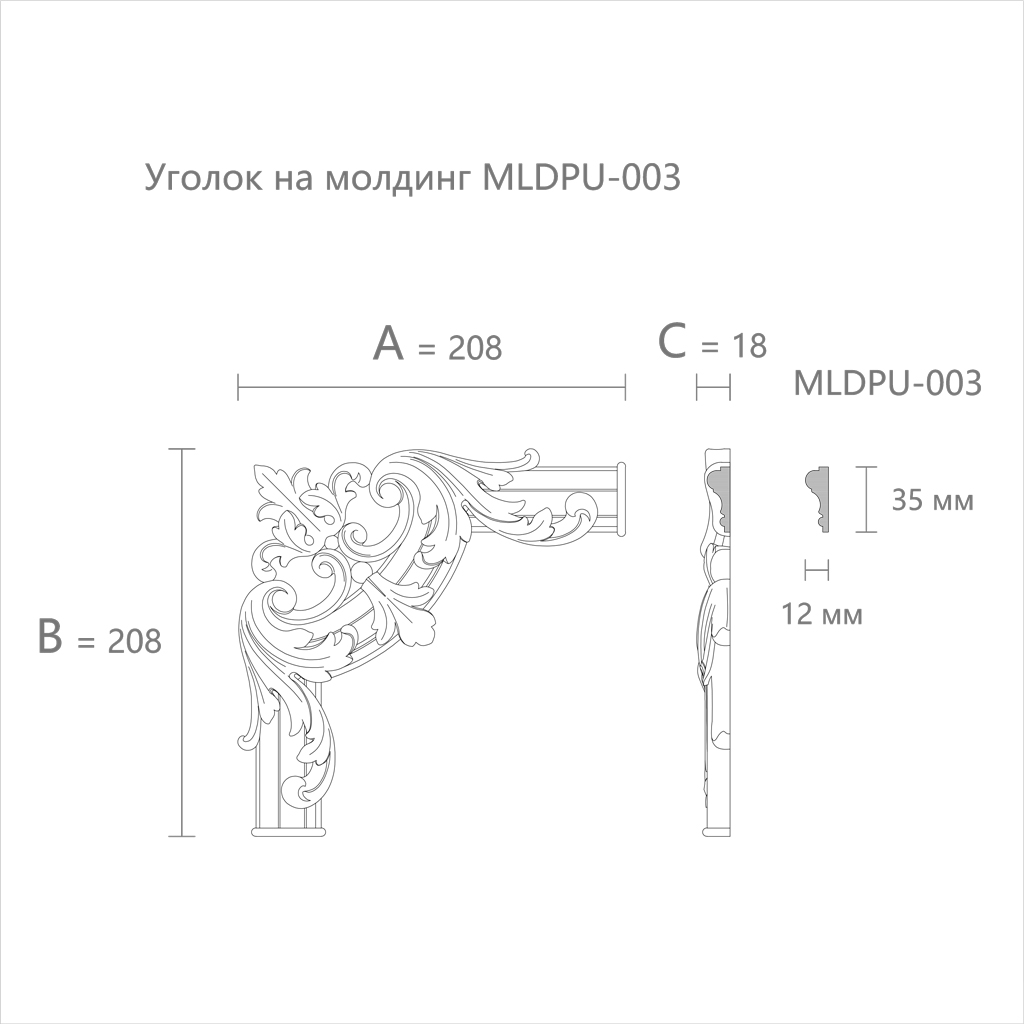
Polyurethane Moldings NPU-500 is a decorative corner element measuring 209 × 209 × 18 mm, designed for decorating interiors in a classic style. The elegant vegetal ornament with characteristic acanthus leaf scrolls and volutes transforms an ordinary room corner into a striking architectural accent. The polyurethane material provides the ideal combination of traditional plaster molding aesthetics with modern performance characteristics, making the decoration durable, practical, and accessible.
Polyurethane – material of the new generation
Polyurethane belongs to the class of synthetic polymers obtained as a result of a chemical reaction between a polyol and an isocyanate. The resulting material possesses unique physical and mechanical properties, combining high strength, elasticity, and minimal density. Modern manufacturing technologies allow creating decorative elements from polyurethane with complex relief, while maintaining the clarity of lines and ornament detail.
Polyurethane molding has become a worthy alternative to traditional plaster due to a number of technological advantages. The material does not absorb moisture, is not prone to cracking, and maintains shape stability under temperature fluctuations. The low weight of the items simplifies transportation, storage, and installation, eliminating the need for reinforced fasteners. The ecological safety of polyurethane is confirmed by certificates – the material does not emit toxic substances and is recommended for use in residential spaces.
The structure of polyurethane ensures even load distribution, preventing deformation of elements during installation and operation. The material is inert to most chemical compounds, including household cleaning agents, simplifying maintenance of decorative elements. Polyurethane is not a nutrient medium for microorganisms, mold, and fungi, which is especially important for rooms with high humidity.
Constructive Features of Model NPU-500
The corner element NPU-500 is specifically designed for decorating interior corners, framing door and window openings, decorating fireplace surrounds and wall panels. Dimensions of 209 × 209 mm provide optimal visual balance – the element is sufficiently expressive to attract attention, yet does not overwhelm the space. Thickness of 18 mm creates the necessary relief for forming light and shadow play, emphasizing the ornament’s volume.
The decorative composition is symmetrical, allowing NPU-500 to be used for both left and right corners without the need to purchase mirrored elements. The central axis of symmetry passes through the main scroll, from which side vegetal motifs radiate. Such a construction ensures harmonious perception of the element from any angle and simplifies the process of planning the decorative composition.
The reverse side of the element has a smooth surface with minor technological recesses, ensuring better adhesion of mounting adhesive. Uniform thickness of the item eliminates warping and deformation under humidity fluctuations. Clear straight edges ensure tight contact with the wall without gaps, which is critical for achieving the effect of monolithic decoration.
Ornamental Composition
The decorative solution of NPU-500 is based on classical motifs of European architecture from the Baroque and Rococo periods. The central element of the composition is a stylized acanthus leaf with characteristic deep cuts and curled tips. The acanthus ornament is considered one of the most recognizable classical motifs, symbolizing nobility, elegance, and continuity of architectural traditions.
Additional vegetal elements radiate from the central scroll – stylized stems with smaller leaves, creating a dynamic asymmetrical composition. Volute-like spirals add movement and energy to the ornament, directing the viewer’s gaze from the center to the periphery. Alternation of large and small elements forms a rhythmic structure, making the decoration visually interesting when viewed from different distances.
Relief depth varies from 2 to 12 mm, creating a multi-layered composition with expressive light and shadow effects. The deepest areas are located in the central part of the scroll, where maximum visual tension is concentrated. Gradual reduction of relief toward the edges of the element ensures a smooth transition from decoration to a smooth wall, creating a sense of organic composition.
Ornament detail is executed at a high level – leaf veins, petal texture, fine stem tendrils are discernible. Such meticulous detailing is possible due to high-pressure injection technology, allowing polyurethane to fill the smallest cavities of the mold. The result is decoration visually indistinguishable from traditional handcrafted plaster molding.
Advantages of Polyurethane Molded Decoration
Polyurethane’s water resistance allows using decorative elements in rooms with high humidity – bathrooms, toilets, pools, kitchens. The material does not absorb water, does not swell, and does not deform even with prolonged contact with moisture. This is a critically important advantage over plaster molding, which deteriorates under high humidity conditions, losing strength and aesthetic qualities.
Temperature stability allows using polyurethane molding in rooms with underfloor heating systems, fireplaces, kitchen equipment. The material retains geometry and appearance within a temperature range from minus forty to plus eighty degrees Celsius. Absence of temperature deformation guarantees that elements will not detach from the wall or form cracks during seasonal temperature fluctuations in the room.
The average weight of polyurethane items ranges from 100 to 300 grams per linear meter depending on the profile cross-section. Element NPU-500 weighs about 150 grams, which is 10–15 times lighter than a similar plaster decoration. Lightness simplifies installation, allowing elements to be mounted even on thin gypsum board partitions without risking deformation of the base. Transportation does not require special conditions, and the risk of damage during transport is minimal.
Polyurethane’s strength and impact resistance exceed plaster’s characteristics by three to four times. The material withstands accidental mechanical impacts without forming chips or cracks. When dropped from height, plaster elements break, whereas polyurethane elements remain intact. The elasticity of the structure allows the material to absorb impact loads, returning to its original shape after stress removal.
The durability of polyurethane molding is several decades without loss of aesthetic or functional properties. The material is not subject to natural aging, does not yellow, does not crumble, does not develop cracks. Ultraviolet radiation does not destroy the polyurethane structure, allowing decoration to be used in rooms with large windows without risk of fading or degradation. Color and shape stability is guaranteed for the entire service life.
Ease of Installation
Installation of polyurethane molding does not require specialized professional skills and can be performed independently using a basic set of tools. Installing element NPU-500 requires polyurethane mounting adhesive, a marking pencil, a construction level, a fine-toothed hacksaw or a stationery knife for trimming, and a damp sponge for removing excess adhesive. The absence of need for specialized equipment makes the process accessible for home craftsmen.
Surface preparation includes cleaning from dust, dirt, and remnants of old coatings. The surface must be dry, degreased, and sufficiently flat to ensure full contact of the element. Permissible unevenness should not exceed two to three millimeters over the length of the element. If necessary, the base is leveled with putty, followed by sanding and priming to improve adhesion.
Position marking of the element is performed using a construction level and tape measure. It is recommended to preliminarily place the element at the installation site and trace its outline with a pencil to visually assess the composition and confirm correct placement. When installing multiple elements, it is important to maintain equal distances and observe symmetry to create a harmonious composition.
Adhesive application is performed using point or continuous methods depending on the element size and adhesive manufacturer recommendations. For element NPU-500, the optimal method is point application with adhesive applied along the perimeter at 5–7 cm intervals and several points in the central area. Excess adhesive is removed with a damp sponge before it sets. Full curing of the adhesive joint occurs within 12–24 hours depending on temperature and humidity conditions.
Element fixation is performed by pressing against the surface with slight pressure for 30–60 seconds to ensure adhesive contact with the base. It is important to avoid excessive pressure that could deform the relief. After installation, the element is checked with a level for deviations from the specified plane. If necessary, the position is corrected by slight displacement until the adhesive sets.
Variants of Application in Interior
Decorating room corners is a classic application of element NPU-500. Corner overlays mask construction imperfections, joint irregularities, and visually soften the space’s geometry. Symmetrical placement of elements at room corners creates a rhythmic structure, unifying the interior into a single composition. Corner decoration looks especially effective in rooms with high ceilings, where classical architectural details are fully revealed.
Framing door and window openings is traditionally considered a basic decorative interior design technique. Element NPU-500 is installed at the top corners of the opening, complemented by vertical pilasters or moldings on the sides and a horizontal frieze on top. Such a composition visually increases the height of the opening, gives it architectural significance and completeness. The decorated portal becomes an independent compositional center of the interior.
Decorating fireplace zones requires special attention to details, since a fireplace is traditionally the focal point of a living room or office. Corner elements NPU-500 are used to create pilasters framing the fireplace opening, or installed at the top corners of the fireplace mantel. Combined with other polyurethane molding elements — friezes, rosettes, consoles — it allows creating a full classical fireplace, indistinguishable from historical examples.
Creating wall panels in a classical style implies dividing the wall into rectangular sections using moldings. Corner elements NPU-500 are installed at intersections of vertical and horizontal moldings, adding elegance and detail to the composition. Panels can be painted in contrasting colors or covered with decorative finishes to imitate various materials. Such decoration is characteristic of classical English, French, and Italian interiors.
Decorating furniture facades opens new possibilities for giving ordinary built-in furniture an exclusive look. NPU-500 elements are glued onto cabinet, chest, or buffet facades, transforming them into premium-class furniture. The lightness of polyurethane does not create additional load on hinges and guides. Decorated furniture fits organically into classical interiors, creating stylistic unity.
Painting Technology
Polyurethane molding is supplied in a basic white color, ready for final finishing. Before painting, it is recommended to wipe the element with a damp cloth to remove dust and manufacturing residues. Priming improves paint adhesion and equalizes the surface’s absorbency, especially at joint spackling areas. Suitable primers are acrylic water-based deep-penetration primers.
Painting is done using water-based, acrylic, or latex paints with a brush, roller, or spray gun. A brush ensures better paint penetration into relief recesses but requires more time. A spray gun speeds up the process, creating an even coating, but requires protection of surrounding surfaces from overspray. The optimal method is a combined approach — the main surface is covered with a roller, while relief details are brushed with a brush.
The number of paint layers depends on the coverage of the chosen paint and desired color intensity. Usually, two to three layers with intermediate drying according to the paint manufacturer’s recommendations are sufficient. Each subsequent layer is applied only after the previous one is fully dry. Excessive paint in one layer leads to runs, filling of relief recesses, and loss of ornament clarity.
Decorative painting techniques allow creating various visual effects. Patination involves applying dark paint into relief recesses, then removing excess from raised parts, which emphasizes ornament volume. Gilding or silvering is done with special metallic paints or patina, giving molding a luxurious look. Dry brush technique creates an aged surface effect, typical for historical interiors.
Protective lacquer coating extends the service life of painted molding, simplifies maintenance, and protects against dirt. For interior use, suitable are acrylic water-based lacquers with matte or semi-matte finish. Glossy lacquer is used less often, as it creates non-characteristic for traditional molding glare. Lacquer is applied in a thin layer after paint is fully dry, usually after one day of painting.
Combination with other decorative elements
Comprehensive decorative solution implies combining corner elements with other types of polyurethane molding. Ceiling cornices frame the room perimeter, visually increasing ceiling height and masking the wall-ceiling joint. Wall moldings create vertical and horizontal wall divisions, forming classical panels and pilasters. Baseboards complete the composition at the bottom, hiding the technological gap between wall and floor.
Rosettes are installed on the ceiling at the location of the chandelier, creating a decorative frame for the light fixture and adding volume to a flat ceiling. Consoles serve as decorative brackets supporting cornices, shelves, or visually enhancing vertical composition elements. Pilasters divide walls into vertical sections, imitating classical architectural orders with capitals, shafts, and bases.
Friezes are horizontal bands with ornamental relief, used to decorate the upper part of the wall under the ceiling or as a dividing element between different room zones. Architraves frame door and window openings, creating an architectural frame and masking mounting gaps. Arches form curved openings, adding expressiveness and individuality to the interior.
Columns and half-columns are the largest decorative elements, creating vertical accents and dividing space into functional zones. Modern polyurethane columns consist of several parts — capitals, shafts, and bases — which simplifies transportation and installation. Balustrades imitate classical balcony railings, used to decorate staircases, podiums, and space zoning.
Stylistic Universality
Classical interiors in Baroque, Rococo, and Neoclassical styles are a natural environment for polyurethane molding. The abundant decoration characteristic of these styles implies using a large number of ornamental elements, creating an atmosphere of luxury and grandeur. Element NPU-500 with its botanical ornament fits organically into such interiors, complementing the overall composition and emphasizing adherence to classical traditions.
Neoclassical interiors represent a modern interpretation of classical styles with simplified details and more restrained decoration. Molding is used sparingly, placing accents and creating visual composition centers. Corner elements NPU-500 are applied selectively, decorating the most significant zones — fireplace opening, entrance to the living room, mirror or artwork frame.
Modern classic or contemporary styles allow combining classical architectural details with modern materials, color solutions, and furnishings. White polyurethane molding against gray or beige walls creates an elegant contrast, emphasizing spatial geometry. Minimalist furniture and modern appliances do not conflict with classical decor but complement each other, creating a multi-layered interior composition.
Eclectic interiors mix elements from various styles and eras, creating unique authorial spaces. Polyurethane molding can combine with industrial details, vintage furniture, and contemporary art. Painting elements in unusual colors — black, blue, gold — creates unexpected visual effects, breaking stereotypes about classical decor. Such an approach is characteristic of creative individuals striving for individuality and self-expression.
Care and Maintenance
Regular care for polyurethane molding reduces to periodic dust removal using dry or slightly damp soft cloth. For hard-to-reach relief recesses, use a soft brush or specialized dust brush. Cleaning frequency depends on usage conditions — in residential spaces, wiping once a month is sufficient; in high-dust areas, more frequently.
Wet cleaning is allowed using soft cleaning agents without abrasive particles or aggressive chemicals. Cleaning solution is applied to cloth, not directly to molding, to avoid excessive wetting. After wet cleaning, surface is wiped dry with a clean cloth to remove moisture residue. Do not use stiff brushes, metal sponges, or abrasive powders that can damage painted surfaces.
Restoration of minor damage is done using acrylic spackling or sealant matched to color. Damaged area is cleaned of contaminants, filled with spackling, and smoothed with a spatula or finger. After drying, restored area is sanded with fine-grit sandpaper and painted to match the original finish. For significant damage, replacement is advisable — low cost and simple installation make it economically justified.
Protection against mechanical damage is especially important in high-traffic areas or rooms with children and pets. Elements located at heights less than 1.5 meters are more susceptible to accidental impacts and scratches. It is recommended to install molding outside active movement zones or protect vulnerable areas with additional architectural details. Applying protective lacquer increases coating resistance to scratches and simplifies maintenance.
Economic feasibility
The cost of polyurethane molding is several times lower than that of similar handcrafted gypsum elements. Savings are achieved through industrial production, allowing mass manufacturing without loss of detail quality. Material accessibility makes classical decor democratic, enabling a wide range of consumers to transform interiors without significant expenses. The price-to-quality ratio of polyurethane molding is optimal for modern renovation tasks.
Savings on installation are achieved due to the possibility of self-installation without hiring specialists. Installing gypsum molding requires professional skills, special equipment, and significant labor costs. Polyurethane elements are installed with adhesive in a few hours, eliminating labor costs. Absence of construction debris and dust reduces cleanup time after installation.
Durability of polyurethane molding ensures long-term savings due to no need for repair or replacement of elements. Gypsum molding requires periodic restoration of cracks, re-adhering detached fragments, and repainting. Polyurethane retains its original appearance for decades without additional investment. Ownership cost of polyurethane decor is minimal throughout its entire service life.
Versatility of application allows using the same elements in different rooms and interior styles. Possibility of multiple painting allows experimenting with color solutions without replacing decor. When changing interior concept, molding is simply repainted in a new color, which is significantly cheaper than full replacement of decorative elements. Investment in quality polyurethane molding pays off through long service life and maintained relevance.
Oak skirting boards are an indispensable element of classic interior styles. In the English style, oak skirting boards with rich carving emphasize the aristocracy and solidity of the space. Dark wood tones harmonize beautifully with traditional materials — natural stone, leather, bronze.
Polyurethane belongs to chemically neutral materials, not emitting toxic substances during use. The material has passed sanitary-epidemiological testing and is recommended for use in residential spaces, including children’s rooms and bedrooms. Absence of harmful emissions is confirmed by conformity certificates and independent laboratory reports. Polyurethane molding is safe for people with allergies and heightened sensitivity to chemicals.
Fire safety of polyurethane is ensured by adding special flame retardants to the composition, preventing combustion. Modern compositions belong to the class of difficult-to-ignite materials, not supporting self-sustained burning. When exposed to open flame, polyurethane melts but does not burn, does not spread fire across the surface. This is an important advantage over some types of plastics and polystyrene foam, which actively support combustion.
Absence of biological activity excludes mold, fungi, and bacteria development on the surface of polyurethane molding. The material is not a nutrient medium for microorganisms, which is especially important for high-humidity spaces. Gypsum molding, when wet, becomes a mold growth medium, posing a health hazard. Polyurethane maintains hygienic safety under any operating conditions.
Ease of disposal of polyurethane products is ensured by the possibility of material recycling. Used elements can be recycled at specialized facilities, producing secondary raw materials. If recycling is not possible, polyurethane is disposed of as regular household waste without harming the environment. The material does not contain heavy metals or toxic compounds capable of contaminating soil and groundwater.
Polyurethane molding NPU-500 represents a modern solution for creating classical interiors, combining traditional decor aesthetics with practicality of innovative materials. Accessibility, ease of installation, durability, and wide application possibilities make this element a universal interior design tool, accessible to anyone striving to create an elegant and individual space.
Your request has been sent!
Our manager will contact you within 5 minutes