












































































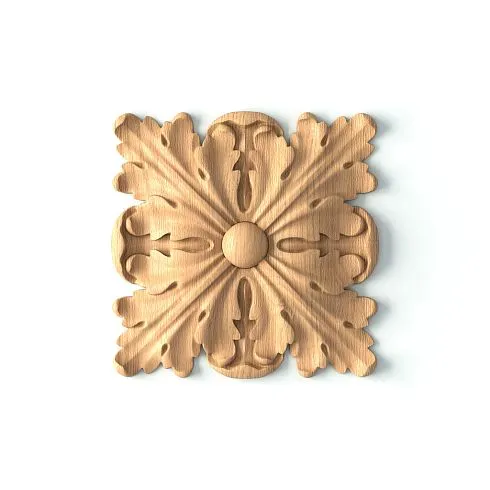
Wooden Decor N-076.1
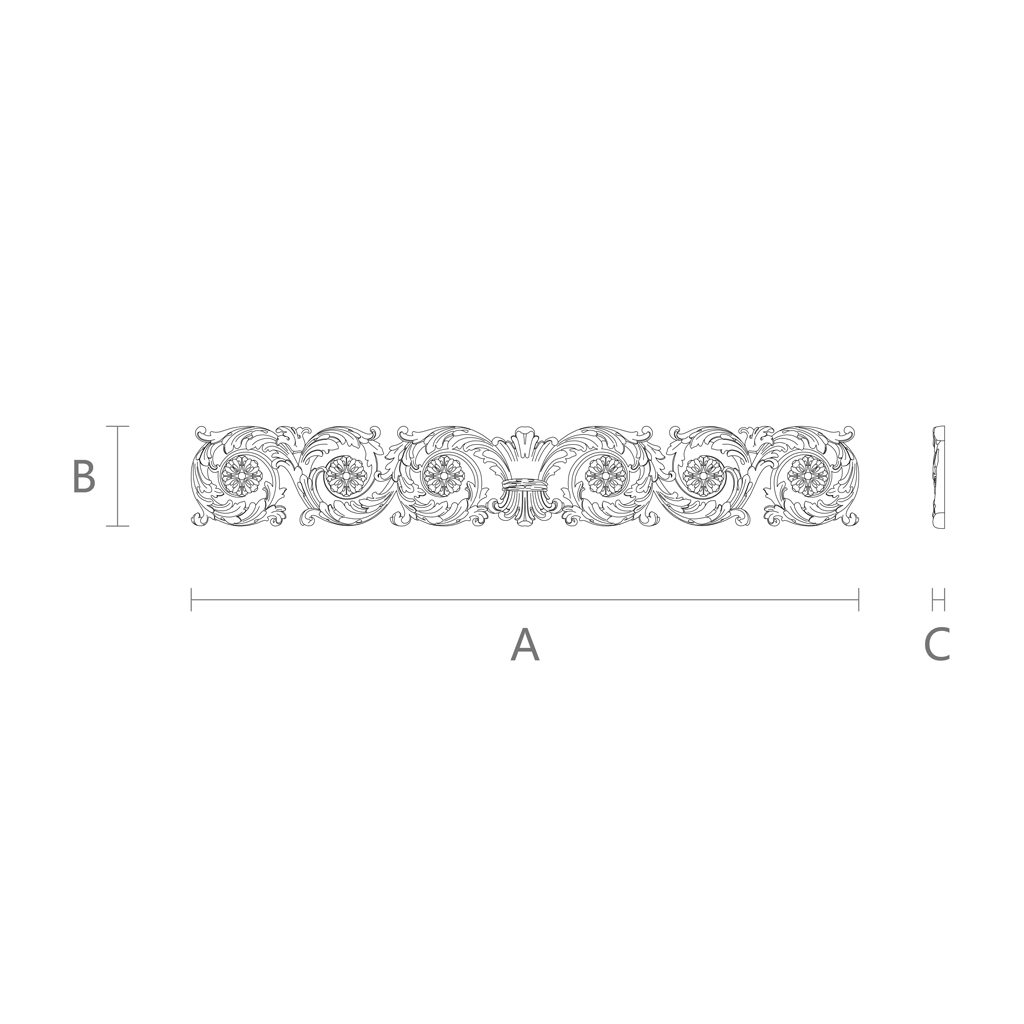
Dimensions and Options
Have questions?
Customers also buy

Polina Sh.
February 4, 2026
Went on a tour. To say I'm delighted is an understatement. The largest production facility in Russia, impressive in its scale and dedication to the craft! It was very interesting and informative. You can immediately see - true masters of their trade! We were welcomed in the best possible way, were polite...
Elena B.
January 29, 2026
Thank you for always having a magnificent assortment and the possibility of manufacturing standard products to non-standard, individual dimensions. Special thanks to manager Oksana for her efficiency and quality of services provided.
Elena K.
January 27, 2026
The moldings are high-quality and beautiful, they were packaged very securely, I will order again, I liked everything!
More than 20 years on the market
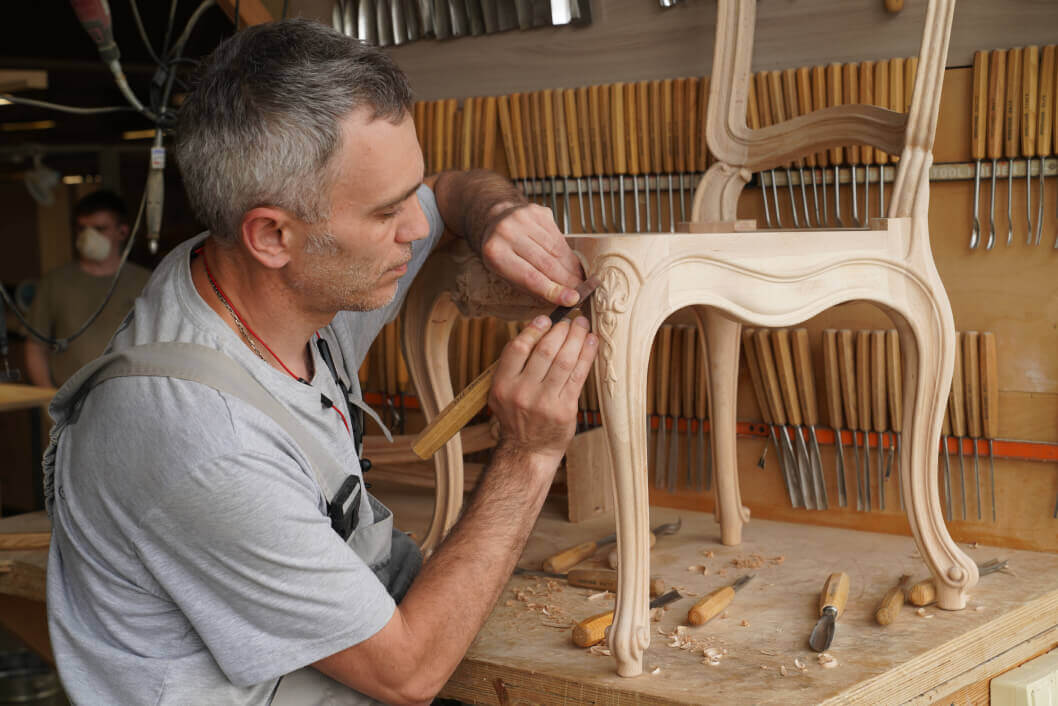
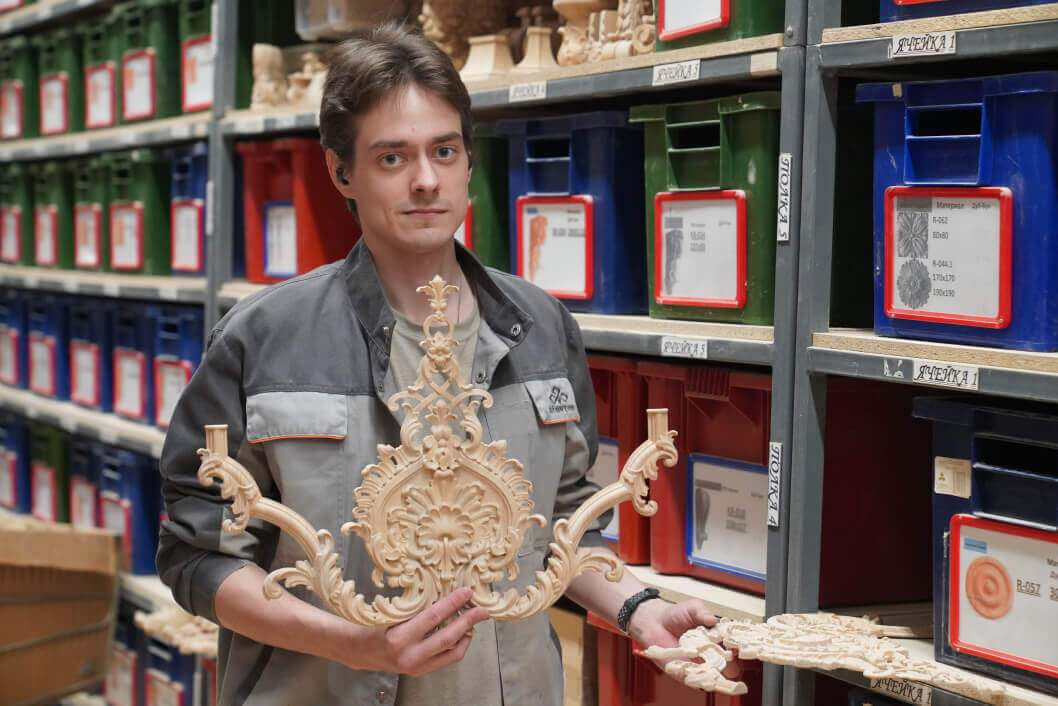
The company's success began in 2002, when two artists — Andrey Ragozin and Evgeny Tsapko — created a small creative workshop for producing wooden carved items. The masters' work was quickly noticed, and within a year they were invited to participate in the reconstruction of the Konstantinovskiy Palace in Strelna.
After the success of this project, the company focused on recreating palace interiors, furniture, church furnishings, and carved decorations in various artistic styles. They worked with cultural heritage sites: The Hermitage, the Alexandrovsky Palace, the Troitsko-Izmaylovsky Cathedral, the Sheremetyevsky Mansion, and many others.
The masters' task — and still is — to create wooden items with the highest level of detail and understanding of every element, based on impeccable knowledge of artistic laws and interior styles.
STAVROS Guarantees
Quality of products without complaints
We save your time, peace of mind, and budget
Large warehouse program
We solve your tasks with maximum speed
Adherence to production deadlines
Streamlined process reduces all risks
Delivery from 1 piece throughout Russia
Quality service regardless of order volume
Your positive business reputation
Reliable partner — the foundation of your business
More decorative appliqués in this category

Frequently asked questions
Our showrooms are located in Saint Petersburg and Moscow. Production is located in Saint Petersburg.
Moscow contacts: https://www.stavros.ru/contacts_all/?tab=msk
Contacts of Saint Petersburg: https://www.stavros.ru/contacts_all/?tab=spb
- Send request by email [email protected]
- Write to us at WhatsApp
- Order by phone 8 (800) 55-46-75
- Visit our showroom in Saint Petersburg and Moscow
Yes, we ship orders throughout Russia and to CIS countries.
We cooperate with transportation companies such as СДЭК and DPD.
You can also arrange pickup of your order through any convenient transportation company for you.
Delivery cost depends on the size, weight of the item, and delivery address.
When placing an order, the delivery cost is calculated automatically and displayed as a separate line on our website.
Prices and availability of items on the website are always current. Data is updated daily.
Note: items in stock are stored on the warehouse in unpolished form and shipped within 3 working days.
If the item is not in stock, average production time: 5–10 working days.
This is the quality of polishing of the items.
Standard — machine polishing, at a more attractive price.
Prestige — detailed hand polishing, items do not require further work.
More details: https://www.stavros.ru/information/kachestvo/
This is the type of veneer of the items.
Under enamel: produced by gluing wooden laminates without color and texture matching. Contrast tonal and textural differences are noticeable. This blank should be chosen if the item is intended for opaque coating.
Under tinting: produced by gluing wooden laminates with color and texture matching. Tonal and textural differences may occur. This blank should be chosen if the item is intended for semi-transparent finish.
More details: https://www.stavros.ru/information/kachestvo/
Beech — dense, non-porous wood, most often used for items covered with enamel.
Oak — dense, porous wood with clearly visible natural grain. Due to its strength and decorative properties, it is often used in items with semi-transparent coating, highlighting the wood pattern.
Custom-made, if non-standard items are required, we can produce products from other types of wood, including blanks provided by the customer, manufactured according to our technical specifications.
All our furniture legs can withstand a vertical load of at least 100 kg.
Average production time for custom-made items: 5–10 working days.
Most items are stored on the warehouse in unpolished form. We need time to polish and pack orders.
Yes, we manufacture non-standard items according to individual projects, but we only accept orders with a minimum quantity.
We can manufacture items of the desired size, but we only work with bulk orders. For details, please consult the sales department manager.
Yes, some of our products can be used outdoors. For example, polyurethane items, as well as carved door casings made of pine.
Other items are produced to order using PUR glue, if minimum quantity is available. No warranty is provided for such products, as outdoor conditions are considered aggressive.
Yes, we paint items when ordering products for a total amount of 150,000 rubles or more.
- Dust removal. After sanding, the surface must be dusted.
- Priming. Apply primer in an even layer.
- Matting. After the primer has fully dried, the surface should be matted (lightly sanded for better adhesion).
- Finish coating. Apply finish coating: lacquer or enamel, in 2 layers, with interlayer drying.
More details: https://www.stavros.ru/information/sovety/
Apply adhesive to the decor. Place it on the surface and press briefly. Then, lift the decor from the surface and leave it open for 3–5 minutes. Press the decor firmly onto the surface and hold for 5–10 seconds.
More details: https://www.stavros.ru/information/sovety/
Ideally, you should prepare a design project before placing an order.
You can do this yourself by downloading drawings of our products from our website, or you can order a project from us.
If the number of decorative elements and fittings is small, our company's manager can assist you with selection.
Unfortunately, this service is not provided.
The packaging method depends on the type of items, but in each case, we ensure sufficient protection for safe transportation.
We most often use corrugated cardboard and stretch film. Fragile items are additionally secured on a rigid base to prevent damage during transport.
We ship all items starting from 1 piece.
Room measurements and item installation can be performed by our partners — carpentry companies represented in most regions of Russia.
Often searched in category Wooden and MDF items
6690
2639
2366
1320
1278
858
A masterpiece of carpentry: wooden decor N-076.1 for creating luxurious interiors
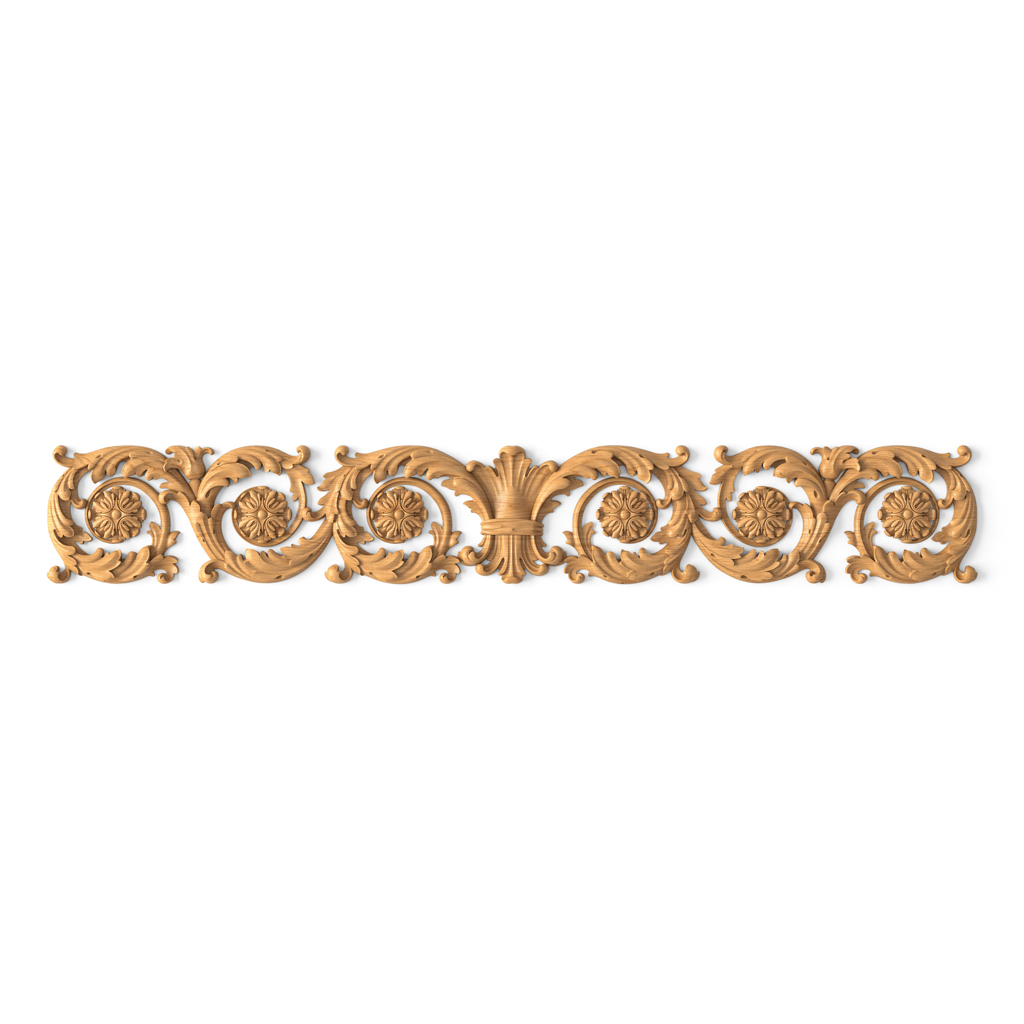
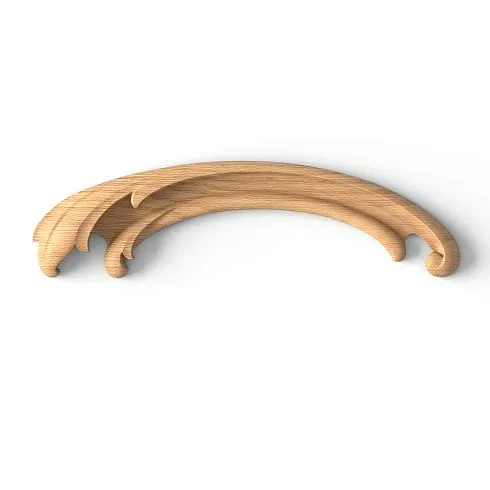
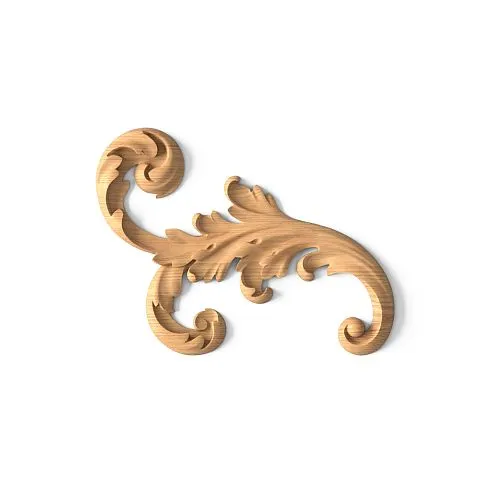
Wooden Decor N-076.1 — horizontaldecorative insertAn exquisite ornamental composition featuring a classical style, representing a high standard of carpentry craftsmanship and wood carving art. The elegant symmetrical pattern, executed in relief carving technique, combines ancient acanthus leaf motifs with baroque scrolls and a central decorative element in the form of a stylized palmette. The piece is crafted from natural solid beech or oak, ensuring flawless quality, durability, and ecological safety of the decorative element. The universal horizontal orientation of the ornament allows using the applique for decorating furniture facades, interior doors, fireplace surrounds, wall panels, and architectural interior elements.
Artistic features of the ornamental composition
Central compositionwooden decorN-076.1 is built on the principles of classical symmetry and the golden section, characteristic of European palace interiors of the 18th-19th centuries. At the center of the ornament is a vertical decorative element in the form of a stylized palmette — a fan-shaped plant motif with spreading petals. This central accent serves as the compositional core, from which the side elements of the ornament symmetrically radiate. The palmette in classical decorative art symbolizes prosperity, abundance, and harmony, making it an ideal choice for decorating grand interior spaces.
leaves of acanthus with characteristic serrated edges and deep relief create a play of light and shadow on the surfacecarved appliqueof the applique, giving it volume and pictorial quality. The scrolls smoothly transition into one another, creating a continuous rhythmic pattern that visually expands the space and adds dynamism to the composition. Each leaf is meticulously crafted — veins, curves, and transitions of relief are executed with high detail.
The side ends of the ornament are finished with decorative rosettes — circular plant motifs that frame the composition and provide a visual conclusion to the decorative line. Rosettes are made in the form of stylized flowers with multi-layered petals arranged in a circle around the central bud. These elements serve not only aesthetic purposes but also functional ones — they ensure harmonious integration of the applique with other decorative elements when creating complex compositions. The overall compositionwooden decorN-076.1 is distinguished by balance, elegance of lines, and classical beauty that remains relevant for centuries.
Technology of manufacturing and quality of execution
Productiondecorative insertsN-076.1 is manufactured using modern high-precision equipment with computer numerical control in combination with traditional manual finishing of carving. The process begins with careful selection of wood — only high-quality solid beech or oak from air-dried kilns with residual moisture of 8-10% is used. The wood undergoes a multi-stage preparation process, including seasoning, acclimatization, and inspection for defects, knots, and cracks.
Initial processing of the blank is performed on CNC milling machines, which reproduce the ornament with precision down to tenths of a millimeter. Computer control allows creating an ideally symmetrical pattern with uniform carving depth across the entire surface of the item. The multi-level relief is formed layer by layer — first, the background wood is removed, then the large ornament elements are worked on, followed by detailing of small decorative fragments. The carving depth is 8-12 millimeters, ensuring expressive play of light and shadow and volume of the decoration.
After machine processing, eachCarved Insertundergoes a manual finishing stage, where experienced woodcarvers refine the finest details of the ornament, smooth transitions of relief, and give the carving a lively, animated character. Manual work allows eliminating traces of machine processing, creating smooth transitions of forms, and emphasizing the natural beauty of wood grain texture. Final sanding is performed in stages using abrasives of different grits — from 120 to 320 grit — ensuring a perfectly smooth surface without any imperfections.
The final stage of production is protective and decorative finishing of the item.Wooden decorationN-076.1 can be supplied in an unfinished state for subsequent custom painting, or with factory finish — toning in various shades of natural wood, patination to create an effect of noble antiquity, or transparent lacquer coating that highlights the natural beauty of wood grain texture. Multi-layer water-based lacquer coating protects the wood from moisture, dirt, and mechanical damage, preserving the original beauty of the decoration for many years.
Application in decorating furniture facades
Primary purposedecorative insertsN-076.1 — decoration of furniture facades in classical, neoclassical, and baroque styles. The horizontal orientation of the ornament makes the applique an ideal choice for decorating upper and lower parts of cabinets, chests, buffets, and display cases. Installing carved decoration on the central part of the facade panel creates an expressive horizontal accent that visually expands the furniture and gives it a majestic, ceremonial character. Particularly striking is the applique on tall cabinet-columns and pedestals, where the horizontal ornament breaks the vertical continuity and creates a rhythmic organization of the facade.
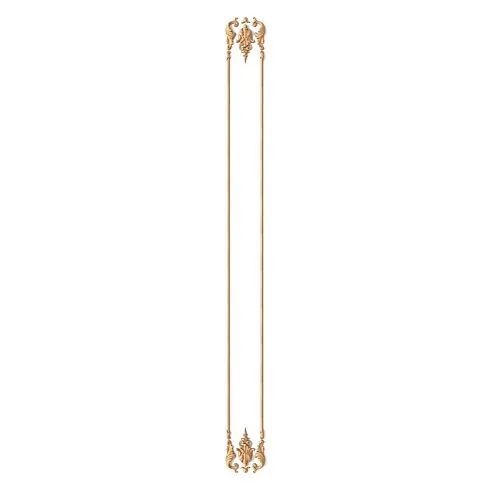
Classic-style kitchen sets are transformed thanks tocarved appliquésN-076.1 on upper cabinet facades. The decoration is installed above cabinet doors or on the front panel of a range hood, creating a compositional center in the kitchen space. The symmetrical ornament emphasizes the classic kitchen layout and harmoniously combines with other decorative elements — cornices, pilasters, shaped legs, and carved handles. To create a cohesive ensemble, it is recommended to combine applique N-076.1 with vertical decorative elements from the same collection, which will create a complete framed composition on the facade.
Furniture for dining rooms and living rooms — buffets, sideboards, chests, consoles — gains special elegance and aristocracy thanks towooden decorN-076.1. The applique is installed on the central part of the facade or symmetrically on both sides of the central axis, creating a balanced decorative composition. When decorating wide chests, multiple appliques can be used, spaced evenly apart, creating a rhythmic pattern and emphasizing the horizontal extent of the furniture. Combining carved decoration with contrasting facade coloring — for example, white decor on a dark background or gilt patina on ivory — enhances the decorative effect and makes the furniture the focal point in the interior.
Bed sets including wardrobes, chests, bedside tables, and dressing tables are united into a stylistically cohesive ensemble due to the repeating decorative motifcarved appliquésInstalling identical N-076.1 appliqués on various pieces of furniture creates visual unity in the bedroom and emphasizes the belonging of all elements to a single collection. On tall cabinets, the decoration is placed at a height of 160–180 centimeters from the floor, corresponding to the eye level of a standing person and ensuring maximum visual expressiveness of the ornament. Dressers are adorned with appliqués on the upper tier of drawers or on the front panel between the countertop and pull-out elements.
Decorating interior doors and portals
Decorative InsertsN-076.1 are ideally suited for decorating interior doors in classical and palace styles. The horizontal ornament composition fits perfectly into the space above the door, where the decoration is installed on the upper part of the door panel or on the portal’s pediment. Such placement draws attention to the architectural composition of the door opening and imparts a ceremonial grandeur characteristic of formal interiors. The symmetrical floral ornament harmonizes with the latticed construction of classical doors, complementing the vertical lines of the lattices with a horizontal decorative accent.
Double-leaf swing doors especially benefit from installingcarved decor elementsN-076.1 on the upper transom between the leaves. The central element of the appliqué aligns with the axis of symmetry of the door opening, creating compositional unity and emphasizing the paired nature of the construction. When both leaves are fully opened, the decorative composition unfolds in full glory, framing the passage between rooms and transforming it into a kind of triumphal arch. Additionally, vertical appliqués can be installed on both sides of the opening, creating a complete classical-style portal framing.
Sliding doors with concealed mechanisms can also be adornedwith wooden appliquésN-076.1 installed on the upper part of the panel. The horizontal ornament visually expands the door and compensates for the narrowness of the leaf, characteristic of sliding systems. It is important to consider the direction of door opening and place the decoration so that the central element of the composition remains visible in any position of the leaf. For wide sliding doors, multiple appliqués can be installed sequentially, creating a continuous decorative band along the upper edge of the panel.
Fireplace portals and decorative niches are transformed thanks tocarved appliquésN-076.1 installed on horizontal structural elements. Above the fireplace opening, on the frieze board of the portal, the decorative ornament creates a compositional center that draws the eye and emphasizes the significance of the fireplace as the main element of the interior. The symmetrical floral pattern harmonizes with the architectural logic of the portal, where vertical supports hold up a horizontal lintel adorned with carved decoration. The combination of stone or marble cladding of the portal withwooden decorcreates an interesting material contrast and enriches the tactile texture of the interior.
Use in wall panels and boiserie
Classic wall panels — boiserie, traditionally decorating palace and estate interiors — achieve completeness thanks todecorative appliquésN-076.1. Horizontal appliqués are installed at the frieze level — the decorative band running along the wall at a height of 160–200 centimeters from the floor. This height corresponds to the classical division of the wall into three parts: plinth, main field, and frieze. The carved ornament on the frieze portion of the panels creates a continuous decorative band around the perimeter of the room, visually unifying the space and imparting a formal character.
Vertical division of wall panels into individual fields — lattices — can also be adornedcarved inlaysN-076.1 installed along the top edge of each lattice. Such placement of decoration creates a rhythmic organization of the wall, where horizontal ornamental elements alternate with vertical gaps, forming a graphic, well-structured composition. To enhance the decorative effect, horizontal appliqués can be combined with vertical corner elements, creating a framed border around each lattice.
Accent walls in living rooms, offices, libraries, and bedrooms acquire special expressiveness thanks towooden decorN-076.1. Appliqués are installed in the central part of the wall, at the compositional center level — for example, above the headboard of a bed, behind a sofa, above a desk, or in the wall space between windows. The horizontal ornament creates a visual anchor, organizing the space around it and drawing attention to the key zone of the room. Painting the appliqué in a contrasting color relative to the wall enhances the decorative effect and transforms the carved element into a standalone work of art.
Staircase areas and halls, characterized by high ceilings and long wall spans, require decorative elements that break the monotony of vertical surfaces.carved appliquésN-076.1 installed on walls along the staircase at equal intervals create a rhythmic pattern that accompanies movement up the stairs and makes the ascent visually comfortable. Horizontal ornamental elements compensate for the dominant verticality of the staircase space and impart balance to it.
Decorating ceilings and ceiling structures
Classical interiors with high ceilings achieve completeness thanks to decorative treatment of ceiling surfaces.Wooden InlaysN-076.1 are used to decorate ceiling beams, coffered ceilings, cornices, and friezes. Installing carved decoration on visible wooden beams crossing the ceiling transforms functional structural elements into decorative interior dominants. Appliqués are attached to the side faces of beams, creating a three-dimensional ornamental band that emphasizes the architectural logic of the ceiling structure.
Coffered ceilings, consisting of recessed square or rectangular cells, are adornedcarved inlaysaround the perimeter of each coffer. Horizontal N-076.1 appliqués are installed on the longitudinal ribs of the coffers, creating a continuous decorative frame around each cell. Combined with central rosettes within the coffers, such a composition creates a luxurious ceiling decoration characteristic of palace interiors from the classical period. Painting the coffers in contrasting colors — for example, white cells with gilded decoration — enhances the architectural expressiveness of the ceiling.
Ceiling cornices and friezes running along the perimeter of the room at the junction of walls and ceiling can also be adornedwooden decorN-076.1. Carved appliqués are installed on the front surface of the cornice, creating a decorative band that visually separates the ceiling plane from the walls and imparts architectural completeness to the room. Such treatment is especially effective in high rooms with ceilings over 3.5 meters, where the decorative cornice becomes an important element of spatial composition.
Custom furniture and interior items manufacturing
Cabinetmakers and interior designers useDecorative InsertsN-076.1 when creating exclusive original pieces. Carved decoration is integrated into the structure of writing desks, where the inlay adorns the front panel above drawers or a decorative frieze under the tabletop. Horizontal ornament visually expands the desk and imparts the dignity characteristic of office furniture in English or French styles. The combination of dark wood mass with gilded or silvered decoration creates an image of a luxurious workspace for a manager or home office.
Banquettes, ottomans, and small sofas for entryways, halls, and boudoirs acquire special elegance due tocarved appliquésN-076.1 installed on the front panel under the seat. Decorative ornament N-076.1 transforms simple upholstered furniture into a luxury item worthy of a formal interior. Upholstery in velvet, jacquard, or tapestry combined with carved wooden decoration creates a harmonious combination of tactile textures and visual images. The legs of the banquettes, shaped like cabrioles or balusters, stylistically echo the vegetal motifs of the inlay, creating a unified artistic image.
Makeup tables and trumeaus for bedrooms and dressing rooms are adorned withwooden decorN-076.1 installed on the upper part of the mirror frame or on the front panel of the table. Symmetrical vegetal ornament emphasizes the femininity and elegance of this piece of furniture, traditionally associated with the boudoir culture of aristocratic interiors. A mirror framed with carved frame and inlay in the central upper part becomes a decorative focal point in the bedroom, organizing the space around it.
Wine cabinets, bar counters, and serving consoles for dining rooms and living rooms are transformed by installingcarved appliquésN-076.1 on visible facade surfaces. Horizontal decoration placed above glass doors of a wine cabinet or on the frieze part of a bar counter imparts solemnity to the furniture and emphasizes its purpose for storing noble beverages and hosting social events. The combination of carved wood with brass or bronze hardware elements, crystal inserts, and mirrored panels creates an image of a luxurious piece of furniture in Art Deco or classicism style.
Restoration of antique furniture and historical interiors
Decorative InsertsN-076.1 are indispensable for restoring antique furniture and recreating historical interiors. Antique furniture from the 18th-19th centuries often loses original carved elements due to mechanical damage, improper storage, or numerous restoration interventions. Manufacturing new inlays based on preserved fragments allows restoring the original appearance of the antique piece and returning it its historical and artistic value. Carved decoration is made from the same wood species as the original furniture and subjected to artificial aging — patination, toning, and creating a worn effect — to achieve full visual correspondence.
Museum and palace interiors undergoing restoration and recreation require precise reproduction of decorative elements characteristic of a specific historical period.carved appliquésN-076.1 in the styles of classicism, empire, or baroque are manufactured according to archival documents, photographs, and preserved samples, ensuring historical accuracy of restoration. Modern 3D scanning technologies allow creating an accurate digital model of the original decoration, which is then reproduced on high-precision equipment with subsequent manual finishing by master carvers.
Private collectors of antique furniture useWooden InlaysN-076.1 to create stylistically similar additions to historical pieces of furniture. New furniture, manufactured according to old patterns and adorned with carved decoration in historical styles, harmoniously combines with authentic antique pieces, creating a cohesive interior ensemble. This approach allows filling the space with sufficient furniture without risking damage to unique historical specimens while preserving stylistic unity of the interior.
Mounting and methods of attaching decorative elements
Installationcarved appliquésN-076.1 to furniture facades and architectural interior elements requires proper selection of mounting method and careful execution. Traditional mounting method involves using PVA or polyurethane wood glue, which ensures strong and durable wood connection. Before gluing, both surfaces — the back of the inlay and the mounting location on the facade — must be thoroughly degreased and cleaned from dust. Glue is applied in a thin, even layer on both surfaces, after which the inlay is pressed onto the base and secured with clamps or weights during glue polymerization, lasting 4-6 hours.
For additional mechanical fixationdecorative insertsN-076.1 use thin finish nails without heads or furniture screws with a diameter of 1-1.5 millimeters. Nails are driven into the least visible parts of the ornament — recesses of relief, joints of elements, side edges of scrolls — where the fastener trace will be hidden by play of light and shadow. After driving in nails, mounting points are filled with wood-colored furniture putty, sanded with fine-grit sandpaper, and toned to fully blend with the surrounding surface. This combined mounting method ensures maximum connection strength and guarantees that the decoration will not peel off even under prolonged use in conditions of variable humidity and temperature.
Mountingcarved decor elementsMounting to wall panels and architectural elements can be performed using mounting glue type 'liquid nails', which provides immediate primary fixation and high final connection strength. Before installation, it is necessary to precisely mark the position of the inlay using a level and tape measure, ensuring horizontal placement and symmetry relative to the central axis of the wall or facade. For heavy, large-sized inlays, it is recommended to use preliminary mechanical fixation with self-tapping screws followed by masking mounting points with wooden plugs or putty.
Variants of final finishing and decorative effects
Wooden InlaysN-076.1 provide wide opportunities for creating various decorative effects due to the diversity of finishing methods. Natural toning highlights the natural beauty of wood texture and preserves the material's natural character. Light shades — whitewashed oak, ivory, natural beech — create a sense of lightness and freshness, visually expanding space and well-suited to pastel interior palettes. Dark tonings — walnut, wenge, stained oak, mahogany — impart decor with solidity, depth, and dignity characteristic of offices, libraries, and masculine spaces.
Patination — artificial creation of the effect of noble aging of wood — transformscarved appliquésN-076.1 into elements of antique interiors. Patination technique involves applying several layers of contrasting color paint or wax, followed by partial removal of the top layer on raised parts of relief. Classical patina is created by combining a dark base with golden, silver, or light beige accents on relief, imitating natural wear of gilding or darkening of wood in frequently contacted areas. Such finishing gives decor historical authenticity and emphasizes the relief's volume.
Gilding and silveringdecorative insertsN-076.1 create luxurious effects characteristic of palace interiors in Baroque, Rococo, and Empire styles. Electroplated gold or gold paint is applied to a pre-primed decorative surface, creating a shimmering metallic coating that reflects natural and artificial light. Full gilding creates an impression of solid metal decoration, while partial gilding — only on raised relief elements against a dark base — creates a more restrained and refined effect. Artificial aging of gilding using patina gives decor a noble patina of time.
Painting in modern designer colors allows integrating classicCarved DecorN-076.1 into modern and eclectic interiors. Snow-white coloring creates a sense of purity and freshness characteristic of Scandinavian style and modern classicism. Pastel shades — mint, lavender, peach, sky-blue — impart romance and femininity to the interior. Saturated deep colors — emerald, sapphire, burgundy, graphite — create dramatic effects and transform carved inlay into an accent element of the interior.
Combination with other decorative elements
N-076.1 effectively combine with other elements from the wooden decoration catalog. Vertical corner inlays, rosettes, pilasters, and capitals, executed in the same artistic style, complement the horizontal ornament N-076.1, creating framed compositions on furniture facades and wall panels. The combination of horizontal and vertical elements forms a decorative architectural structure, where each element occupies its place in the overall composition hierarchy.carved appliquésN-076.1 effectively combines with other elements from the wooden decor catalog. Vertical corner appliqués, rosettes, pilasters, and capitals, executed in the same artistic style, complement the horizontal ornament N-076.1, forming framed compositions on furniture facades and wall panels. The combination of horizontal and vertical elements forms a decorative architectural structure, where each element occupies its place in the overall compositional hierarchy.
Moldings and profiled strips of various cross-sections frameDecorative Inserts, creating additional volume and emphasizing the boundaries of decorative fields. A framed construction of moldings with a central carved appliqué N-076.1 forms a classical panel composition characteristic of high-style interiors. Multi-level frames using moldings of different widths and profiles create a complex play of planes and enhance the architectural expressiveness of the decor.
Carved rosettes in round or oval shapes are positioned along the central axis above or below the horizontal appliqué N-076.1, creating vertical compositional linkage and enhancing the symmetry of the decorative solution. Corner appliqués with vegetal ornament, echoing motifs of N-076.1, are placed at the corners of rectangular decorative fields, forming a completed framed composition. Such comprehensive decoration transforms a simple flat surface of a furniture facade or wall panel into a complex multi-layered architectural composition with pronounced relief and rich play of light and shadow.
Purchase exclusiveWooden decorationN-076.1 in the Stavros online store — the choice of professional interior designers, furniture craftsmen, and admirers of classic style, who create luxurious, refined, and unique spaces filled with the beauty of natural wood and the artistry of wood carving.
Your request has been sent!
Our manager will contact you within 5 minutes